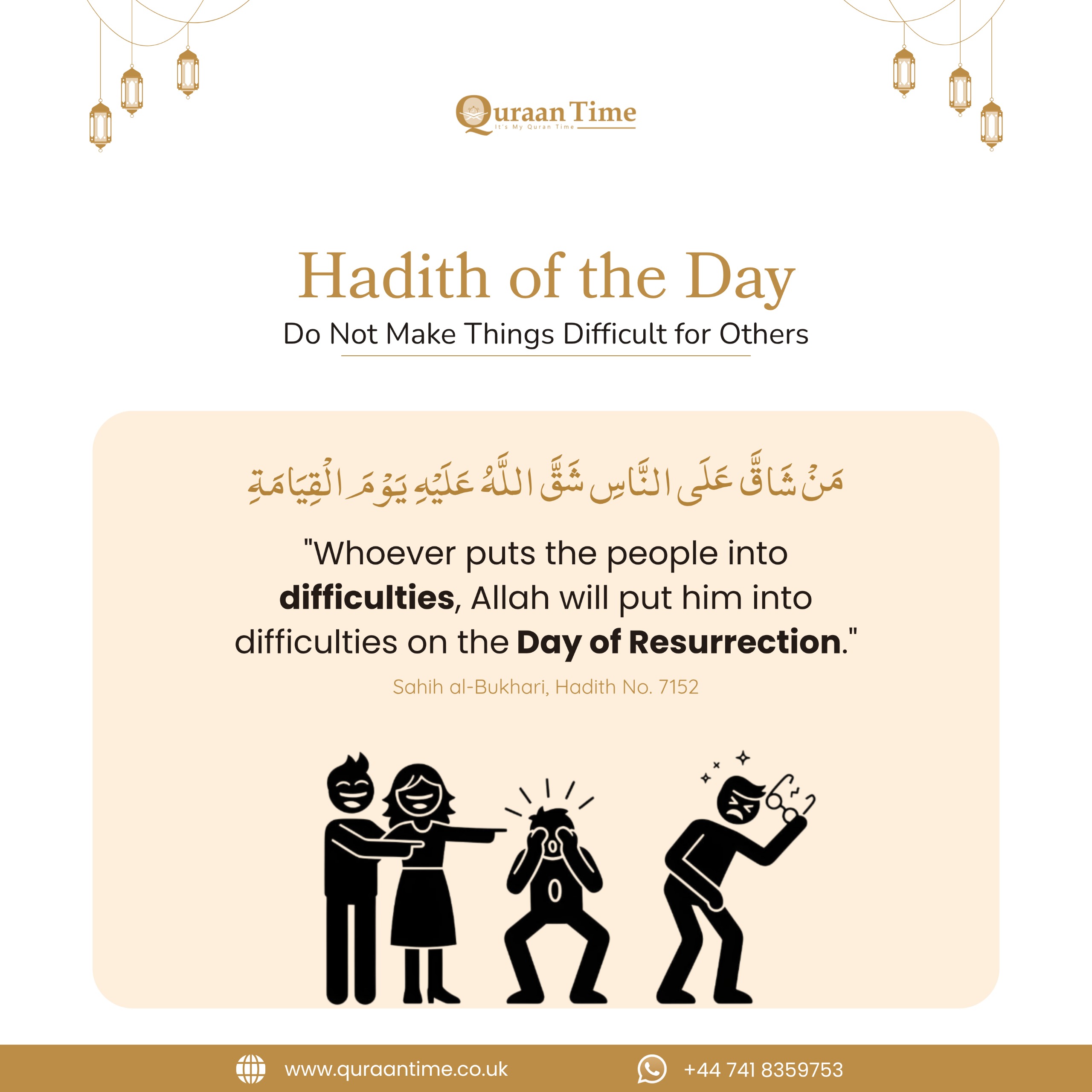
This profound hadith serves as a timeless reminder of the principles of compassion, empathy, and social responsibility in Islam. It highlights the direct correlation between our treatment of others in this world and our standing in the Hereafter. The Prophet Muhammad (peace be upon him) taught that ease and difficulty are not merely worldly matters but have profound spiritual consequences.
In our daily lives, we often encounter situations where we have the power to make things easier or harder for those around us. Whether in our families, workplaces, or communities, this hadith calls us to be agents of relief rather than sources of hardship. The Arabic term "شَاقَ" (shaqqa) implies going to extremes, causing strain, or creating unnecessary obstacles. It is a warning against authoritarianism, harshness, and any behavior that burdens others unjustly.
Scholars explain that this hadith encompasses all aspects of life: financial transactions, personal relationships, judicial rulings, and even everyday interactions. When a person deliberately complicates matters for others—whether through deceit, oppression, or negligence—they are essentially sowing seeds of difficulty that will harvest consequences on the Day of Judgment. Conversely, those who facilitate ease for others are promised divine facilitation in this life and the next.
Modern psychology confirms what Islamic teachings have emphasized for centuries: social support and kindness reduce stress and improve mental health. By adopting the prophetic approach of making things easy, we not only fulfill a spiritual obligation but also contribute to healthier, more harmonious societies. The hadith encourages us to reflect on our habits: Are we approachable? Do we listen before judging? Do we offer solutions rather than obstacles?
Imam al-Bukhari included this narration in his collection to remind believers that faith is not merely ritualistic but deeply ethical. The Day of Resurrection is the ultimate court of justice, where every action will be weighed. Those who caused difficulty for others will find themselves in difficulty, a recompense that matches their deeds. This is both a warning and an invitation to reform our conduct and prioritize mercy in all our dealings.
Questions & Answers: Teachers and Parents Reflect
Teacher: "How can we apply this hadith in the classroom without compromising discipline?"
Parent: "Discipline and ease are not mutually exclusive. The Prophet (peace be upon him) was firm when needed but always compassionate. We can set clear expectations while being patient, listening to students' concerns, and offering second chances. Making things easy means explaining rules with wisdom and addressing misbehavior with kindness rather than harshness."
Parent: "My child is struggling with homework. How do I avoid making things difficult while still ensuring they learn?"
Teacher: "Break tasks into smaller steps, use encouraging language, and celebrate small progress. Instead of focusing on the difficulty, frame challenges as opportunities for growth. Ask guiding questions rather than giving answers. This aligns with the prophetic approach: removing unnecessary burdens while nurturing capability and confidence."
Teacher: "What about students who repeatedly disrupt class? Doesn't strictness become necessary?"
Parent: "Strictness should be purposeful, not punitive. The hadith warns against making things difficult for others. Instead of reacting with anger, we can use restorative practices—understanding the root cause of disruption, involving the student in finding solutions, and maintaining dignity. This approach is more effective and aligns with Islamic values of justice and mercy."
Parent: "How do we teach our children this hadith in an age-appropriate way?"
Teacher: "Use stories from the Prophet's life where he showed ease. Role-play scenarios where they can choose between making things easy or difficult. Encourage them to reflect on how they feel when someone is kind versus harsh. Children learn best through example, so we must model patience and gentleness in our own interactions with them."
Teacher: "Does this hadith mean we should never challenge or correct others?"
Parent: "Not at all. The Prophet (peace be upon him) corrected companions, but with wisdom and care. 'Making things easy' refers to the manner and intent. We can correct firmly while maintaining respect, offering clear guidance, and giving people room to improve. Difficulty arises when correction is done with arrogance, ridicule, or without consideration for the other's feelings."