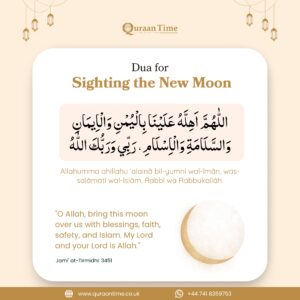


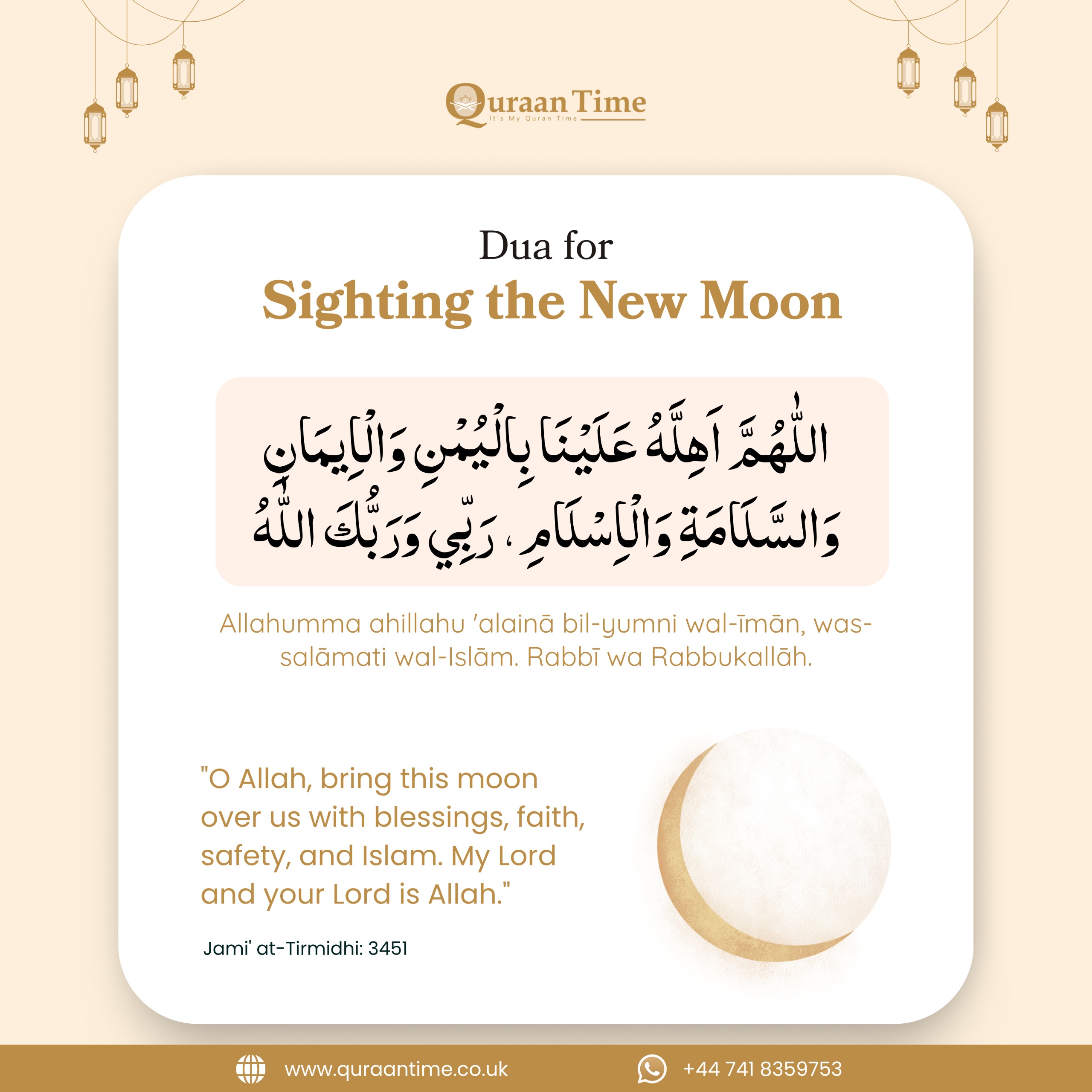
The sighting of the new moon marks the beginning of a new month in the Islamic lunar calendar. It is a moment of reflection, renewal, and spiritual connection. The Prophet Muhammad (peace be upon him) taught this beautiful supplication to instill tawheed (monotheism) and to seek divine blessings for the days ahead. Saying this dua is not merely a ritual; it is an acknowledgment that all affairs are in the hands of Allah, and that every new cycle brings opportunities for increased faith, safety, and devotion.
This dua encapsulates the core beliefs of a Muslim: faith (īmān), blessings (yumn), safety (salāmah), and Islam—the complete submission to Allah. By reciting it upon seeing the crescent, a believer aligns their heart with the divine will and seeks protection from harm. The phrase “Rabbī wa Rabbukallāh” (My Lord and your Lord is Allah) serves as a direct address to the moon itself, reminding us that even the celestial bodies are subservient to Allah’s command.
Imam Tirmidhi recorded this narration, emphasizing its authenticity and the importance of preserving this prophetic practice. In a world filled with uncertainty, this dua offers tranquility and a reminder of the eternal promise of mercy for those who turn to Allah. Whether it is the start of Ramadan, Dhul-Hijjah, or any other month, this supplication sets a tone of hope and spiritual readiness.
Faith (Īmān) – it is the foundation of every action. Without faith, the words are empty. Blessings (Yumn) – they encompass barakah in time, health, and provision. Safety (Salāmah) – protection from physical and spiritual harm. Islam – the comprehensive surrender to Allah, which brings peace to the heart. The Prophet’s choice of these four elements covers all aspects of human existence.
The moon is a sign (ayah) of Allah. Its waxing and waning remind us of the transient nature of this world. By addressing the moon, the dua breaks the barrier between the created and the Creator, affirming that even the moon obeys Allah. This is a profound lesson in tawheed that we can pass on to the next generation.
Imam Ibn ‘Uthaymeen (may Allah have mercy on him) mentioned that the dua for the new moon is a form of praising Allah and seeking His help. It also teaches us to connect every natural phenomenon with the Creator, not to view them as mere occurrences. This keeps the heart alive with dhikr and prevents heedlessness. Parents and teachers should emphasize this connection when children ask about the moon.
May Allah accept our supplications and grant us the blessings of every new moon. Ameen.
Based on Jami’at-Tirmidhi 3451 · Adapted for educational and spiritual reflection