
Hadith about Sadaqah
A powerful reminder that charity purifies the heart, reduces sins, helps people in need, and brings the believer closer to Allah.
Hadith about Sadaqah teaches that charity is not only financial help. It is a spiritual act that cleanses the heart, protects the soul from greed, and becomes a means of mercy by Allah's permission.
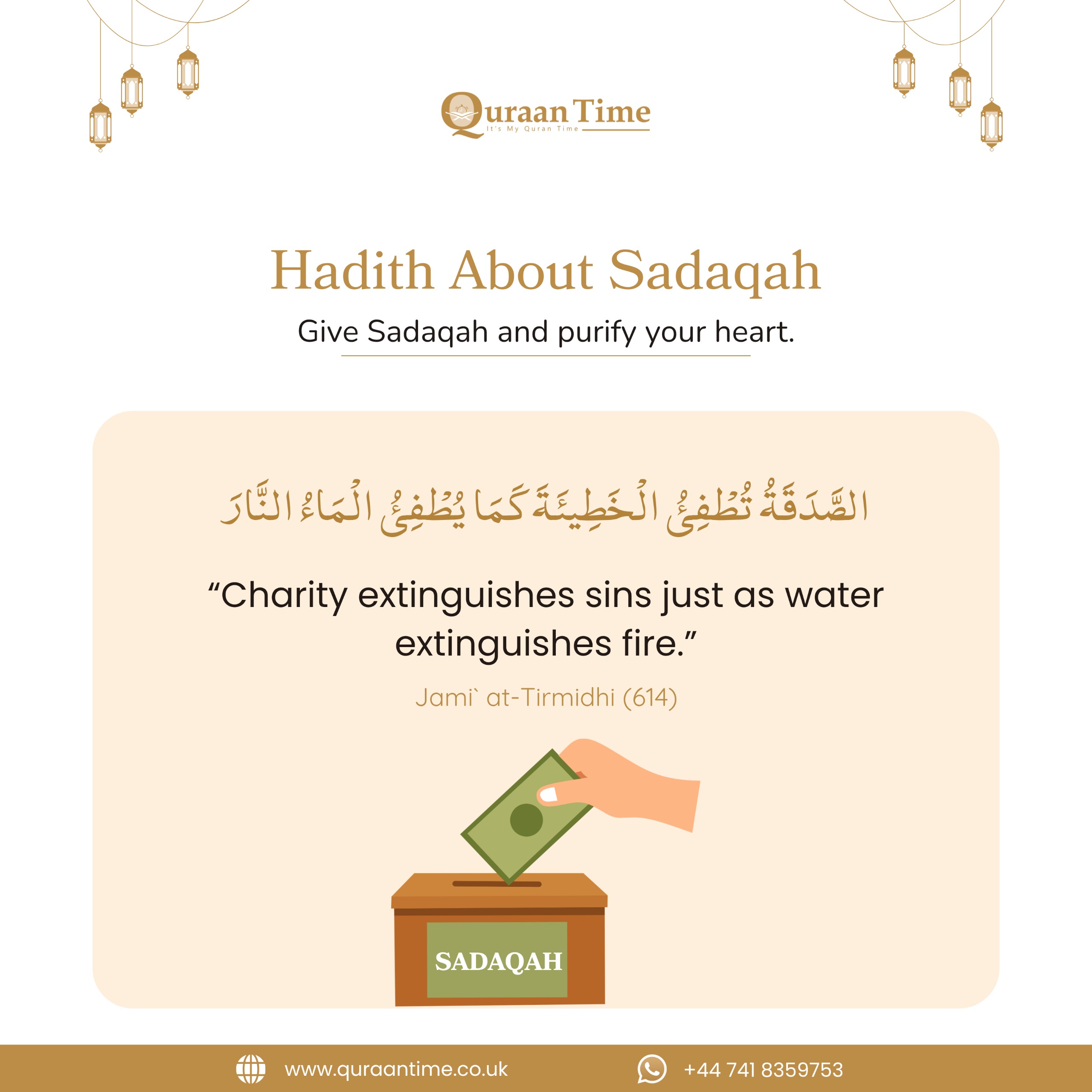
The Prophet Muhammad ﷺ taught that charity can extinguish sins just as water extinguishes fire. This image is simple, powerful, and easy for students and families to remember.
Sadaqah can be money, food, water, kind words, beneficial knowledge, helping someone, or removing harm from a path. Islam opens many doors of giving so every person can participate.
Hadith about Sadaqah in English
"Charity extinguishes sins just as water extinguishes fire."
Main Meaning
Giving sincerely can become a means of forgiveness and purification.
Daily Practice
Give regularly, even if the amount is small, and keep the intention sincere.
Hadith Source
This meaning is reported in Jami` at-Tirmidhi.
7 Powerful Lessons from Hadith about Sadaqah
These lessons make the hadith practical for children, parents, teachers, and everyday Muslim life.
Charity Purifies
Sadaqah cleans the heart from greed and reminds the believer that wealth belongs to Allah.
Sins Can Be Erased
The hadith gives hope that sincere charity can help extinguish sins by Allah's mercy.
Small Gifts Matter
Even a small amount can be valuable when the intention is pure.
Giving Softens the Heart
Helping others teaches gratitude, compassion, and awareness of people's needs.
Charity Builds Community
It supports the poor, students, families, widows, orphans, and people in hardship.
Sincerity Is Essential
The best charity is given for Allah, not for praise, attention, or status.
Everyone Can Give
A smile, kind word, helpful action, or shared knowledge can also be charity.
Make It a Habit
Regular giving, even small, trains the soul to love generosity.
How to Practice Hadith about Sadaqah
Charity becomes part of life when it is simple, regular, and sincere.
- Give a small amount daily, weekly, or whenever Allah makes it easy.
- Feed someone, share water, or support a family in hardship.
- Help a student learn Quran or useful knowledge.
- Give privately when possible to protect sincerity.
- Teach children to save a little for charity from their own money.
A sincere act of charity may leave the hand quickly, but with Allah it can remain as light, mercy, and forgiveness.
Why Hadith about Sadaqah Matters Today
Modern life often teaches people to measure success by what they collect, save, display, or own. This hadith changes the direction of the heart. It reminds the believer that wealth is a trust and that giving from it can become a path to forgiveness.
Charity also protects a person from selfishness. When a Muslim gives, they remember the hungry, the sick, the lonely, the student who needs help, the family under pressure, and the people whose hardship may be hidden from public view.
The Hadith about Sadaqah is especially useful for families because it turns generosity into a shared habit. Parents can teach children that charity is not only for adults or wealthy people. Even a child can give a coin, share food, speak kindly, or help someone with sincerity.
Parent and Teacher Q&A on Hadith about Sadaqah
This hadith is easy to teach because children understand the image of water putting out fire.
How can children understand it?
Explain that good deeds can remove sins, just like water removes fire.
Is charity only money?
No. Islam includes helpful actions, kind speech, feeding others, and removing harm as forms of charity.
How can families practice it?
Keep a family charity jar, choose causes together, and make dua for those receiving help.
Authentic References for Hadith about Sadaqah
Read the narration in Jami` at-Tirmidhi 614. You can also reflect on the Quranic example of charity multiplying like a seed at Quran.com 2:261.
Final Reflection on Hadith about Sadaqah
Hadith about Sadaqah reminds Muslims that giving is a path to purification, forgiveness, and mercy. Give what you can, keep your intention sincere, and trust Allah to turn small charity into great reward.