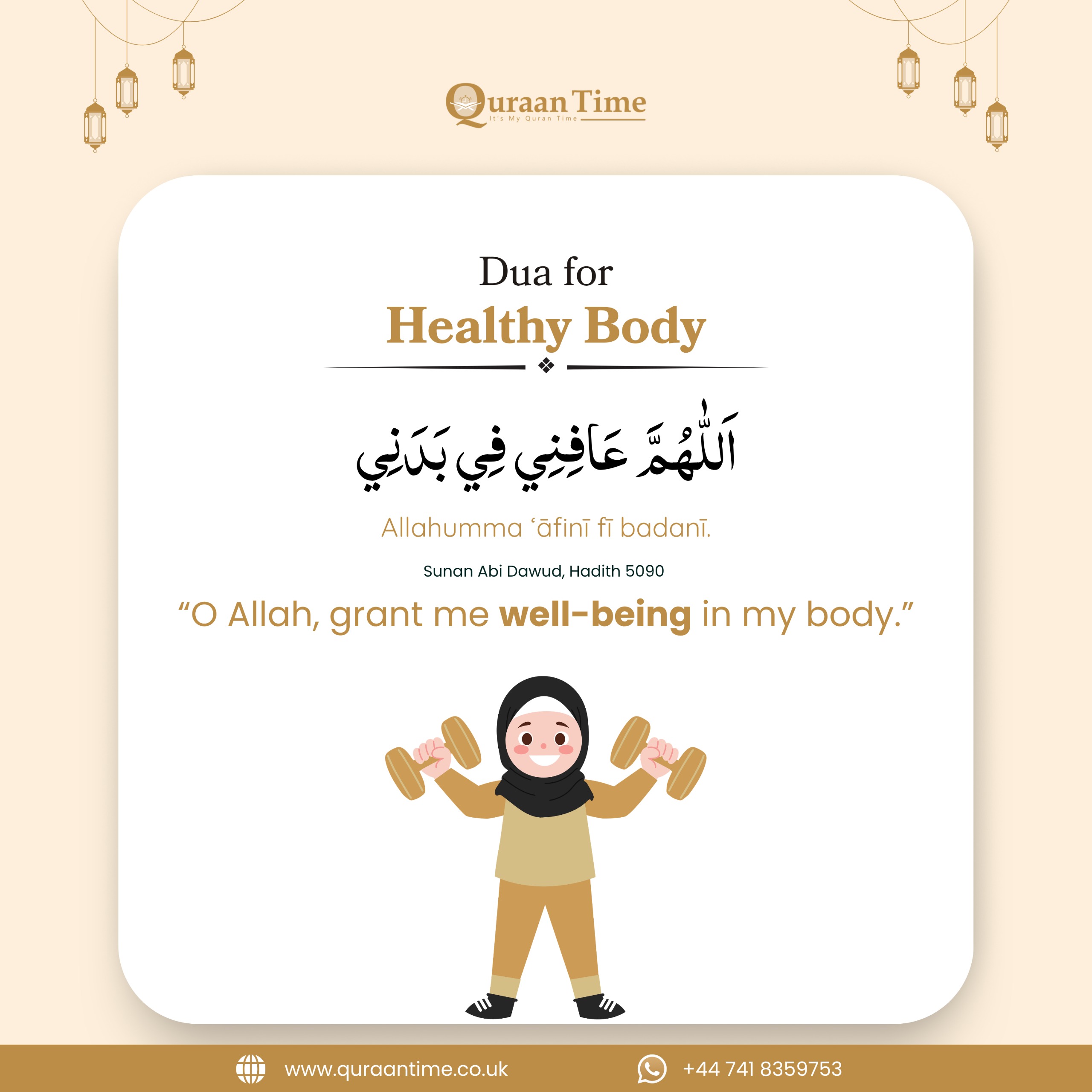
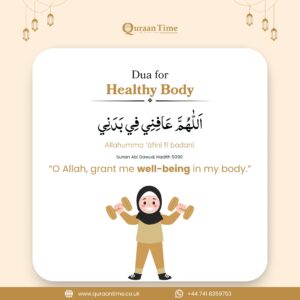
“O Allah, grant me well-being in my body.”
— Sunan Abi Dawud, Hadith 5090
Hadith Reference: Sunan Abi Dawud (5090) – The Prophet ﷺ used to recite this Dua morning and evening for protection and health.
This powerful supplication is a concise yet profound plea to the Almighty for physical well-being. It acknowledges that our bodies are trusts from Allah, and we seek His preservation from ailments, weaknesses, and disabilities. The Dua encompasses not only freedom from sickness but also the strength to perform acts of worship, earn a livelihood, and serve humanity.
Reciting “Allahumma ‘āfinī fi badanī” regularly cultivates tawakkul (reliance on Allah) while taking practical means of health. Scholars explain that ‘āfiyah (well-being) includes safety from physical and mental afflictions, soundness of limbs, and protection from sudden harm. This Dua is a shield that guards the believer from the unseen and visible dangers that threaten the body.
Imam Ibn al-Qayyim (rahimahullah) mentioned that this Dua is among the comprehensive supplications because it asks for the foundation of all goodness — a healthy body. Without health, one cannot fully engage in ibadah, family responsibilities, or community service. Therefore, teaching this Dua to children and embedding it in daily routines is a practice of the righteous.
In a world where physical and mental stresses are rampant, this Dua serves as a spiritual remedy. It aligns the heart with the Creator, reminding us that ultimate healing and preservation come from Him. When combined with medical treatments, it becomes a complete approach to wellness — trusting in Allah while using the means He has provided.
📿 Recite this Dua today0
Questions & Answers: Teachers & Parents
Teacher: “What is the exact wording of this Dua for children?”
Answer: The exact Dua is: “Allahumma ‘āfinī fi badanī” which means “O Allah, grant me well-being in my body.” It is short and easy for children to memorize.
Parent: “How often should we recite this Dua with our kids?”
Answer: Scholars recommend reciting it three times every morning and evening. It instills a habit of seeking Allah’s protection and fosters mindfulness about health.
Teacher: “Does this Dua replace medical treatment?”
Answer: Absolutely not. This Dua complements medical care. It is a spiritual act that invites Allah’s blessing, but we must also follow medical advice and take care of our bodies as a trust from Allah.
Parent: “Can we add other Duas for specific body parts?”
Answer: Yes, you can combine this with other prophetic Duas. But this particular Dua is comprehensive and covers the entire body. It is the foundation of physical well-being in Islam.
Teacher: “How can we make this Dua engaging for young students?”
Answer: You can turn it into a morning ritual, use a recitation counter (like the one above), and explain the meaning with simple stories about the Prophet’s ﷺ care for health. Repetition with understanding builds strong iman.
Reflections on this Dua: The phrase “fi badanī” (in my body) is specific, yet its implications are vast. It asks for inner and outer wellness — from the beating of the heart to the soundness of the mind. The Prophet ﷺ taught this Dua to his companions, and they would recite it with presence of heart. It is a Dua of humility, recognizing our fragility and Allah’s absolute power to heal and protect.
When parents and teachers model this Dua, children learn that health is a blessing that must be cherished and preserved through both prayer and action. It bridges the gap between the spiritual and the practical. In times of illness, this Dua becomes a source of solace and hope, reminding the believer that Allah is the ultimate Healer.
Furthermore, reciting this Dua with consistency builds a habit of gratitude. Each time we say “O Allah, grant me well-being in my body,” we acknowledge that every breath, every movement, and every moment of health is a gift that deserves thanks. This Dua is a sunnah that enriches our daily lives, making us mindful of our Creator’s mercy.