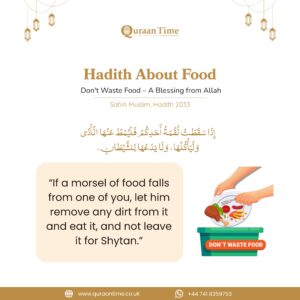


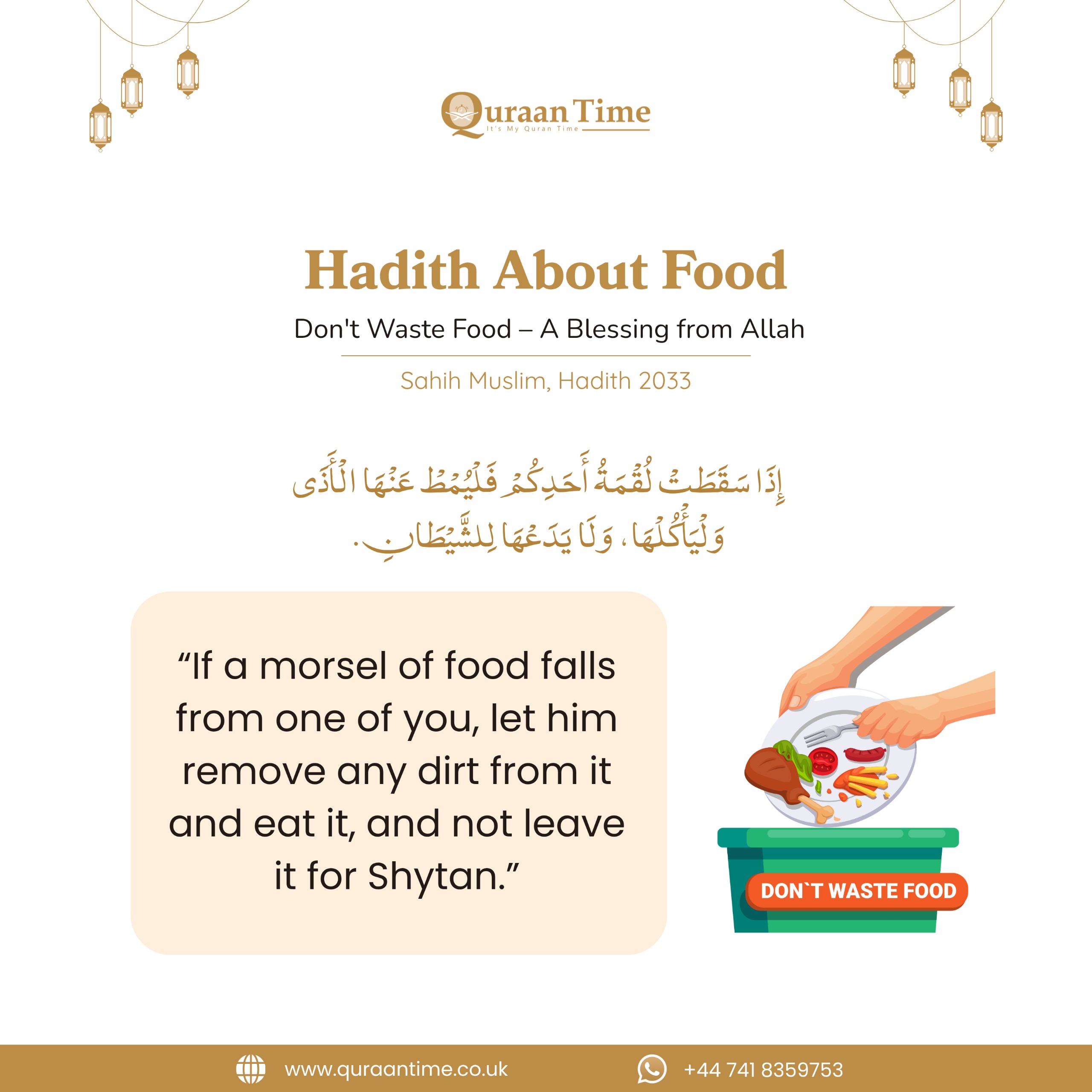
Food is a profound blessing from Allah, and the way we treat it reflects our gratitude and consciousness. In a world where millions face hunger, the prophetic guidance on food carries immense relevance. The Hadith above is not merely about hygiene or etiquette; it is a spiritual discipline that trains the soul to value every gift, no matter how small. Wasting food, even a single morsel, is discouraged not only as an economic or ecological concern but as an act that distances us from divine mercy. This article explores the depths of this teaching, its practical implications, and how teachers and parents can nurture this value in children.
The instruction to pick up a fallen morsel, clean it, and eat it carries layered meanings. Firstly, it instills humility — we are reminded that we are not above the food that sustains us. Secondly, it cultivates mindfulness; eating with awareness prevents waste and overconsumption. Thirdly, it is a form of resistance against the whispers of Shytan, who thrives on ingratitude and excess. By eating the fallen morsel, we reclaim blessings and declare that nothing from Allah’s provision is insignificant. Modern research also shows that reducing food waste lowers environmental impact, aligning perfectly with the prophetic ethos.
Moreover, this Hadith encourages a proactive attitude. It’s not just about avoiding waste but actively preserving food. The companion actions — cleaning the morsel — show that effort and care are part of faith. This teaching transforms a simple act of eating into an act of worship. When we internalize this, our relationship with food becomes sacred, and we become more conscious of our consumption patterns. It also builds resilience: we learn not to be wasteful even in abundance, a trait that defines the righteous.
Final insight: The dialogue between teachers and parents is vital because it bridges home and school. When both environments reinforce the same prophetic values, children internalize them deeply. This Hadith, though brief, is a cornerstone of Islamic eating etiquette, and its application builds character, community, and consciousness.
This teaching extends to all forms of consumption — water, energy, and time. If we can value a single morsel, we can value every resource. Scholars have noted that the Hadith subtly indicates that Shytan gains influence through wastefulness. By saving food, we reclaim our agency and affirm that Allah’s provisions are too precious to squander. In a consumerist age, this message is revolutionary. It calls us to simplicity, contentment, and active gratitude. Additionally, the act of cleaning the morsel symbolizes that even if something seems imperfect, with effort, it can be restored. This is a metaphor for our own lives — we can always turn back to Allah, clean our intentions, and become better.
Furthermore, the social dimension is powerful. When a community collectively avoids waste, surplus can be shared. The Prophet (peace be upon him) said, “He who eats his fill while his neighbor goes hungry is not a believer.” Thus, food is not just for individual consumption; it is a trust. Teaching children to save every morsel prepares them to be generous and responsible citizens. It also fosters a deep connection to the earth, as food production involves water, soil, and labor — all of which are signs of Allah’s mercy. This holistic understanding transforms a simple household act into an act of profound worship and stewardship.
“ The believer is not one who wastes, even if he is rich. Every blessing will be asked about on the Day of Judgment. ” — inspired by the prophetic ethos.
May Allah make us among those who value His blessings. My Quran Time — fostering faith through everyday actions.