
What is Islam?
A clear introduction to Islamic belief, worship, the Quran, the Prophets, the five pillars, and the beautiful purpose of life in submission to Allah.
What is Islam? Islam is the religion of worshipping Allah alone, following His guidance, and living with faith, mercy, justice, and accountability. The word Islam is connected to submission, peace, and surrender to the will of the Creator.
Muslims believe that Allah sent Prophets throughout history, including Adam, Nuh, Ibrahim, Musa, Isa, and Muhammad, peace be upon them all. The final Prophet is Muhammad ﷺ, and the Quran is the final revelation sent for guidance.
Islam is not only a set of rituals. It shapes belief, prayer, family life, manners, charity, learning, honesty, patience, and the way a person treats others. It gives human life a purpose: to know Allah, worship Him, and return to Him with a heart full of faith.
What is Islam? A Simple Definition
Islam teaches that there is no god worthy of worship except Allah, and that Muhammad ﷺ is the Messenger of Allah.
Core Belief
Worship Allah alone without partners.
Final Book
The Quran is the final revelation and guidance for mankind.
Final Prophet
Prophet Muhammad ﷺ is the final Messenger sent by Allah.
7 Powerful Truths: What is Islam?
These points help students, parents, teachers, and new learners understand the foundation of the Islamic faith.
Belief in One God
Islam begins with tawheed: Allah alone creates, provides, guides, and deserves worship.
The Quran Guides Life
The Quran teaches belief, worship, morality, law, stories, warnings, and hope.
Prophets Were Sent
Muslims honor all Prophets sent by Allah and believe they called people to worship Him alone.
The Five Pillars Matter
Shahadah, salah, zakah, fasting, and Hajj form the main acts of Islamic worship.
Character Is Worship
Honesty, mercy, patience, modesty, and justice are part of practicing Islam.
Life Has Purpose
Muslims believe life is a test and that every person will return to Allah.
The Hereafter Is Real
Belief in accountability, Paradise, and judgment gives life moral direction.
Islam Builds Community
Prayer, charity, family ties, and learning bring Muslims together in worship and service.
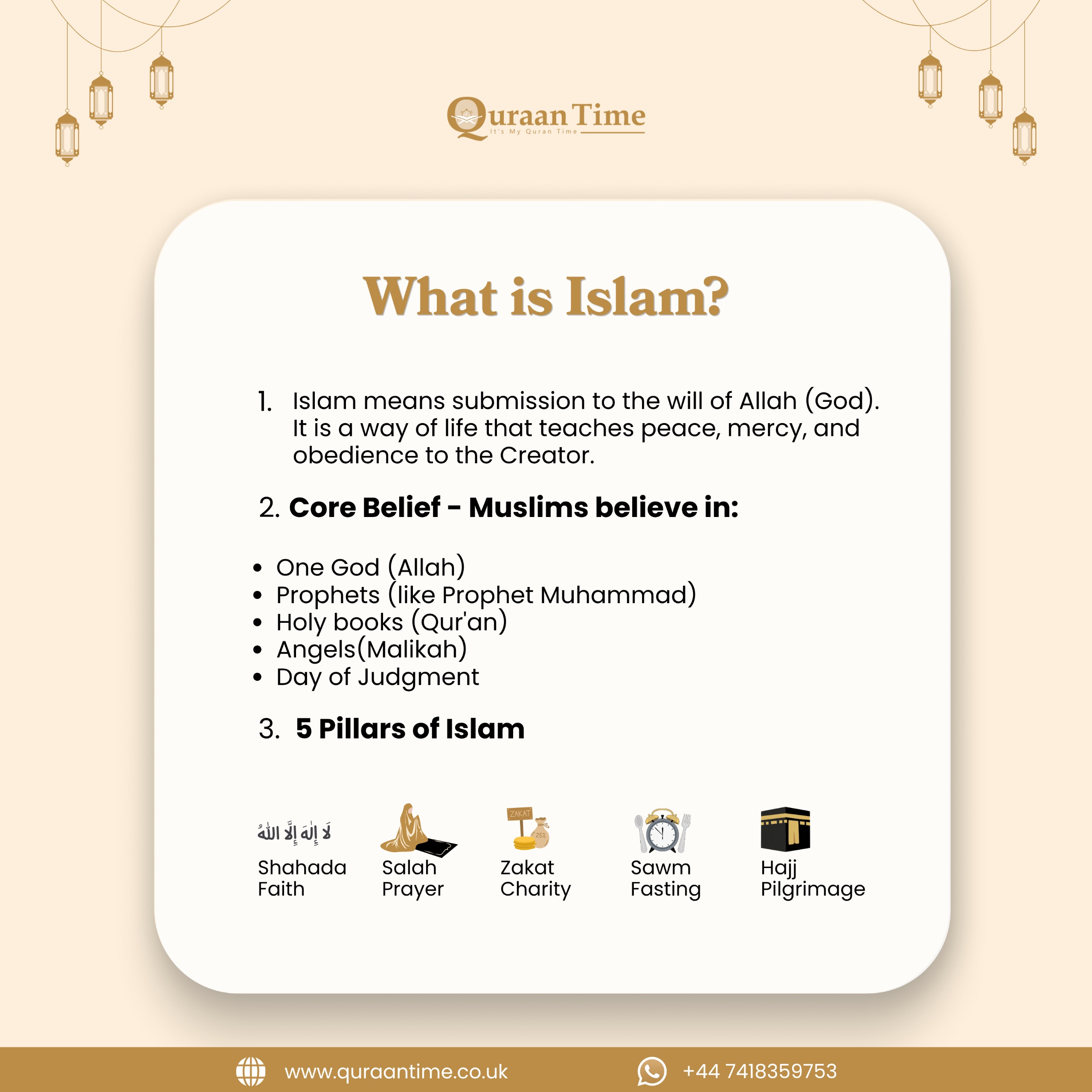
What is Islam? The Five Pillars
The five pillars are the main outward acts of worship that organize a Muslim’s life around faith and obedience.
- Shahadah: testifying that Allah alone is worthy of worship and Muhammad ﷺ is His Messenger.
- Salah: praying five daily prayers with humility and discipline.
- Zakah: giving required charity to support those in need.
- Sawm: fasting in Ramadan to build taqwa and self-control.
- Hajj: pilgrimage to Makkah for those who are able.
Islam is a complete way of life: belief in the heart, worship in action, and mercy in character.
Why Islam Matters in Daily Life
Islam gives direction to the smallest and largest parts of life. It teaches a person how to worship, how to speak, how to earn, how to give, how to forgive, and how to live with responsibility.
A Muslim does not separate faith from daily choices. Prayer builds discipline. Charity builds compassion. Fasting builds self-control. Good manners build trust. The Quran builds understanding, and the Sunnah shows how guidance looks in real life.
This is why Islam is described as a complete way of life. It gives the heart belief, the body worship, the mind knowledge, and society justice and mercy.
Parent and Teacher Q&A: What is Islam?
These simple answers help explain Islam to children, new Muslims, and classroom learners.
How do we explain Islam to children?
Say that Islam means loving Allah, worshipping Him alone, following the Prophet ﷺ, and doing good.
Is Islam only prayer?
No. Prayer is central, but Islam also includes belief, manners, charity, family, honesty, and justice.
What should beginners learn first?
Start with tawheed, the shahadah, prayer, the Quran, and the character of Prophet Muhammad ﷺ.
Authentic References for What is Islam?
Read the Quranic statement about Islam as the religion with Allah at Quran.com 3:19. You can also read the famous hadith about the pillars of Islam in Sahih al-Bukhari 8.
Final Reflection: What is Islam?
What is Islam? Islam is the path of worshipping Allah alone, following His final Messenger ﷺ, living with purpose, and preparing for the Hereafter through faith, worship, knowledge, and good character.