
Hadith of the Day
A powerful reminder that purification is not only about washing the body, but also about cleansing the heart, habits, words, and worship.
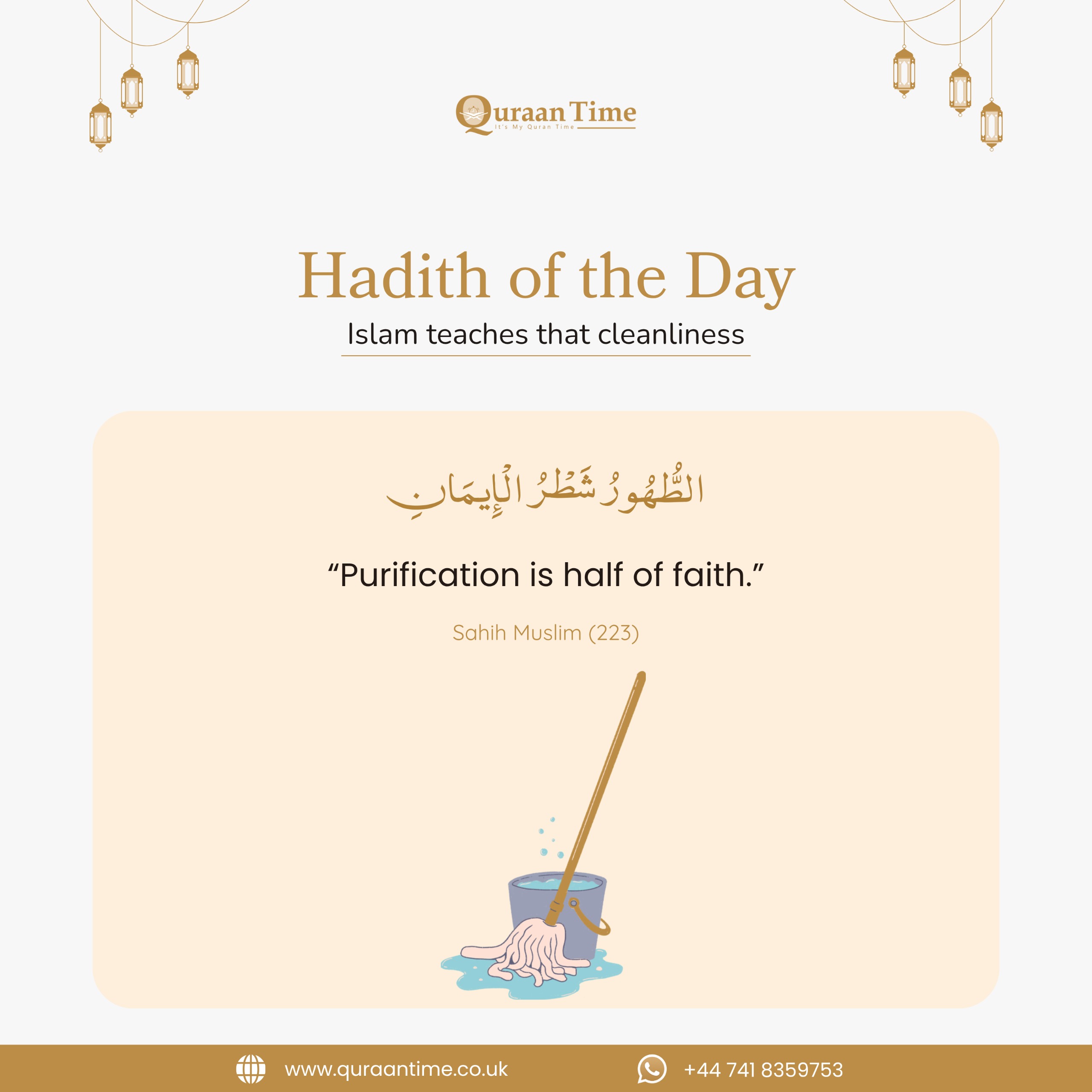
Hadith of the Day explains the famous teaching of Prophet Muhammad ﷺ: purification is half of faith. This statement shows how deeply Islam values cleanliness, purity, discipline, and spiritual preparation.
Purification includes wudu, ghusl, clean clothes, clean places of prayer, and avoiding impurity. It also points toward inner purification: removing arrogance, envy, dishonesty, hatred, and careless speech from the heart.
A Muslim does not treat cleanliness as a small matter. It is connected to salah, Quran recitation, manners, dignity, health, and love for Allah. This hadith teaches that faith is not only something spoken by the tongue; it appears in daily habits.
Hadith of the Day in English
"Purification is half of faith."
Main Meaning
Cleanliness and purity are major parts of Islamic worship and character.
Daily Practice
Make wudu carefully, keep clothes clean, and purify the heart from sin.
Hadith Source
This narration is recorded in Sahih Muslim 223.
7 Powerful Lessons from Hadith of the Day
These lessons make the hadith practical for homes, classrooms, masjids, and daily worship.
Cleanliness Is Worship
Purification prepares the believer for salah and other acts of obedience.
Wudu Builds Discipline
Repeating wudu throughout the day trains the Muslim in awareness and order.
The Heart Needs Purity
Faith grows when arrogance, envy, lying, and hatred are removed from the heart.
Prayer Deserves Preparation
Clean clothes, a clean body, and a clean place show respect for meeting Allah.
Children Learn Through Routine
Teaching wudu early helps children connect cleanliness with worship.
Purity Protects Dignity
Islamic cleanliness supports health, confidence, and respectful community life.
Faith Is Practical
This hadith shows that Islam connects belief with daily physical habits.
Begin with Wudu
A careful wudu can turn an ordinary moment into preparation for worship.
How to Apply This Hadith of the Day
Purification becomes meaningful when it changes daily behavior, not only when it is studied as a rule.
- Make wudu with calmness instead of rushing through the steps.
- Keep prayer clothes, prayer mats, and prayer spaces clean.
- Teach children the order and meaning of wudu with patience.
- Clean the heart by making istighfar and avoiding harmful speech.
- Remember that inner purity matters alongside outer cleanliness.
True purification washes the limbs for prayer and trains the heart to stand before Allah with humility.
Why Purification Matters in Daily Life
Purification shapes the rhythm of a Muslim’s day. Before salah, the believer washes and prepares. This repeated routine reminds the heart that worship deserves attention, order, and respect.
Cleanliness also affects how Muslims live with others. A clean home, clean clothes, and clean habits bring comfort to the family and dignity to the community. Islam does not separate worship from daily manners.
Inner purification is just as important. A person may have clean clothes but still carry envy, pride, or anger. This hadith encourages Muslims to work on both: the body that prays and the heart that turns to Allah.
Parent and Teacher Q&A on Hadith of the Day
This hadith is ideal for teaching children because it connects faith with a daily routine they can practice.
How can children understand purification?
Explain that Muslims clean the body for worship and clean the heart by choosing good actions.
Is purification only wudu?
No. Wudu is important, but purification also includes ghusl, clean spaces, clean clothes, and a clean heart.
How can families practice it?
Make wudu before salah together, keep a clean prayer area, and teach children to respect cleanliness.
Authentic References for Hadith of the Day
Read the narration in Sahih Muslim 223. You can also reflect on Quranic guidance about purification at Quran.com 5:6.
Final Reflection on Hadith of the Day
Hadith of the Day teaches that purification is a path to stronger faith. Keep the body clean, prepare beautifully for salah, and ask Allah to purify the heart from everything that weakens iman.