Prophetic Tradition (Hadith): The Messenger of Allah (peace be upon him) said:
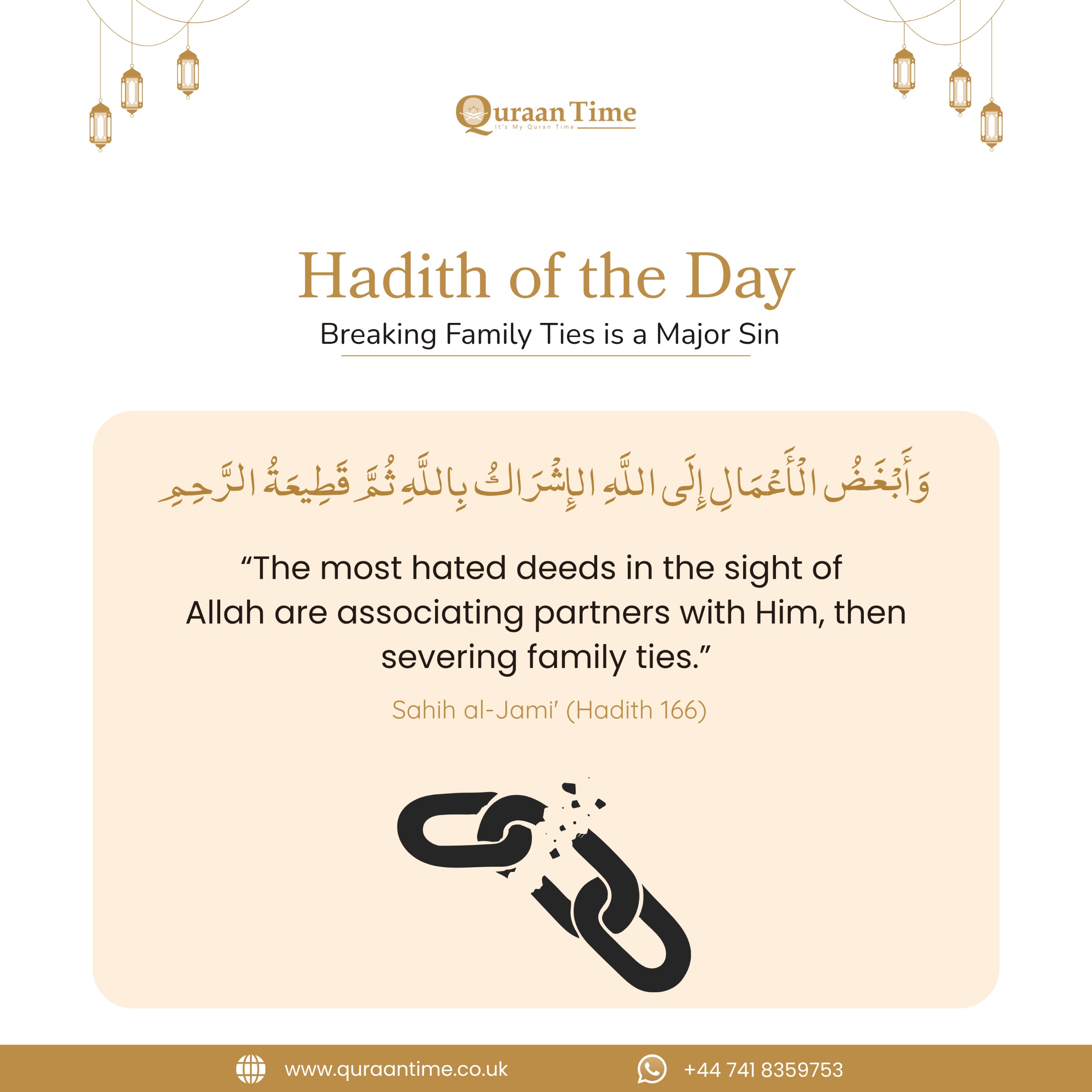
“The most hated deeds in the sight of Allah are associating partners with Him (shirk), then severing family ties (qat’ ar-rahim).”
— narrated in Sahih al-Jami‘ (Hadith 166), authenticated by Al-Albani
The Weight of Severing Ties in Islam
In the rich tapestry of Islamic ethics, kinship (Silat ar-Rahim) occupies a station only second to the belief in Allah’s Oneness. The above hadith, classified as authentic (Sahih), reveals the gravity of breaking family bonds. The word “Rahim” stems from “Rahm” (womb), signifying the sacred blood relation that Allah Himself protects. This tradition teaches that after the enormity of shirk (associating partners with the Creator), no sin is more loathsome to Allah than deliberately cutting off relatives. The neglect of parents, brothers, sisters, uncles, aunts, or even distant cousins without valid Islamic reason leads to divine displeasure, spiritual darkness, and societal fragmentation.
Modern life, with its fast-paced distractions and fleeting grudges, often silently fosters estrangement. Yet, Islam elevates reconciliation to an act of profound worship. The Prophet (ﷺ) said: “The one who maintains ties is not the one who reciprocates, but the one who reaches out when relatives cut him off.” This redefines strength not as retaliation, but as magnanimous initiative. Severing ties is not limited to total abandonment; it also includes neglecting visits, avoiding calls, failing to inquire about family well-being, or harboring persistent enmity. Scholars highlight that “hateful deeds” here means acts that earn Allah’s wrath and distance a person from His mercy.
Did you know? Maintaining kinship ties increases provision (rizq), lengthens life in blessings, and removes hardships. Conversely, severing family ties blocks mercy and invites punishment in this world and the Hereafter.
The consequences are spelled out in additional narrations: “No sin is more deserving of Allah hastening the punishment upon its doer in this world – in addition to what is stored for him in the Hereafter – than oppression and severing family ties.” (Sunan Abi Dawood). Therefore, the hadith reminds us that the very fabric of an upright community rests upon healthy familial bonds. From an Islamic psychological viewpoint, a person who severs ties often suffers from pride, unresolved trauma, or material selfishness. The cure lies in humility, sincere intention for Allah’s pleasure, and small consistent steps to restore contact — even with a greeting, a gift, or a prayer for them.
Practical Steps to Strengthen Family Ties
First, renew your intention (niyyah) solely for Allah. Second, start with the closest relatives – parents, then siblings, then extended kin. Third, forgive past offences, knowing that Allah loves those who pardon. Fourth, use modern tools: a phone call, a message, or a visit, but ensure it’s consistent. Even if the other party is hostile, the Muslim is rewarded for the mere attempt. Fifth, make du'a (supplication) for your family by name. The Prophet said: ‘The mercy of Allah does not descend upon a people among whom there is one who severs ties.’ So recommit today: send a prayer, ask about their health, or share a meal. This simple act transforms hearts and invokes divine blessings.
Teachers & Parents Dialogue: Nurturing Family Bonds
Teacher Umm Khalid: “What is the most effective way to explain the severity of severing ties to young children without frightening them?”
Parent, Brother Ahmad: “We can use the analogy of a tree — roots represent family. When a branch is cut, the whole tree suffers. Relate it to the hadith: Allah loves those who keep family close, just like we love it when siblings share toys and speak kindly. Positive reinforcement encourages children to greet relatives, even virtually.”
Teacher Sr. Fatima: “In our school, I notice some students don’t know their cousins or grandparents because of family disputes. How can a parent begin mending those ties Islamically?”
Parent, Abu Zayd: “Start small: make a sincere dua during tahajjud. Then send a simple gift or a plate of food with a child’s drawing. The Prophet (ﷺ) recommended gifts, for they remove rancor. Also, teach children that reaching out does not mean accepting abuse; but for the sake of Allah, we initiate goodness. As parents and teachers, we model forgiveness by talking well of absent relatives.”
Teacher Huda: “What if a family member is toxic and harms the family? Does Islam still obligate maintaining ties?”
Parent Consultant, Laila: “Scholars differentiate between maintaining ties (silat ar-rahim) and exposing oneself to harm. You are not required to endure physical or emotional abuse. But you must keep a thread of connection – such as sending salaam via a third person, making dua for them, or helping them indirectly. Cutting all communication entirely is prohibited. However, one can set boundaries while still acknowledging the relationship. This upholds the spirit of the hadith.”
Teacher Yusuf: “Practical homework for parents and children to strengthen kinship?”
Parent & Educator, Sister Maryam: “Start a ‘Family Tree Friday’ each week—call or write to one relative. Younger kids can draw pictures, older kids can interview an elder relative about family history. Challenge each family member to perform one act of silat ar-rahim daily, even just a kind text message. Then share the reward and discuss the Hadith.”
Scholarly deep-dive: Ruling on those who abandon relatives
Ibn Hajar Al-Asqalani (rahimahullah) explained that “severing ties” includes not just physical avoidance but also refusing to speak, neglecting financial assistance if needed, or failing to show basic compassion. The sin is magnified if one cuts ties over trivial worldly reasons. Repentance requires reestablishing contact, acknowledging the wrong, and resolving to maintain ties for Allah. The companions feared this sin so much that they would send small gifts even to non-Muslim relatives. This shows the comprehensive mercy of Islamic law. This hadith (Al-Jami' 166) is a powerful reminder that no believer should underestimate the spiritual ruin caused by broken family bonds.