

Dua for Protection From Opressors
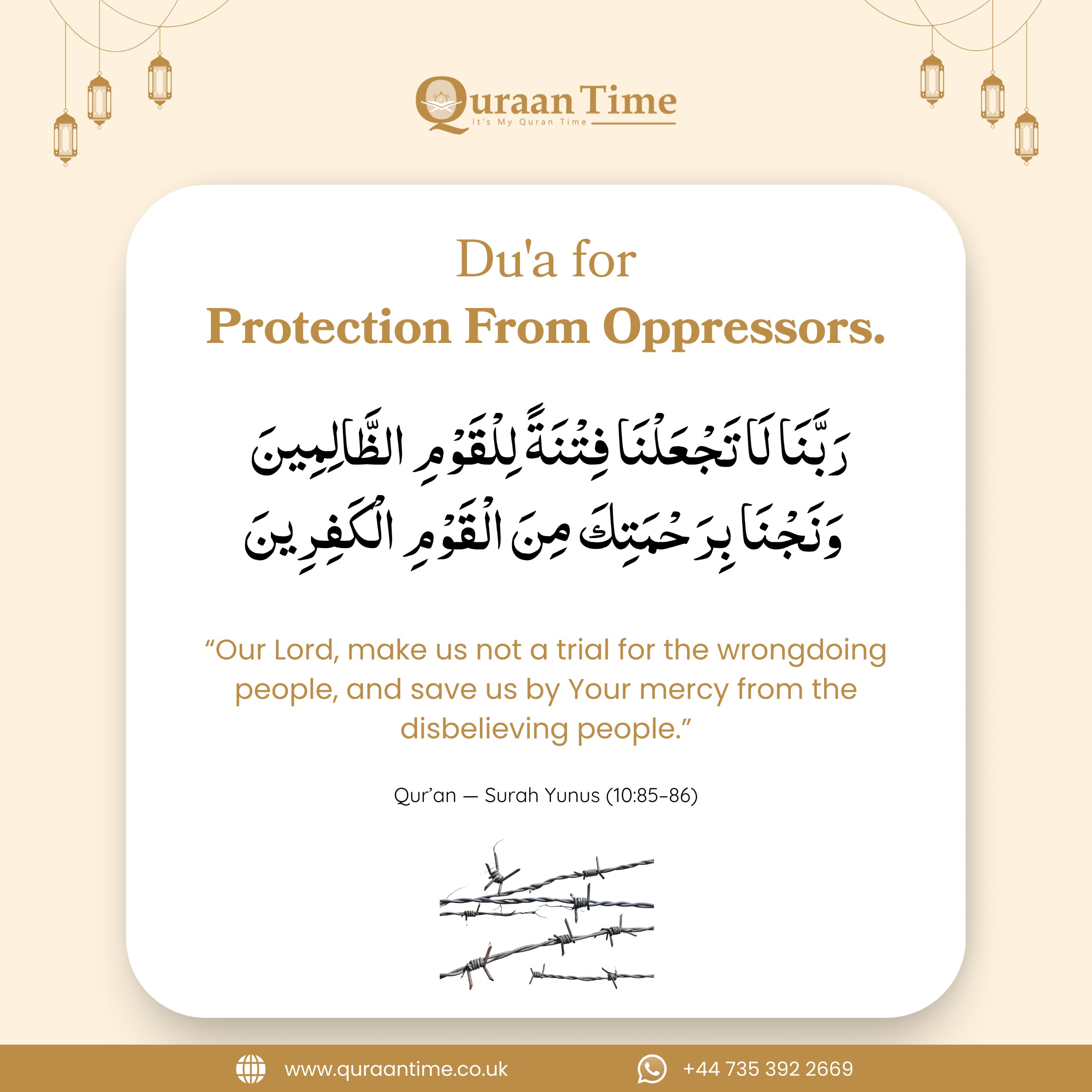
Dua for Protection From Oppressors
A Divine Supplication for Safety and Spiritual Resilience
Understanding This Powerful Supplication
This profound dua, recited by the believers of Prophet Musa (Moses) when facing Pharaoh's tyranny, represents a timeless plea for divine protection against oppression. The supplication combines two essential requests: first, to not become a trial or source of misguidance for oppressors, and second, to be delivered from their harm through Allah's mercy.
In today's world, where various forms of oppression manifest physically, emotionally, and spiritually, this dua serves as a spiritual shield. The first part acknowledges the believers' vulnerability and asks Allah to prevent their situation from becoming a misleading test for others. The second part directly seeks deliverance from those who reject truth and justice.
Historical Context and Significance
The dua originates from a critical moment in Islamic history when a small group of believers faced the world's most powerful tyrant. Pharaoh represented not just political oppression but also spiritual arrogance and denial of divine truth. By invoking this supplication, the believers demonstrated complete reliance on Allah rather than their own limited resources.
This historical context makes the dua particularly relevant for contemporary believers facing various forms of oppression, whether institutional, social, or personal. It teaches that true protection comes from spiritual connection rather than mere physical defense.
Spiritual Benefits of Regular Recitation
- Spiritual Protection: Creates a metaphysical shield against negative influences and oppressors
- Inner Peace: Reduces anxiety and fear by transferring reliance to the Divine
- Divine Connection: Strengthens relationship with Allah through conscious dependence
- Moral Clarity: Helps maintain righteousness even in challenging circumstances
- Community Solidarity: When recited collectively, fosters unity among believers facing common challenges
- Historical Continuity: Connects contemporary believers with the legacy of earlier prophets and their followers
Questions & Answers: Teachers and Parents Discuss
Teacher Response: Introduce the dua as a "spiritual superhero shield." Explain that just as superheroes have special protection, believers have this powerful prayer. Create a story around Prophet Musa and Pharaoh that children can relate to, emphasizing how the believers were protected despite Pharaoh's power. Practice recitation together daily, especially before school.
Parent Perspective: We made it part of our morning routine. Before leaving for school, we recite it together and visualize a protective light surrounding our children. We also discuss what "oppression" means in child-friendly terms - like when someone uses their size or popularity to hurt others. The key is connecting the dua to their actual experiences while keeping it age-appropriate.
Islamic Scholar Input: This phrase contains profound wisdom. It recognizes that oppressed believers could potentially become a "fitnah" (trial) for oppressors in several ways: Their suffering might harden oppressors' hearts further, their response might provoke worse oppression, or their situation might be misinterpreted by observers. Essentially, it's asking Allah to manage the entire situation - including how oppressors perceive and react to believers - not just to remove the oppression.
Practical Application: In modern contexts, this means praying not only for deliverance from difficult people or situations but also that our conduct during trials doesn't inadvertently strengthen their misguidance or provide excuses for their behavior.
Counselor Perspective: Absolutely. The dua's power extends beyond physical protection. Emotional and psychological oppression can be equally damaging. Reciting this supplication helps victims recognize that the injustice they face is not a reflection of their worth but a test. It externalizes the problem appropriately - identifying the oppressor's behavior as wrong while maintaining the victim's dignity.
Community Leader View: We've incorporated this dua in support groups for people facing workplace discrimination, domestic issues, and social injustice. The collective recitation creates solidarity and reminds participants that their struggle has spiritual dimensions and solutions beyond merely legal or social remedies.
Islamic Guidance: While there's no fixed number, traditional practice suggests reciting it:
- Morning and evening (part of daily adhkar)
- After each of the five daily prayers
- When feeling particularly vulnerable or threatened
- When witnessing injustice against others
Consistency matters more than quantity. Even once daily with full presence of heart is more beneficial than rapid repetition without contemplation.
Psychological Benefit: Regular recitation creates a "protective mindset" that reduces chronic stress in oppressive environments. The ritual itself provides psychological stability amidst uncertainty.
Practical Implementation in Daily Life
Integrating this dua into your spiritual practice requires both consistency and conscious reflection. Consider these approaches:
1. Personal Protection Ritual: Recite upon leaving home, visualizing divine protection surrounding you throughout the day.
2. Family Practice: Gather family members for brief morning sessions, discussing current challenges and how this dua applies.
3. Community Support: Share the dua with those facing difficulties, creating networks of spiritual support.
4. Reflective Journaling: After recitation, note feelings, insights, or changes in your situation to recognize divine response.
This ancient supplication carries timeless power for contemporary challenges. Whether facing personal difficulties, societal injustice, or spiritual tests, connecting with this dua creates both internal resilience and divine protection. Start by reciting it once daily with understanding and presence of heart, observing its transformative impact on your perspective and situation.
Important Considerations
While this dua provides spiritual protection, it complements rather than replaces practical measures. Islamic teaching emphasizes both tawakkul (reliance on Allah) and takleef (taking appropriate action). Those facing oppression should seek both spiritual and practical solutions, including legal recourse, community support, and personal safety measures where necessary.
The dua's ultimate goal isn't merely removal of difficulty but spiritual growth through trials. As the Quran states in Surah Al-Baqarah (2:286): "Allah does not burden a soul beyond what it can bear." This supplication helps believers navigate their capacity with divine assistance.
For further guidance on Islamic supplications and spiritual protection:
Quraan Time UK | www.quraantime.co.uk | +44 735 392 2669