

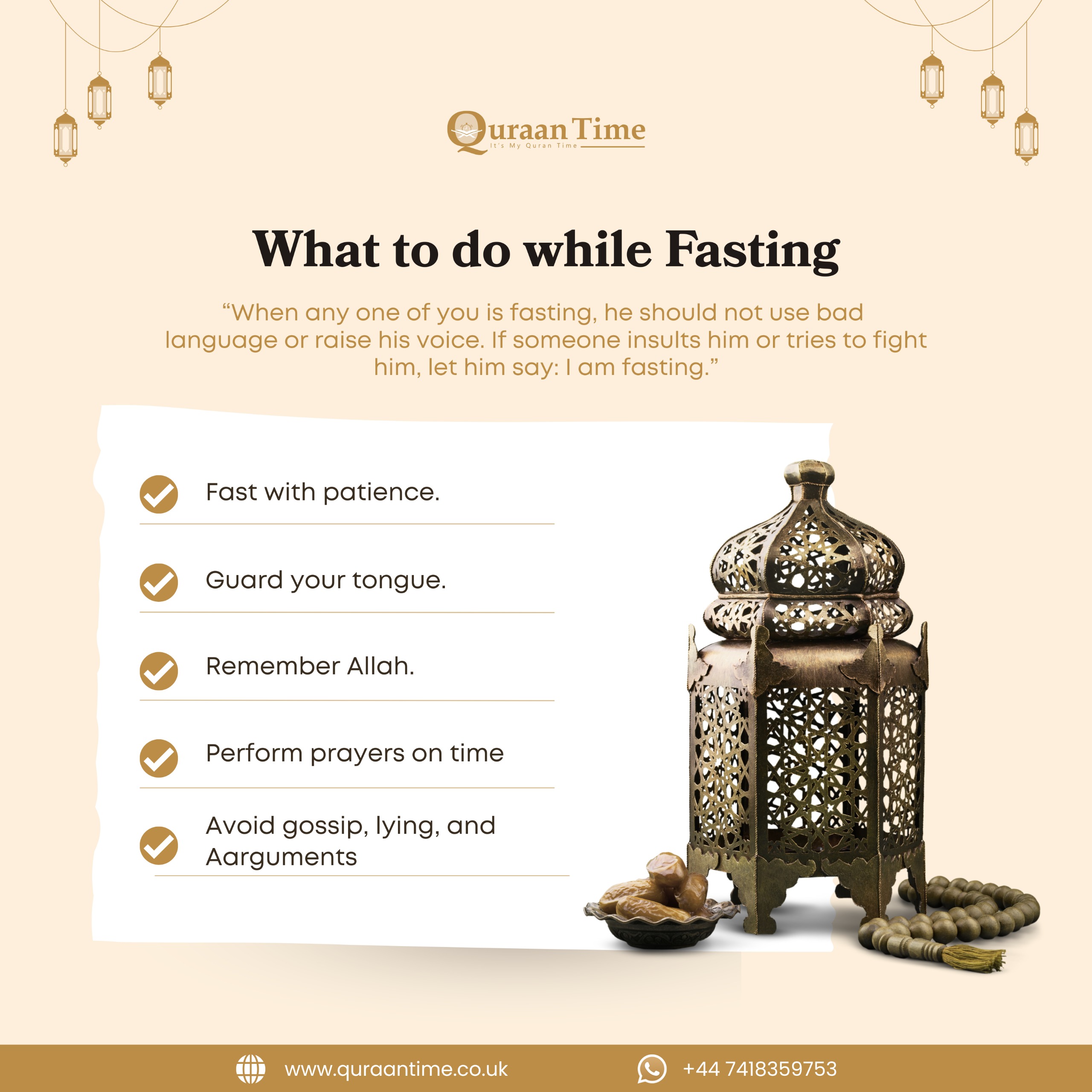
What to do while Fasting

What to do while Fasting

What to Do While Fasting: A Comprehensive Spiritual Guide

Elevating Your Fast Beyond Abstinence - A Journey of Spiritual Growth and Self-Discipline

"When any one of you is fasting, he should not use bad language or raise his voice. If someone insults him or tries to fight him, let him say: I am fasting."

- Prophetic Guidance on Fasting Etiquette

1Fast with Patience

Fasting is not merely about abstaining from food and drink; it's a comprehensive exercise in patience. The hunger and thirst you feel are constant reminders to practice restraint in all aspects of life.

Patience during fasting means maintaining composure when tired, responding gently when provoked, and enduring discomfort without complaint. This practice builds emotional resilience that extends far beyond the fasting period.

2Guard Your Tongue

The tongue can break a fast spiritually even if the physical fast remains intact. Guarding your speech means avoiding gossip, lies, hurtful words, and unnecessary arguments.

When fasting, every word should be measured. If you feel compelled to speak, ask: Is it true? Is it necessary? Is it kind? This practice transforms fasting from a physical exercise into a comprehensive spiritual purification.

3Remember Allah

Fasting is fundamentally an act of worship, and conscious remembrance elevates it from mere abstinence to spiritual connection. Increase your remembrance through prayer, reflection, and gratitude throughout the fasting day.

Use moments of hunger as triggers for remembrance. Each time you feel the pangs of hunger, let it remind you of your purpose and the countless blessings you normally enjoy.

Essential Practices During Fasting

  • Perform prayers on time with focused devotion
  • Avoid gossip, backbiting, and unnecessary talk
  • Speak only what is beneficial or remain silent
  • Increase charity and acts of kindness
  • Read and reflect on spiritual texts
  • Control anger and respond with gentleness
  • Express gratitude for blessings
  • Seek forgiveness and forgive others

Fasting Questions: Teachers & Parents Dialogue

How can I help my child understand the purpose of fasting beyond just not eating?

Teacher's Response: Begin by explaining fasting as a special training program for our souls. Compare it to athletes training for a competition - they strengthen their bodies, while fasting strengthens our self-control and kindness muscles.

Practical Approach: Create a "kindness chart" alongside the fasting calendar. For each day of fasting, have your child perform one act of kindness (sharing toys, helping with chores, saying kind words). This helps them connect fasting with positive behavior change.

Parent's Experience: "We started a 'fasting gratitude journal' where our children write one thing they're grateful for each fasting day. This shifted focus from what they're missing to what they have."

My child gets irritable while fasting. How should we handle this?

Teacher's Response: Irritability is a normal part of the fasting experience, especially for beginners. It actually provides a teaching moment about self-awareness and emotional regulation.

Practical Approach: Teach children the "fasting response" technique: When they feel irritable, they say "I am fasting" (as mentioned in the teaching) and take three deep breaths. This creates a pause between the feeling and the reaction.

Parent's Experience: "We created a calm-down corner with quiet activities for when our daughter feels fasting-related irritability. After a few minutes of coloring or reading, she usually regains composure."

How can we make fasting a positive family experience rather than a difficult obligation?

Teacher's Response: Transform fasting from an individual obligation to a shared spiritual journey. The family that fasts together grows together in patience and empathy.

Practical Approach: Establish special family fasting traditions: pre-dawn meals together, shared afternoon prayers, collective iftar preparation, and post-iftar family reflection time. Create a "family fasting achievement board" to celebrate milestones.

Parent's Experience: "We started 'fasting story time' where we share stories of patience and perseverance during our iftar meal. The children now associate fasting with family bonding rather than deprivation."

What are age-appropriate expectations for children who are fasting?

Teacher's Response: Fasting should be introduced gradually according to a child's physical and emotional readiness, not simply by age. The focus should be on understanding rather than endurance in the early years.

Practical Approach: For young children (5-7): Fast for half a day or until lunchtime. For pre-teens (8-12): Fast full days but with parental discretion based on health and stamina. For teens (13+): Encourage full fasting with emphasis on spiritual aspects.

Parent's Experience: "We let our children choose their fasting goals each year. This gives them ownership and makes them more committed. Some years they focus on 'no complaining,' other years on 'helping others' alongside the physical fast."