Understanding What Distracts Us from the Hereafter
In our pursuit of worldly success and comfort, we often fall into traps that distract us from our ultimate purpose. These traps, whispered by Shaytan, make temporary pleasures seem everlasting while obscuring the eternal reality of the afterlife. This article explores these spiritual pitfalls and offers guidance for maintaining focus on what truly matters.
1
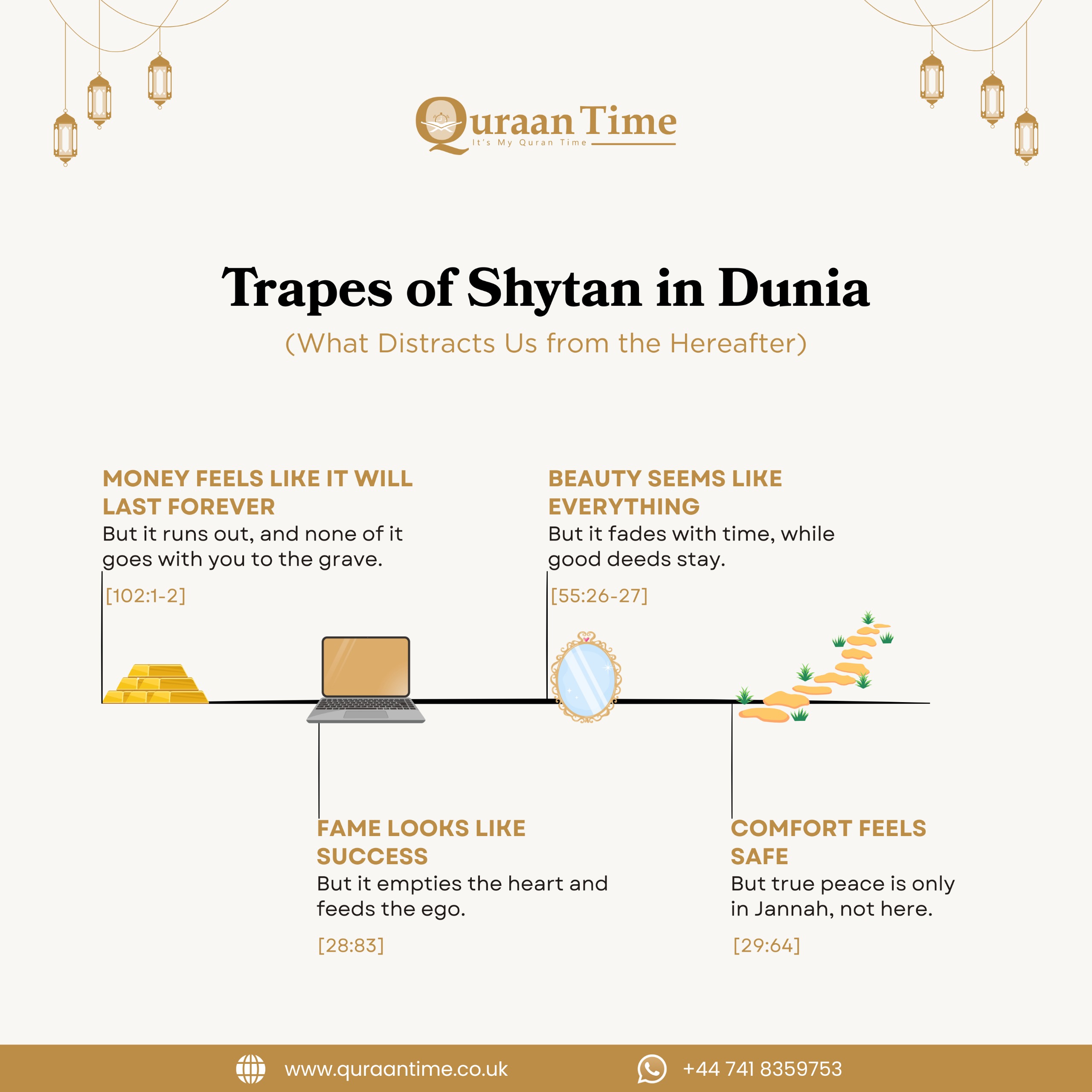
Money Feels Like It Will Last Forever
We chase wealth as if it will provide eternal security, investing our time and energy in accumulating material possessions. Yet this pursuit often leaves us empty, constantly wanting more while neglecting spiritual growth.
"Competition in [worldly] increase diverts you until you visit the graves." (Quran 102:1-2)
The reality is that wealth is temporary. It cannot accompany us beyond death, and our accounting in the hereafter will be based on how we earned and spent it, not how much we accumulated.
Practical protection: Develop a balanced approach to wealth by:
Regular charity (even small amounts)
Mindful spending that aligns with Islamic principles
Regular remembrance that all provision comes from Allah
Investing in good deeds that yield eternal rewards
2
Beauty Seems Like Everything
Society places immense value on physical appearance, promoting it as a source of confidence, success, and happiness. This focus leads to vanity, excessive concern with others' opinions, and neglect of inner character development.
"Everyone upon the earth will perish, and there will remain the Face of your Lord, Owner of Majesty and Honor." (Quran 55:26-27)
Physical beauty is fleeting, diminishing with age, while the beauty of good character and righteous deeds endures. The most valued beauty in Allah's sight is the beauty of piety and moral excellence.
Focus on eternal beauty:
Develop taqwa (God-consciousness) as true adornment
Invest in beautifying your character through patience, kindness, and honesty
Remember that Allah looks at hearts and deeds, not outward appearances
Appreciate beauty as a sign of Allah's creation without making it an idol
3
Fame Looks Like Success
In the age of social media, fame and recognition have become primary goals for many. We seek validation through likes, followers, and public acknowledgment, mistaking visibility for significance and popularity for success.
"That home of the Hereafter We assign to those who do not desire exaltedness upon the earth or corruption." (Quran 28:83)
True success lies in humility and sincerity, not in being known or praised by people. The pursuit of fame often corrupts intentions and distances us from Allah's pleasure, which should be our ultimate goal.
Avoid the fame trap by:
Checking your intentions regularly - are you doing things for Allah or for people's praise?
Valuing anonymous good deeds as more protective of sincerity
Understanding that true honor comes only from Allah
Finding contentment in Allah's knowledge of your deeds rather than public recognition
4
Comfort Feels Safe
We naturally seek ease, security, and predictability, building comfortable lives that shield us from hardship. While Islam doesn't require asceticism, excessive attachment to comfort can make us spiritually complacent and unwilling to strive in Allah's cause.
"And this worldly life is not but diversion and amusement. And indeed, the home of the Hereafter is truly the life, if only they knew." (Quran 29:64)
True peace and security are found only in Jannah, not in worldly comfort. Trials and hardships are often catalysts for spiritual growth, while excessive comfort can lead to forgetfulness of our ultimate return to Allah.
Balance comfort with spiritual vigilance:
Regularly step out of your comfort zone for Allah's sake
Practice gratitude for blessings without becoming attached to them
Remember that this life is a test, not a destination
Develop contentment with what you have while striving for the hereafter
Questions from Parents & Answers from Teachers
How can I teach my children about the temporariness of wealth without making them feel insecure?
Focus on teaching balance - wealth is a blessing from Allah that we should be grateful for, but not something we should worship or believe will last forever. Use age-appropriate examples: "Just like your favorite toy eventually breaks or you outgrow your clothes, money and things don't last forever. But being kind, honest, and helping others - those good deeds stay with you always." Teach them the concept of rizq (provision) coming from Allah, which creates security in His promise rather than in money itself.
- Parent of three children aged 7, 10, and 13
My teenager is obsessed with social media and seeking validation online. How can I help them understand the trap of fame?
First, acknowledge the reality of their world without dismissing it. Then gently guide them to reflect: "How do you feel when you get many likes versus when you get few? Is that feeling lasting?" Introduce the Islamic concept of sincerity (ikhlas) - doing things purely for Allah's pleasure. Share stories of the Prophet's companions who did great deeds without seeking recognition. Encourage them to do one good deed anonymously each week and reflect on how that feels compared to public validation.
- Concerned parent of a 15-year-old
In a world that celebrates physical beauty, how do I help my daughters develop healthy self-image while understanding it's temporary?
Complement them on their character more than their appearance. Say "I'm so proud of your honesty" as often as "you look nice." Teach them about great Muslim women known for their knowledge, courage, and faith, not primarily their physical appearance. Discuss how the body changes naturally with age, but good character only deepens. Most importantly, model this yourself by not obsessing over mirrors, weight, or aging signs, but rather focusing on developing your own character.
- Mother of two teenage daughters
We live a comfortable life, and I worry my children won't develop resilience. How can I introduce healthy challenges without removing necessary comforts?
You don't need to remove comforts to build resilience. Create small challenges: fasting occasional Sunnah days together, volunteering in less comfortable environments, taking on a physical challenge like a hike, or reducing screen time for a week. Use these experiences to discuss how temporary discomfort can strengthen us. Share stories of the Prophet and companions who had both times of ease and hardship, maintaining faith through all circumstances.