

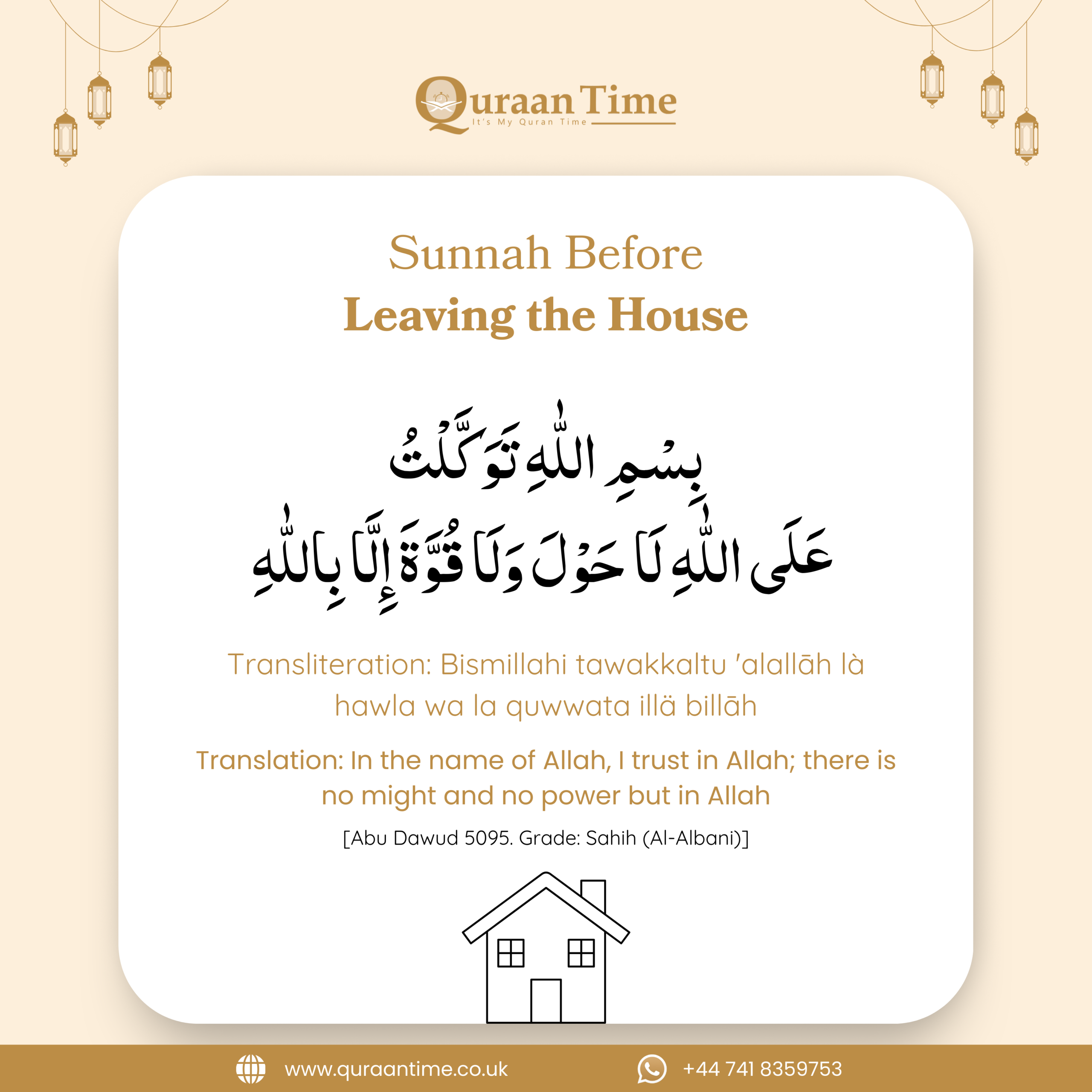
Incorporating the Sunnah into our daily routines transforms mundane activities into opportunities for spiritual growth and divine connection. The practice of reciting a specific supplication when leaving home is more than just a ritual; it's a conscious acknowledgment of our dependence on Allah and a means of seeking His protection in a world filled with unseen dangers and challenges.
This article explores the comprehensive understanding of this important Sunnah, its significance, benefits, and practical implementation in modern life. We'll also address common questions from parents and teachers about teaching this practice to children and integrating it into family life.
Making this Sunnah a consistent habit requires intention and practice. Consider these practical tips:
1. Place visual reminders near your door – a beautiful calligraphy of the dua can serve as both decoration and reminder.
2. Teach family members to recite it together when leaving, transforming it into a family practice.
3. Connect the dua with an existing habit (like putting on shoes or grabbing keys) to build consistency.
4. Understand the meaning deeply so the words come from the heart, not just the tongue.
This is a common challenge. Try these strategies:
1. Create a "leaving routine" that includes the dua as a non-negotiable step, just like putting on shoes.
2. Place an attractive reminder at child's eye level near the door - perhaps with colorful Arabic calligraphy.
3. Practice together for the first few minutes after waking up, making it part of morning preparation.
4. Use positive reinforcement - praise them when they remember, and gently remind when they forget.
5. Share stories of how the Prophet (pbuh) and companions practiced this Sunnah.
Integrating this Sunnah into curriculum can be done through:
1. Interactive lessons that explore the meaning of each word in the dua.
2. Creative projects where students design their own reminder cards or posters.
3. Role-playing activities demonstrating the before-leaving routine.
4. Connection to broader concepts like tawakkul (trust in Allah) and remembrance of Allah (dhikr).
5. Encourage implementation by having students track their practice and share experiences.
6. Include parental involvement through take-home materials that help families practice together.
If you remember after leaving, you should still recite the dua. The Prophet (pbuh) taught us that the supplication is for protection throughout our journey outside the home. While it's best to recite it at the moment of leaving, reciting it later when you remember still brings benefit. The key is the intention and remembrance of Allah. Use the moment of remembering as an opportunity to make dhikr and reconnect with Allah's presence in your day.
With teenagers, focus on the psychological and spiritual benefits they can relate to:
1. Discuss the concept of mindfulness - the dua helps them be present and intentional as they start their day.
2. Connect it to real-world concerns - talk about how seeking Allah's protection is relevant in today's world.
3. Use analogies they understand - compare it to putting on "spiritual armor" before facing daily challenges.
4. Encourage critical thinking - have them research and present on the benefits of daily spiritual practices.
5. Share modern testimonies of how this practice has helped people in challenging situations.
Note: While the dua mentioned above is the most authentic and commonly cited supplication for leaving the house, there are other narrations with similar meanings. The essence remains the same: seeking Allah's protection, placing trust in Him, and acknowledging that all power belongs to Him alone.
Incorporate this beautiful Sunnah into your daily routine and experience the spiritual benefits. Share this practice with your family and community to spread the blessings.
Download Printable Reminder Card