
Learn when to stop, when to continue, and when to pause in your Quran recitation. Simple explanations for every Muslim seeking perfect tajweed.
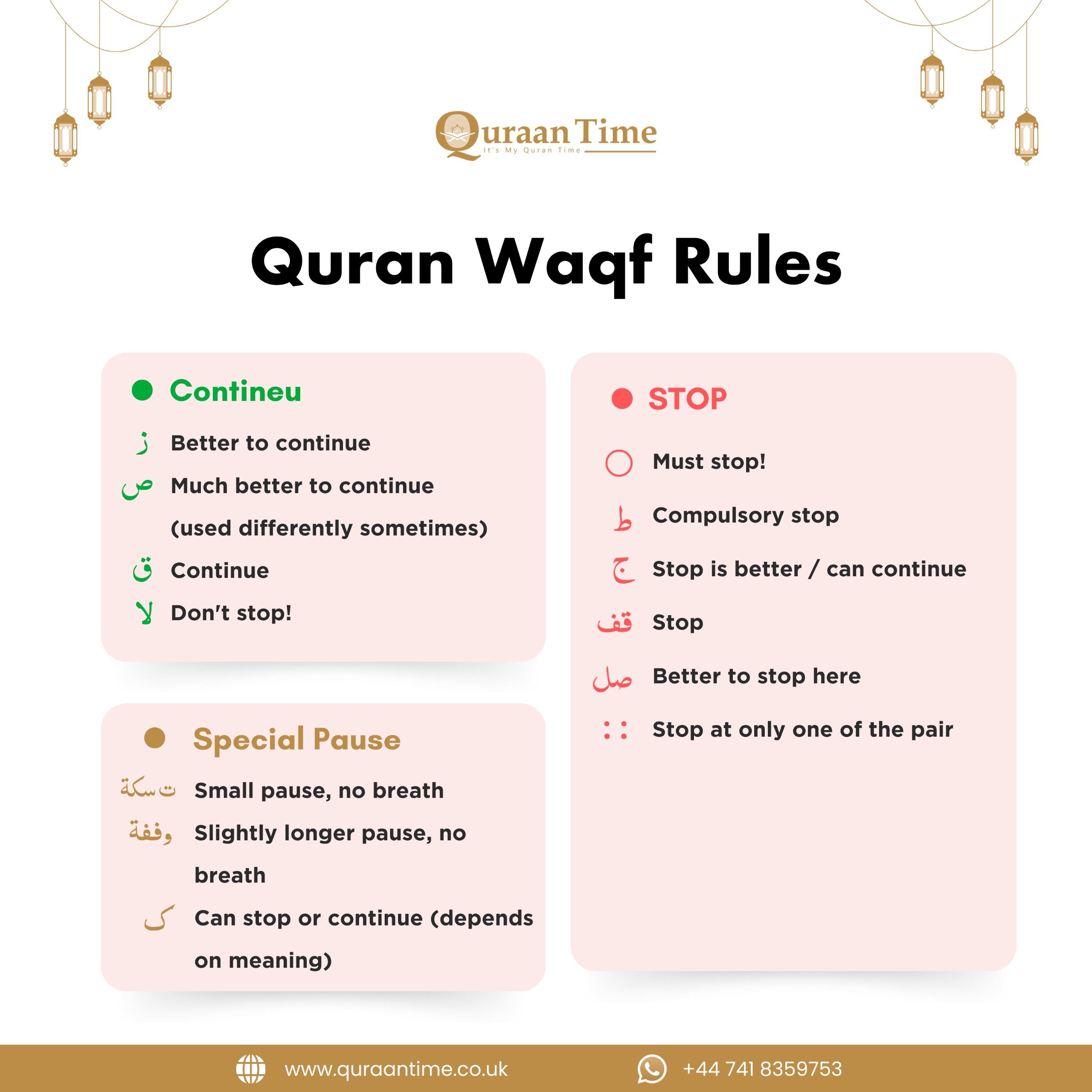
Waqf rules (وقف) are the stopping and pausing rules in Quran recitation. Think of them as punctuation marks for the Quran. Just as commas and periods help us understand sentences in English, waqf rules help us understand verses in the Quran correctly.
When you follow these rules, you protect the meaning of Allah's words. A wrong stop can change the entire message. This guide explains each rule in simple language so anyone can understand and apply them.
These rules tell you when you should keep reading without stopping. They're like green traffic lights for your recitation.
These are the "yellow lights" - not full stops, but moments where you hesitate slightly.
The "red lights" of Quran recitation. These tell you where to stop completely.
Parent: My child is 8 years old. Should I teach all these rules at once?
+Teacher: No, start simple. First teach just three: Must Stop (⏹), Continue (→), and Small Pause (⏸). Once they master these, add one new rule every two weeks. Children learn best step by step. Make it a game - "Find the red light stops today!"
Parent: What if I make a mistake and stop where I should continue?
+Teacher: Allah is Most Merciful. If you realize your mistake, simply go back to where you should have continued and read correctly. The key is to try your best. Even scholars sometimes pause differently based on interpretation. What matters is your intention to recite properly.
Parent: How long should I pause at a "Slightly Longer Pause"?
+Teacher: About 1-2 seconds, but don't count. Feel the natural break. It should be long enough to separate ideas but short enough that the listener knows you're continuing. Practice by reading this sentence with a pause: "And remember your Lord... when you forget." See how the pause adds meaning?
Parent: Are these rules the same in every Quran print?
+Teacher: 95% yes, but some prints use slightly different symbols. The Mushaf Madinah (the green one) is standard worldwide. If you're learning, use that version. The rules themselves never change - Allah's words are protected. Only the symbols representing them might look different.
Parent: Can I listen to a reciter to learn these rules?
+Teacher: Absolutely! Listen to Sheikh Al-Husary or Sheikh Abdul Basit. Follow along in your Quran. Mark where they stop and pause. This is called "shadow learning" and it's very effective. But also learn the theory so you understand WHY they stop where they do.
Remember: Learning Quran is a journey. Don't be hard on yourself if you make mistakes. Every effort to learn Allah's book properly is rewarded immensely. Start with one rule today, add another tomorrow. Consistency beats perfection.
May Allah make the Quran the spring of our hearts, the light of our chests, and the remover of our sadness.