
Hadith of the Day

Hadith of the Day

Hadith of the Day

The True Meaning of Bravery

Today's Featured Hadith

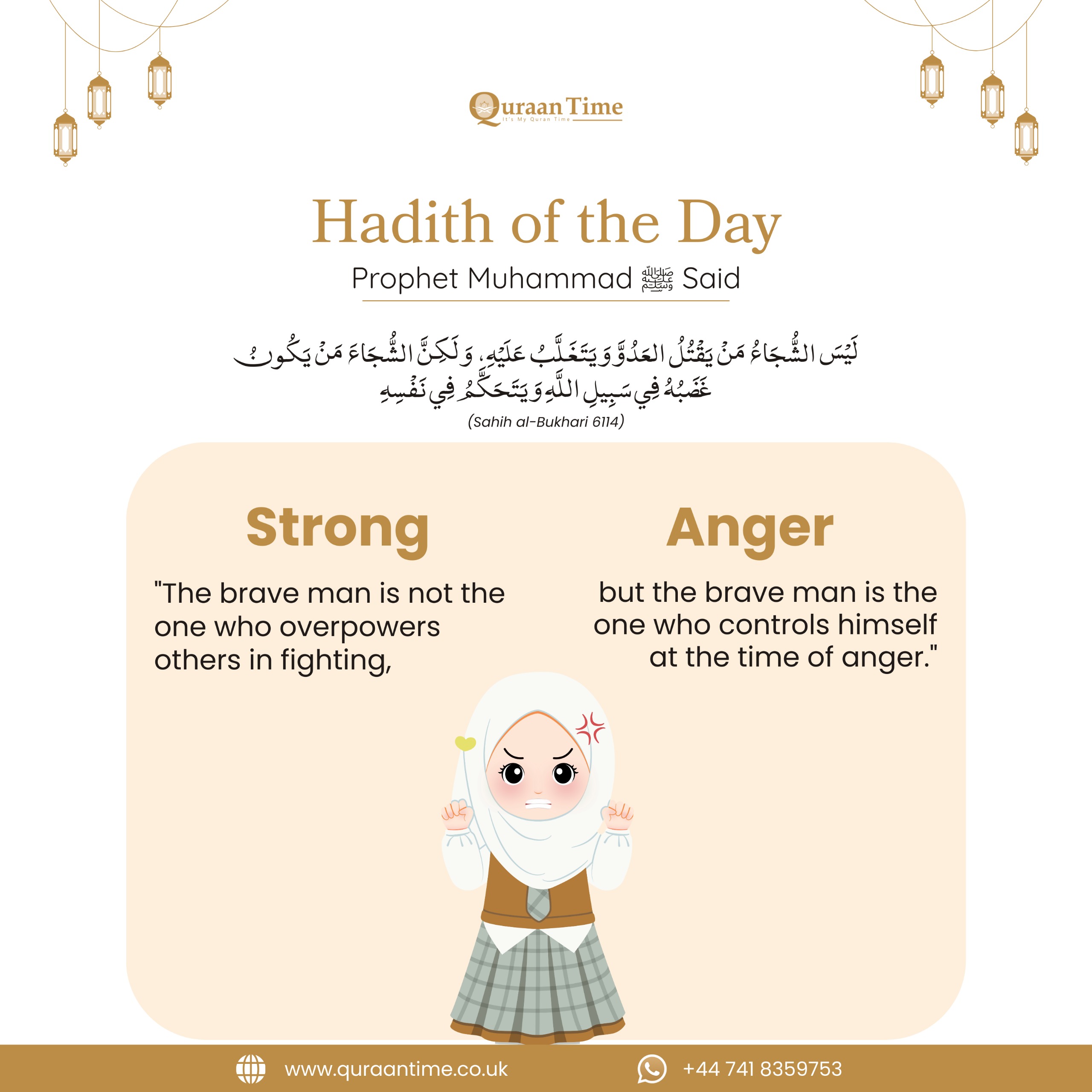
عَنْ أَبِي هُرَيْرَةَ رَضِيَ اللَّهُ عَنْهُ، عَنِ النَّبِيِّ صَلَّى اللَّهُ عَلَيْهِ وَسَلَّمَ قَالَ: لَيْسَ الشَّدِيدُ بِالصُّرَعَةِ، إِنَّمَا الشَّدِيدُ الَّذِي يَمْلِكُ نَفْسَهُ عِنْدَ الْغَضَبِ
Abu Huraira reported: The Prophet Muhammad, peace and blessings be upon him, said, "The strong are not the best wrestlers. Verily, the strong are only those who control themselves when they are angry."
Sahih al-Bukhari 6114
Key Insight:
This profound hadith redefines the concept of strength, shifting the focus from physical power to moral and spiritual fortitude. True strength lies in self-mastery, particularly in moments of intense emotion.

Understanding the Hadith

In a world that often celebrates physical prowess and outward displays of power, this hadith offers a transformative perspective. Prophet Muhammad (ﷺ) redirects our understanding of strength from external dominance to internal control.

The Arabic term "الشَّدِيدُ" (ash-shadeed) traditionally refers to someone of great physical strength. However, the Prophet redefines it to mean one who has mastery over their own self, particularly during moments of anger or provocation.

This teaching aligns with the broader Islamic principle that the greater jihad (struggle) is the struggle against one's own base desires and impulses. It emphasizes that the most challenging and significant battles are fought within the human soul.

Practical Application:
This hadith encourages us to develop emotional intelligence and self-regulation. In practical terms, it means pausing before reacting in anger, choosing thoughtful responses over impulsive reactions, and maintaining dignity in difficult situations.

Interactive Learning

Explore different hadiths and test your understanding with these interactive features.

Questions & Answers: Teachers and Parents Discussion

How can we teach children the true meaning of strength according to this hadith?
Start by modeling self-control yourself. When children see adults managing their anger appropriately, they learn by example. Praise children not just for physical achievements but for moments when they show patience, forgive others, or control their temper. Use stories from the Seerah that demonstrate the Prophet's patience in difficult situations.
What are some practical exercises to develop this type of inner strength?
The "pause and reflect" technique is effective: when angry, take three deep breaths before responding. Encourage journaling about emotional triggers. Practice mindfulness and remembering Allah in moments of agitation. The Prophet advised saying "A'udhu billahi min ash-shaytan ir-rajim" (I seek refuge in Allah from Satan) when angry, which creates a mental break.
How does this understanding of strength differ from modern cultural messages?
Modern culture often equates strength with dominance, assertiveness, and never showing vulnerability. This hadith teaches that true strength is shown in restraint, mercy, and self-control. While society might celebrate "winning" an argument, Islam celebrates maintaining relationships through patience and forbearance.
Can this teaching be applied in school environments?
Absolutely. Schools can implement conflict resolution programs that emphasize self-control over physical confrontation. Teachers can recognize and reward students who demonstrate emotional regulation. Classroom discussions can explore historical figures who showed strength through patience rather than violence.