

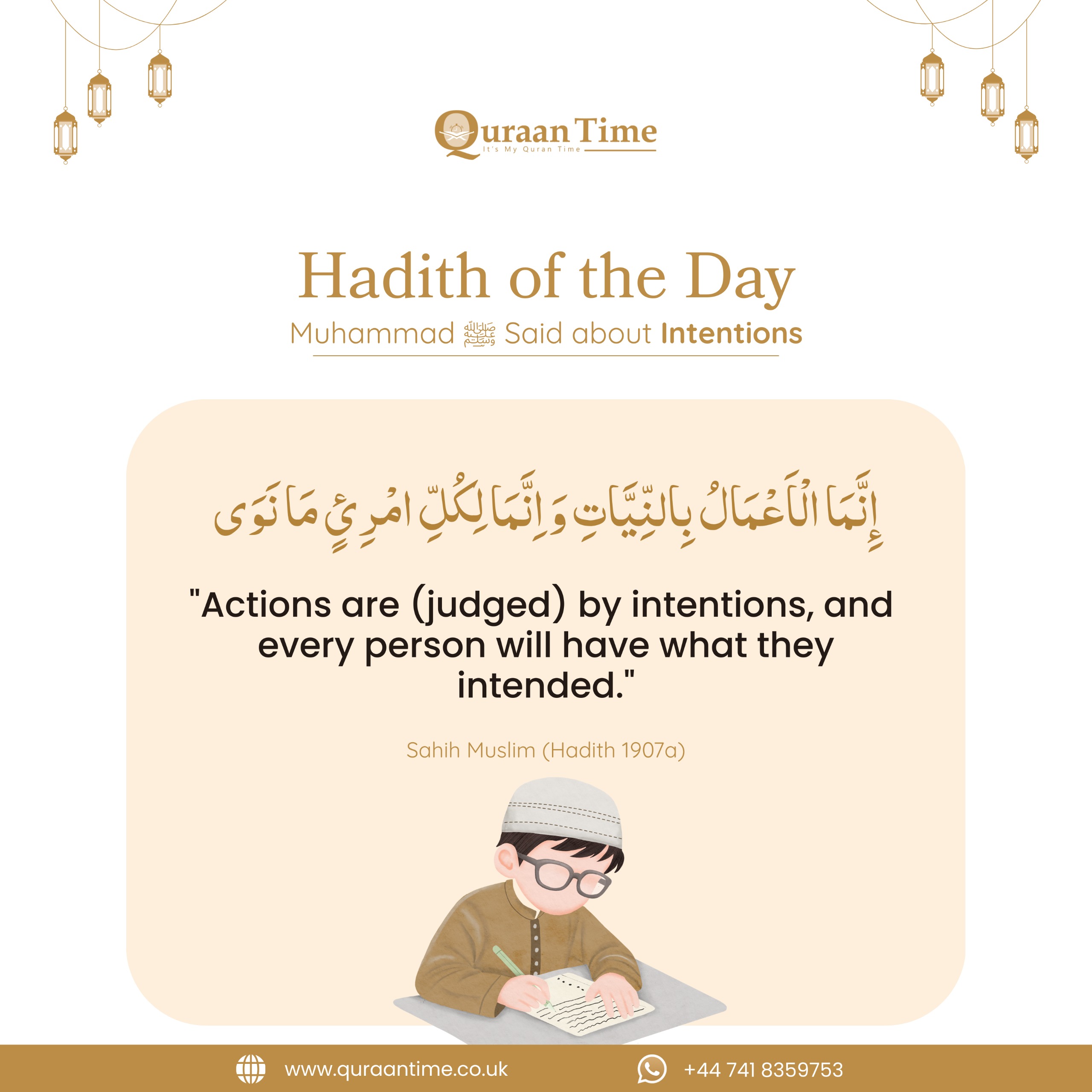
An in-depth exploration of one of the most fundamental teachings of Prophet Muhammad ﷺ - that actions are judged by intentions, and their spiritual significance in daily Muslim life.
In the rich tapestry of Islamic teachings, certain hadiths stand out for their profound depth and universal applicability. Among these, the hadith about intentions holds a special place, often considered one-third of Islamic knowledge due to its comprehensive nature.
This seemingly simple statement encapsulates a complete framework for ethical and spiritual living. It was narrated by Umar ibn al-Khattab (may Allah be pleased with him) and serves as a foundational principle that touches every aspect of a Muslim's life, from worship to social interactions, from business dealings to personal development.
This hadith was delivered during the Hijrah (migration) from Makkah to Madinah, a pivotal moment in Islamic history. It addresses a specific incident while establishing a universal principle. The Prophet ﷺ emphasized that the value of migration is not in the physical movement itself, but in the intention behind it - whether it was for Allah and His Messenger or for worldly gains.
Scholars throughout Islamic history have placed immense importance on this hadith. Imam Al-Shafi'i remarked that this hadith encompasses seventy chapters of Islamic jurisprudence. Its position as often the first hadith in many collections is not coincidental but intentional, signaling that proper intention must precede all actions.
Understanding intentions transforms routine activities into acts of worship. When a Muslim eats with the intention of strengthening their body to worship Allah, eating becomes an act of worship. When they work with the intention of providing halal sustenance for their family, their work becomes worship. This hadith teaches us that the spiritual value of actions is determined not by their outward form alone but by the inner state of the heart.
Parents and teachers often discuss how to practically implement this teaching. Below are some common dialogues that occur in Islamic educational settings:
Teacher's Response: Start with simple examples they understand. When they share a toy, ask "Are you sharing to make your friend happy and please Allah?" When they study, remind them "This knowledge will help you become better Muslims." Reinforce that good intentions make ordinary actions special. Use age-appropriate stories from the Prophet's life and the Sahabah to illustrate the power of intention.
Parent's Insight: At home, we make it a habit to verbally state intentions before certain activities. Before eating: "We eat to have strength to worship Allah." Before going to school: "I go to learn what Allah created." This verbalization helps internalize the concept. We also praise the intention, not just the action - "What a beautiful intention you had!"
Teacher's Response: Scholars distinguish between the initial intention and what occurs during the action. The general principle is that you are rewarded based on your initial sincere intention. If a wrong intention intrudes, one should dismiss it and return to the original pure intention. The struggle against showing off or seeking praise is itself a form of jihad (struggle) that brings reward.
Parent's Insight: We teach children that intentions can be like seeds - you plant a good seed (pure intention), and even if weeds try to grow (impure thoughts), you keep tending to the good plant. The important thing is to recognize when our focus shifts and gently bring it back to Allah. This awareness itself is spiritual growth.
Teacher's Response: This teaching is profoundly connected to mindfulness in Islam. Setting intentions requires presence of heart and awareness of Allah. It protects against autopilot living where actions lose meaning. When we constantly check our intentions, we remain connected to our purpose as worshippers of Allah, which provides psychological stability and reduces anxiety about worldly outcomes.
Parent's Insight: In our family, we've found that discussing intentions reduces stress about results. When a child doesn't win a competition but had the intention to do their best for Allah's pleasure, they find contentment. This teaching builds resilience - our worth isn't determined by outcomes but by our sincere efforts directed toward Allah.
Teacher's Response: While sincere intentions increase the value of actions, they don't replace the need for proper performance according to Islamic guidelines. A good intention to pray doesn't replace actually praying. However, with sincere intention, imperfect actions out of genuine effort are rewarded by Allah's mercy. The key is striving to perfect both intention and action.
Parent's Insight: We emphasize both: "Try your best in action, and purify your heart in intention." When children make mistakes in worship (like mispronouncing Arabic), we reassure them that Allah knows their sincere intention to worship correctly and rewards their effort. This balanced approach prevents either complacency or despair.
The concept of niyyah (intention) elevates mundane activities to spiritual exercises. It creates a continuous awareness of Allah throughout the day, transforming the entire life of a Muslim into an act of worship. This teaching liberates believers from the anxiety of results - when intentions are pure for Allah's sake, the outcome is in His hands, and whatever He decrees is accepted with contentment.
In contemporary times, where distraction and superficiality often dominate, this hadith offers a profound antidote: depth through intentionality. Each action, no matter how small, becomes meaningful when connected to the Divine. The daily renewal of intention becomes a spiritual practice that continually aligns the heart with its ultimate purpose: the pleasure of Allah.
This article is part of our "Hadith of the Day" series dedicated to exploring Islamic teachings in practical, contemporary contexts. For more resources or to discuss implementing these teachings in educational settings, visit www.quraantime.co.uk or contact +44 741 8359753.
© Quran Time Islamic Education. All content is based on authentic Islamic sources and scholarly consensus.