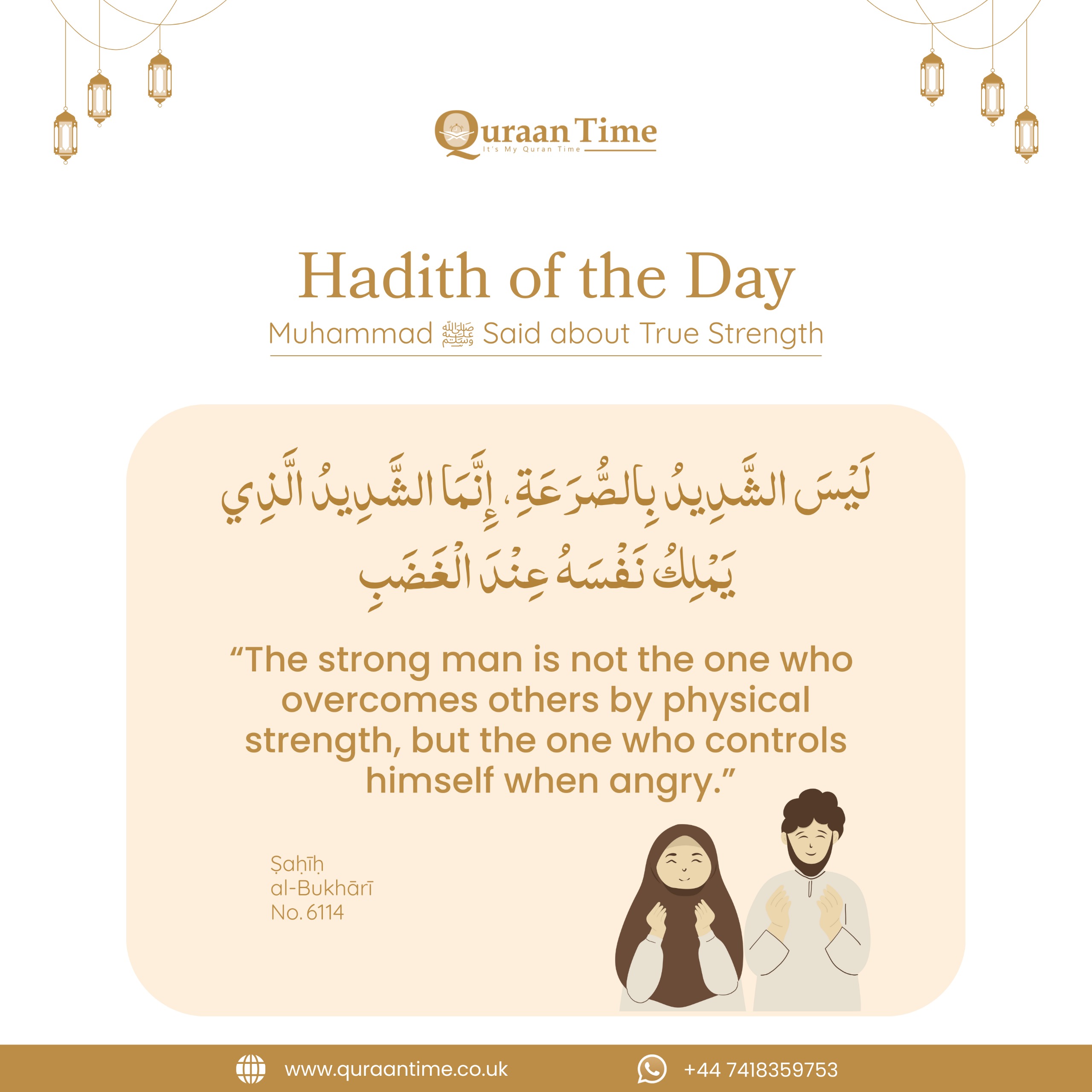
لَيْسَ الشَّدِيدُ بِالصُّرَعَةِ، إِنَّمَا الشَّدِيدُ الَّذِي يَمْلِكُ نَفْسَهُ عِنْدَ الْغَضَبِ
"The strong man is not the one who overcomes others by physical strength, but the one who controls himself when angry."
Sahih al-Bukhari, No. 6114
This profound hadith from Prophet Muhammad (peace be upon him) revolutionizes our understanding of strength. In a world that often celebrates physical power and dominance, the Prophet redefines true strength as self-mastery and emotional intelligence.
The Meaning Behind the Hadith
The Arabic term "Ash-Shadid" (الشَّدِيد) typically means "the strong" or "the powerful." However, the Prophet redirects this concept from external dominance to internal control. The real test of strength, according to this teaching, occurs in moments of emotional turmoil when every instinct might push toward reaction rather than reflection.
This teaching aligns with the Quranic principle: "Those who restrain anger and pardon people - and Allah loves the doers of good." (Quran 3:134)
Benefits of Controlling Anger
- Spiritual Elevation: Controlling anger brings one closer to Allah and follows the example of the Prophets
- Better Relationships: Prevents damage to family bonds, friendships, and community harmony
- Mental Peace: Reduces stress and anxiety associated with uncontrolled emotions
- Improved Decision Making: Allows for rational thinking rather than emotional reactions
- Social Respect: Earns genuine respect from others through demonstrated self-control
- Physical Health: Reduces negative health impacts of chronic anger and stress
Questions and Answers About Controlling Anger
Parent: How can I explain this concept of strength to my children who see superheroes as the ideal of strength?
Teacher: This is an excellent opportunity to redefine heroism. Explain that real superheroes are those who control their emotions. You can use examples from the Prophet's life - how he remained patient when people hurt him. Contrast this with superheroes who often solve problems through violence. Emphasize that controlling anger requires more courage than fighting, and that's what makes someone truly strong in Allah's eyes.
Parent: What practical steps did the Prophet recommend for controlling anger?
Teacher: The Prophet gave several practical recommendations: change your physical position (if standing, sit down; if sitting, lie down), perform wudu (ablution), seek refuge in Allah from Satan, and remain silent. He also taught that saying "I seek refuge with Allah from Satan, the accursed" helps calm anger. These actions create a pause between the trigger and response, allowing reason to overcome emotion.
Parent: Is all anger considered bad in Islam?
Teacher: Not at all. There's a distinction between praiseworthy and blameworthy anger. The Prophet himself showed anger when Allah's commandments were violated or justice was trampled. This is "righteous anger" - anger for the sake of Allah. What's condemned is anger arising from personal ego, pride, or when our desires are frustrated. The key is whether the anger serves truth and justice or merely satisfies the self.
Parent: How can we develop this quality of controlling anger in our daily lives?
Teacher: Start with self-awareness - recognize your anger triggers. Practice the Prophet's recommendations consistently. Develop empathy by considering why others might be acting certain ways. Increase remembrance of Allah (dhikr) throughout the day, as this creates a spiritual buffer. Also, reflect on the consequences of uncontrolled anger - both in this world and the hereafter. Like any skill, it requires consistent practice and sincere dua.
Parent: What if we fail to control our anger? How should we seek forgiveness?
Teacher: First, seek forgiveness from Allah immediately with sincere repentance. Then, if your anger harmed others, seek their forgiveness directly. The Prophet said: "Whoever has wronged his brother concerning his honor or something, let him ask for his pardon today before there will be no dinar nor dirham." This shows the importance of repairing human relationships. Remember that struggling with anger is part of human nature - what matters is continuous effort and repentance.
Practical Tips for Implementing This Hadith
1. The Pause Principle: When angry, consciously pause and count to ten before responding.
2. Make Dua: Regularly ask Allah to help you control your anger.
3. Seek Coolness: Literally cool yourself with water - the Prophet recommended ablution.
4. Change Position: Follow the Sunnah by changing your physical position.
5. Reflect on Consequences: Remember the damage anger can cause to relationships and your own soul.
6. Practice Empathy: Try to understand the other person's perspective.
7. Seek Islamic Knowledge: Understanding Islam's teachings on patience increases motivation to practice it.
The hadith about true strength teaches us that real power lies not in dominating others, but in mastering ourselves. By learning to control our anger, we embody the Islamic virtues of patience, mercy, and self-discipline that Prophet Muhammad exemplified throughout his life. May Allah make us among those who control their anger and pardon people.