

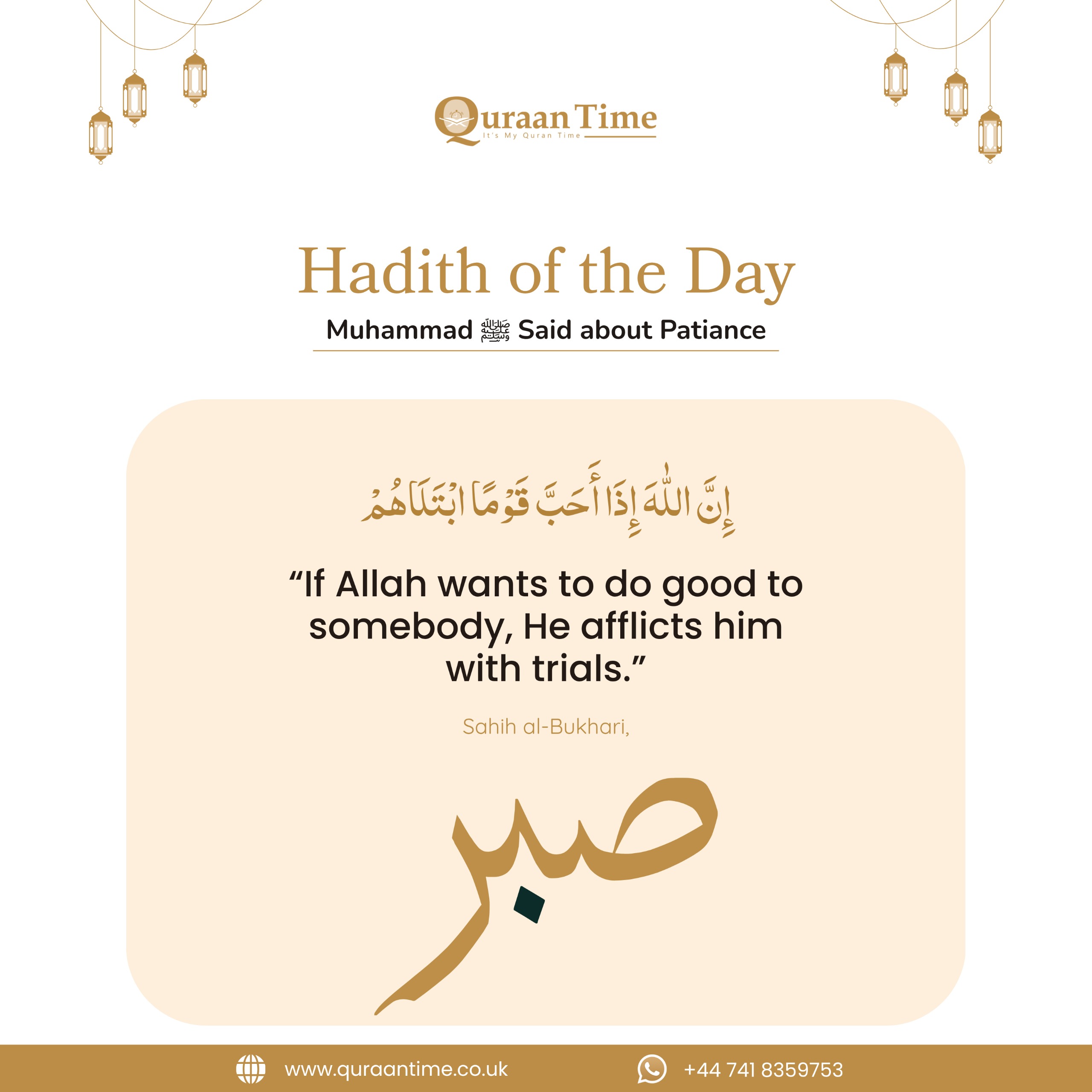
In Islamic tradition, the concept of patience (Sabr) is not merely endurance but a transformative spiritual state. The prophetic narration quoted above—recorded by Imam al-Bukhari—reveals a fundamental principle: divine trials are a sign of divine love and a pathway to elevated ranks. When Allah afflicts a believer with hardship, it is often a means of purification, forgiveness, and drawing closer to the Creator. Scholars explain that calamities remove minor sins, strengthen faith, and remind humanity of their ultimate reliance upon Allah. Far from being a punishment, tribulation for a believer becomes a hidden blessing.
Patience in the face of difficulty is threefold: patience in obedience (performing acts of worship despite hardship), patience in refraining from sin (avoiding what Allah prohibited even under pressure), and patience with divine decree (accepting what Allah has willed without complaint). The Prophet ﷺ emphasized that the magnitude of the reward corresponds with the magnitude of the trial. This transforms the believer’s perspective: every sleepless night, financial loss, or health challenge becomes an opportunity to accumulate everlasting treasure. Psychologically, this narrative promotes resilience and post-traumatic growth, aligning with modern positive psychology.
Moreover, the hadith teaches parents and teachers how to reframe children’s struggles: small setbacks help develop character and reliance on God. The early Muslim community faced immense persecution yet emerged stronger, because they understood that trials refine faith like fire refines gold. Today, educators and parents can implement this prophetic wisdom by encouraging patience, modeling gratitude, and teaching that ease follows hardship (Qur’an 94:5-6).
Renowned Islamic scholars like Ibn al-Qayyim stated that patience is half of faith (the other half being gratitude). For modern families, this translates to raising resilient children who see challenges as opportunities for growth. Parents who narrate stories of prophets (Ayyub’s patience, Yaqub’s grief) help anchor this virtue. Teachers in Islamic schools can design emotional intelligence lessons around the prophetic model of handling loss, bullying, or academic stress with dignified patience. The ripple effect is a generation that does not despair in hardships but turns to prayer and constructive action.
Additionally, the Qur’an pairs patience with prayer as tools for seeking help: “Seek help through patience and prayer” (Al-Baqarah 2:45). Thus, the hadith of the day is not an invitation to passivity; rather, it encourages active spiritual engagement while enduring life’s storms. Medical studies have also shown that spiritual patience reduces cortisol levels and improves cardiovascular health, reflecting the holistic mercy of this prophetic teaching.