

The comprehensive guide to understanding, reciting, and benefiting from the blessings upon Prophet Muhammad (PBUH) as taught by himself.
Durood-e-Ibrahimi, also known as Salat al-Ibrahimiyyah, is the most authentic and complete form of sending blessings upon Prophet Muhammad (peace be upon him). It holds a unique status because it was taught by the Prophet himself in response to a direct question from his companions about how to send blessings upon him.
This special supplication connects our love for Prophet Muhammad (PBUH) with the legacy of Prophet Ibrahim (AS), creating a spiritual link between the two great messengers of Allah.
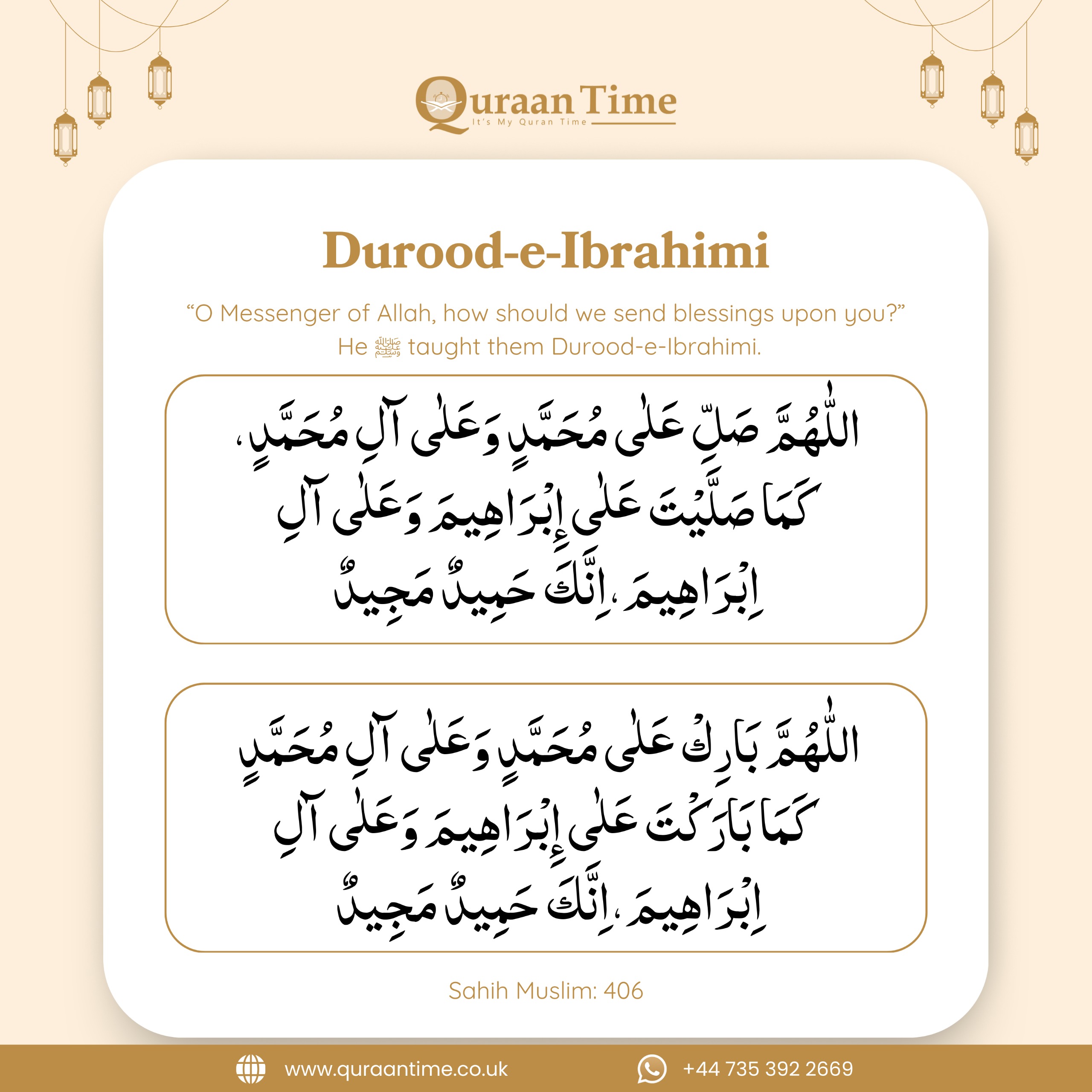
The occasion for revealing this specific Durood is recorded in Sahih Muslim (406). The companions asked: "O Messenger of Allah, how should we send blessings upon you?" In response, Allah revealed through Jibreel (AS) the exact words we now know as Durood-e-Ibrahimi.
This teaching moment established a standardized, blessed formula that would be recited by Muslims until the end of time.
Allahumma salli 'ala Muhammadin wa 'ala ali Muhammadin, kama sallayta 'ala Ibrahima wa 'ala ali Ibrahima, innaka Hamidum Majid.
"O Allah, send blessings upon Muhammad and the family of Muhammad, as You sent blessings upon Ibrahim and the family of Ibrahim. Indeed, You are Praiseworthy and Glorious."
Allahumma barik 'ala Muhammadin wa 'ala ali Muhammadin, kama barakta 'ala Ibrahima wa 'ala ali Ibrahima, innaka Hamidum Majid.
"O Allah, send Your grace upon Muhammad and the family of Muhammad, as You sent Your grace upon Ibrahim and the family of Ibrahim. Indeed, You are Praiseworthy and Glorious."
Teacher's Answer: Prophet Ibrahim (AS) holds a special position as the father of prophets and the builder of the Kaaba. By connecting our blessings upon Prophet Muhammad (PBUH) with blessings upon Ibrahim (AS), we acknowledge the continuity of divine message and honor both great messengers. Additionally, Prophet Muhammad (PBUH) is from the lineage of Ibrahim through Ismail (AS), creating a familial and spiritual connection.
Parent's Answer: Start with the meaning first. Explain in simple terms that we're sending love and blessings to Prophet Muhammad (PBUH). Break it down into small phrases. Use melodic recitation to make it appealing. Incorporate it into daily routines - after Adhan, before and after Salah. Reward consistent recitation with praise or small incentives. Most importantly, recite it yourself regularly so children learn by example.
Teacher's Answer: "Salli" (صَلِّ) refers to sending blessings, mercy, and honor from Allah upon the Prophet. "Barik" (بَارِكْ) means to send abundance, increase, and continuous blessings. Think of "salli" as conferring honor and status, while "barik" is about multiplying goodness and making it lasting. Both are essential components of complete blessings.
Parent's Answer: Absolutely! In fact, the Prophet encouraged frequent recitation of Durood. You can recite it anytime: morning and evening, after hearing the Prophet's name mentioned, when entering or leaving a mosque, during times of distress, on Fridays especially, and whenever you want to increase your good deeds. There are special times when it's highly recommended, but it's always beneficial.
Allah Himself sends blessings upon those who send blessings upon the Prophet. This creates a direct spiritual connection with the Divine.
The Prophet will recognize and intercede for those who regularly sent blessings upon him, especially in times of need on the Day of Resurrection.
Regular recitation serves as a means of purification and elevation of ranks. Each Durood erases sins and raises spiritual status.
Supplications preceded by Durood are more likely to be accepted, as they begin with praising Allah and blessing the Prophet.
Those who frequently send blessings develop a special love and connection with Prophet Muhammad (PBUH) that transcends worldly limitations.
Unlike shorter forms, Durood-e-Ibrahimi contains both "salli" and "barik" components, making it the most comprehensive form of blessings.
To make Durood-e-Ibrahimi a living practice, consider these practical suggestions:
Make a commitment to recite Durood-e-Ibrahimi at least 100 times daily. Start with smaller goals if needed, but be consistent. The spiritual transformation you'll experience will be profound.
Download Printable Durood Guide