

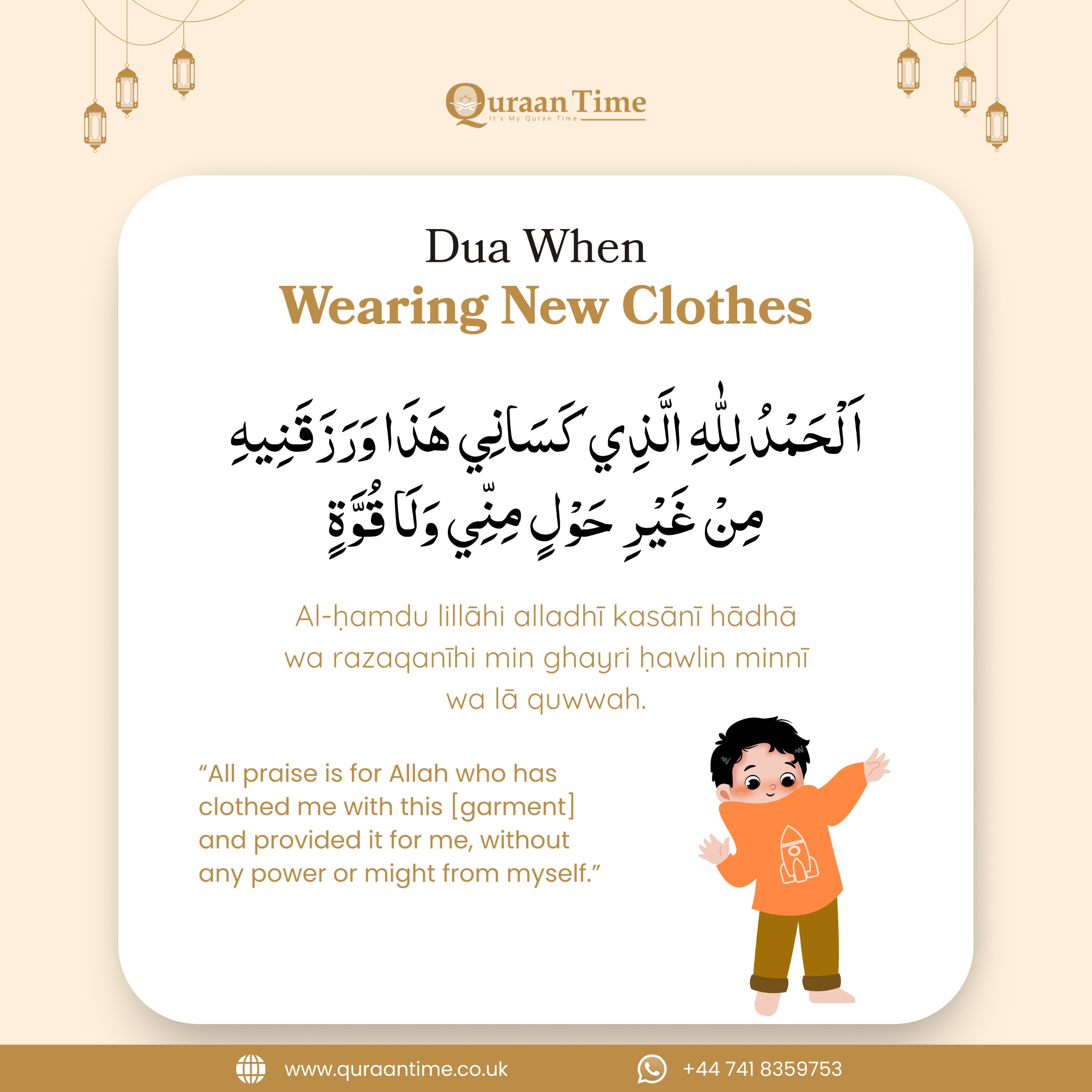
Alhamdulillah alladhi kasani hadha · Sunnah of Gratitude
Al-ḥamdu lillāhi alladhī kasānī hādhā wa razaqanīhi min ghayri ḥawlin minnī wa lā quwwah.
Sahih: Abu Dawud, Al-Albani graded it Hasan. Ibn Umar used to recite it upon every new garment.
The Messenger of Allah ﷺ taught his companions to recite this supplication the moment they wear a new garment. It is not merely words; it is an acknowledgment that the very fabric, the ability to purchase, the strength to put it on — all originate from Allah's grace. Imam Ibn al-Qayyim said: 'This dua combines gratitude and tawheed, for it attributes the blessing to the Creator and absolves oneself from any independent power.'
The phrase 'min ghayri hawlin minni wa la quwwah' is a profound confession of human limitation. It safeguards the heart from 'ujb (self-admiration). When a person wears a beautiful garment and feels pride, shaytan exploits it. This dua neutralizes that trap. Moreover, it is a sunnah that can be practiced daily — every time we wear something new to us.
Scholars also recommend adding: 'Allahumma inni as'aluka min khayrihi wa khayri ma huwa lahu, wa a'udhu bika min sharrihi wa sharri ma huwa lahu' (O Allah, I ask You for its goodness and the good for which it was made, and I seek refuge from its evil and the evil for which it was made). This complete version is narrated from Abu Dawud.
When to recite? Immediately after wearing, before leaving the house. It applies to any clothing — turban, shirt, trousers, coat, even shoes according to some scholars. The garment may be new or used; what matters is that it is new to the wearer. Imam Al-Nawawi in Al-Adhkar emphasized: 'This includes a garment that is newly acquired, whether purchased, gifted, or inherited.'
Parents should teach children this dua playfully. Keep a small card in the wardrobe. Also, feeding others or giving charity when wearing new clothes is mustahabb, but the dua is the core. The Prophet ﷺ saw Umar wearing a new garment and said: 'Tabyad wa tuhmad wa tamut wa yarzuqakallahu 'aqlan' — may you wear it new, live praiseworthy, die as martyr, and Allah grant you contentment. (Ibn Majah)
Some people recite only 'Alhamdulillah alladhi kasani' and omit the crucial part 'min ghayri hawlin minni wa la quwwah'. Others forget to recite for second-hand clothes. Remember: The barakah is in the remembrance, not the price tag. Also, avoid saying the dua while the garment is still on the hanger — wear it first.
Model the dua when you wear new clothes in front of children. Use gestures. Explain that Allah loves when we thank Him. Connect it to the concept of rizq (provision). For teenagers, discuss the psychological benefit: humility and gratitude reduce anxiety.
Parent: My 6-year-old son rushes and forgets the dua. How to make it stick?
Teacher: Turn it into a song-like rhythm. Children love repetition. I use a 'Dua badge' — when a child recites it, they get a star on a shared chart. Also, let them wear a new inexpensive accessory (like a cap) and practice. Be patient; it's about connection, not perfection.
Parent: Does this dua apply if I inherit clothes from my deceased father?
Teacher: Yes, and it is a beautiful act of sadaqah jariyah for your father. When you wear his clothes and say the dua, you are honoring him and acknowledging Allah's provision. The salaf used to wear garments of their parents and recite the dua.
Parent: My daughter only wants branded clothes. How to teach gratitude?
Teacher: Involve her in charity. When you buy new clothes, let her pick one small item to donate. Then explain that the dua makes any clothing 'branded' with barakah. Also share the story of the Prophet ﷺ who wore coarse wool but was the most grateful.
Teacher: How to handle teenagers who feel awkward reciting duas publicly?
Parent: We whisper it together. I say it silently, and my son lipsyncs. At home, we made a 'closet reminder' sticker with the dua in Arabic and English. Gradually, he started saying it aloud. Peer influence is strong; we also invited his friend who practices sunnah.
Parent: Is there a specific dua for new shoes?
Teacher: General scholars include footwear under 'new clothes'. You can recite the same dua. Additionally, when wearing new sandals, it's sunnah to start with the right foot. The essence is thanking Allah for covering and protection.
Teacher: Any advice for Islamic school teachers to normalize this dua?
Parent: We have 'New Clothes Day' once a term. Children wear something new and we all recite the dua together loudly. Then we share snacks. It's become a beloved tradition. Also, we send home a dua card with each new uniform piece.
Parent: Can I say the dua in English only?
Teacher: Arabic is the prophetic wording and carries immense reward. However, if a person cannot pronounce Arabic, they may say it in their language until they learn. But the goal is to learn the Arabic as it is a sunnah uttered by the Prophet ﷺ.
Record every time you recite the dua upon wearing new clothes. Your personal sunnah log.
Your count is saved in your browser. Keep the sunnah alive.
Imam Al-Nawawi stated: 'It is mustahabb to say this dua when wearing a new garment, and it is comprehensive of praise and declaration of inability.' Ibn Battal commented: 'The slave attributes the blessing to the Owner and frees himself from any might.' This dua is a fortress against shirk al-asghar.