

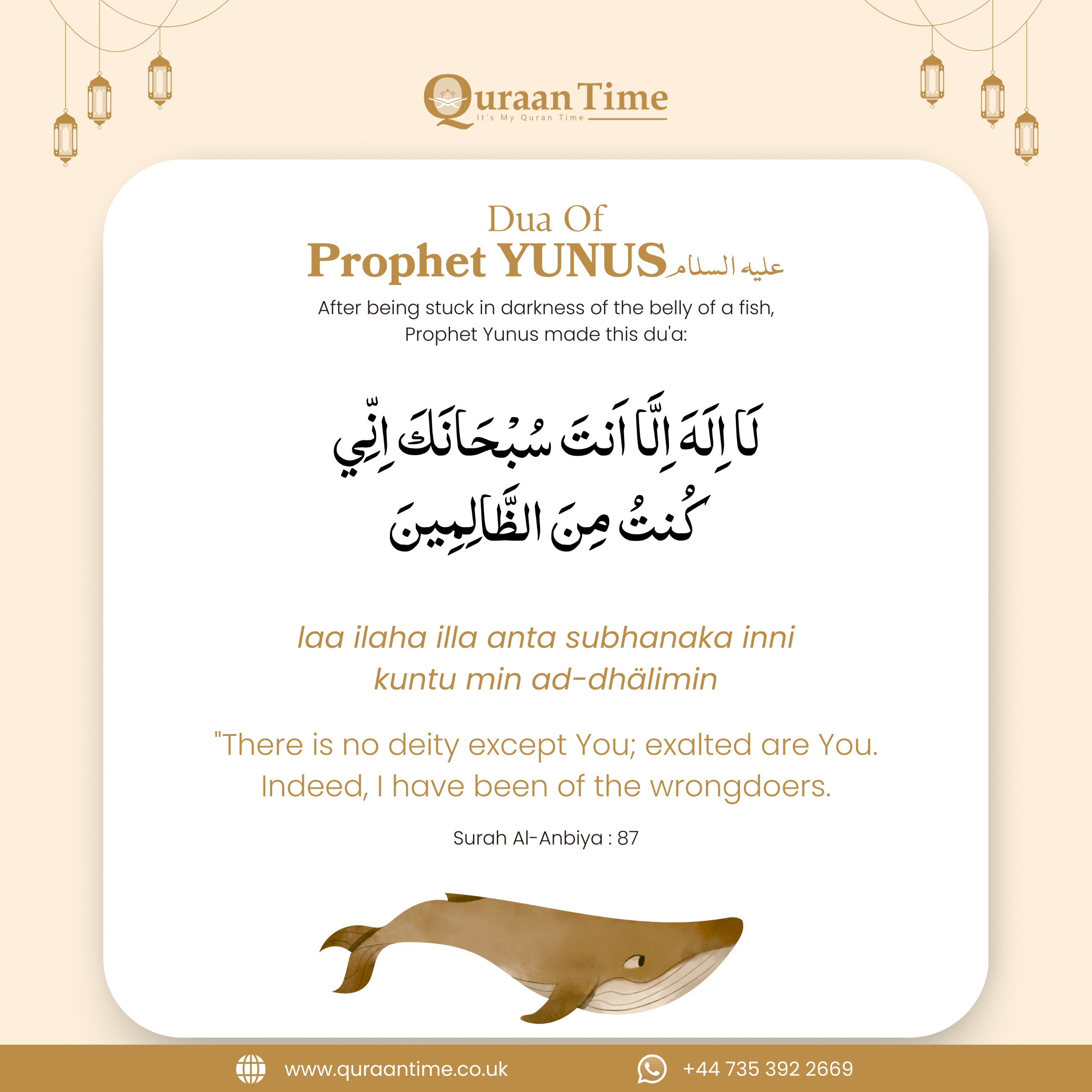
In the depths of the ocean, engulfed by darkness within the belly of a whale, Prophet Yunus (AS) uttered a supplication so powerful that it reached the Divine Throne and secured his deliverance. This dua, encapsulated in Surah Al-Anbiya (21:87), remains one of the most profound supplications in Islamic tradition, offering timeless lessons for believers facing their own metaphorical darkness.
"There is no deity except You; exalted are You. Indeed, I have been of the wrongdoers."
This concise yet profound supplication contains three essential elements: affirmation of Allah's oneness (Tawhid), glorification of His perfection, and acknowledgment of one's own shortcomings.
Historical Context: The Story Behind the Dua
Prophet Yunus (AS) was sent to the people of Nineveh, who persisted in their disbelief despite his prolonged efforts. After leaving his people without Allah's command, he boarded a ship that encountered a violent storm. The crew cast lots to determine who should be thrown overboard, and the lot fell upon Yunus (AS). Swallowed by a great fish, he found himself in layers of darkness: the darkness of the night, the darkness of the sea, and the darkness within the fish's belly.
It was in this triple darkness that Prophet Yunus (AS) recited this dua. The Quran recounts: "So We responded to him and saved him from the distress. And thus do We save the believers." (Surah Al-Anbiya 21:88)
Spiritual Benefits and Virtues
Numerous Hadith highlight the virtues of this dua. Prophet Muhammad (PBUH) said: "The supplication of Dhun-Nun (Prophet Yunus) when he supplicated while in the belly of the whale: 'La ilaha illa Anta, Subhanaka, inni kuntu minaz-zalimin.' There is no Muslim who supplicates with it for anything, ever, except Allah responds to him." (Tirmidhi)
- Acceptance of Repentance: This dua is particularly powerful for seeking forgiveness and having one's repentance accepted.
- Relief from Distress: It serves as a means to alleviate difficulties, anxieties, and seemingly impossible situations.
- Strengthening of Faith: Reciting it reinforces Tawhid and humility before Allah.
- Connection with Prophetic Tradition: It links the believer to the experience of patience and hope exemplified by Prophet Yunus (AS).
- Comprehensive Supplication: It combines praise, acknowledgment of Allah's perfection, and admission of one's faults in one concise formula.
Questions & Answers: Teachers and Parents Discuss the Dua
Begin with age-appropriate storytelling. For younger children, focus on the whale story as a natural point of interest. Emphasize that Prophet Yunus (AS) never gave up hope and turned to Allah in his most difficult moment. Create visual aids showing the three layers of darkness. Teach the dua in short phrases with meanings explained simply. Relate it to times when children feel "in the dark" - scared, lonely, or facing difficulties. Practice reciting together during family prayer times.
First, understand that this dua isn't just for catastrophic situations. We can recite it when:
1. Feeling overwhelmed by responsibilities
2. Making important decisions
3. Seeking forgiveness after mistakes
4. During night prayers (Tahajjud)
5. When experiencing anxiety or sadness
Create family reminders: post the Arabic and translation on the fridge, set phone reminders to recite it at specific times, or incorporate it into your morning and evening adhkar routine.
Frame it positively: "Even prophets acknowledged they weren't perfect." Explain that everyone makes mistakes - what matters is recognizing them and asking Allah for forgiveness. Use examples children understand: "When you take your sister's toy without asking, then say sorry, that's like saying 'inni kuntu minaz-zalimin.'" Emphasize Allah's mercy - He loves when we admit our mistakes and ask for forgiveness. This teaches accountability without shame.
Contemporary Applications
In today's fast-paced world, believers face different kinds of "darkness" - mental health challenges, financial pressures, family conflicts, and spiritual dryness. The dua of Yunus (AS) offers a spiritual toolkit for these modern trials:
For anxiety and depression: The dua acknowledges distress while affirming divine power over it. Psychologically, admitting one's helplessness ("I have been of the wrongdoers") can be therapeutic when coupled with faith in a merciful God.
In interpersonal conflicts: Reciting this dua before difficult conversations fosters humility and reduces ego-driven responses.
During major life transitions: Whether changing careers, moving cities, or facing health challenges, this dua anchors the believer in divine support.
Practical Implementation Guide
To fully benefit from this dua, consider these implementation strategies:
1. Consistent Practice: Recite it at least once daily, preferably after Fajr or before sleeping.
2. Reflective Journaling: Write about situations where you felt "in darkness" and how reciting this dua affected your perspective.
3. Family Learning: Dedicate one Friday night each month to discussing Prophet Yunus's story and practicing the dua together.
4. Community Sharing: Share experiences of how this dua helped you with trusted friends or study circles.