

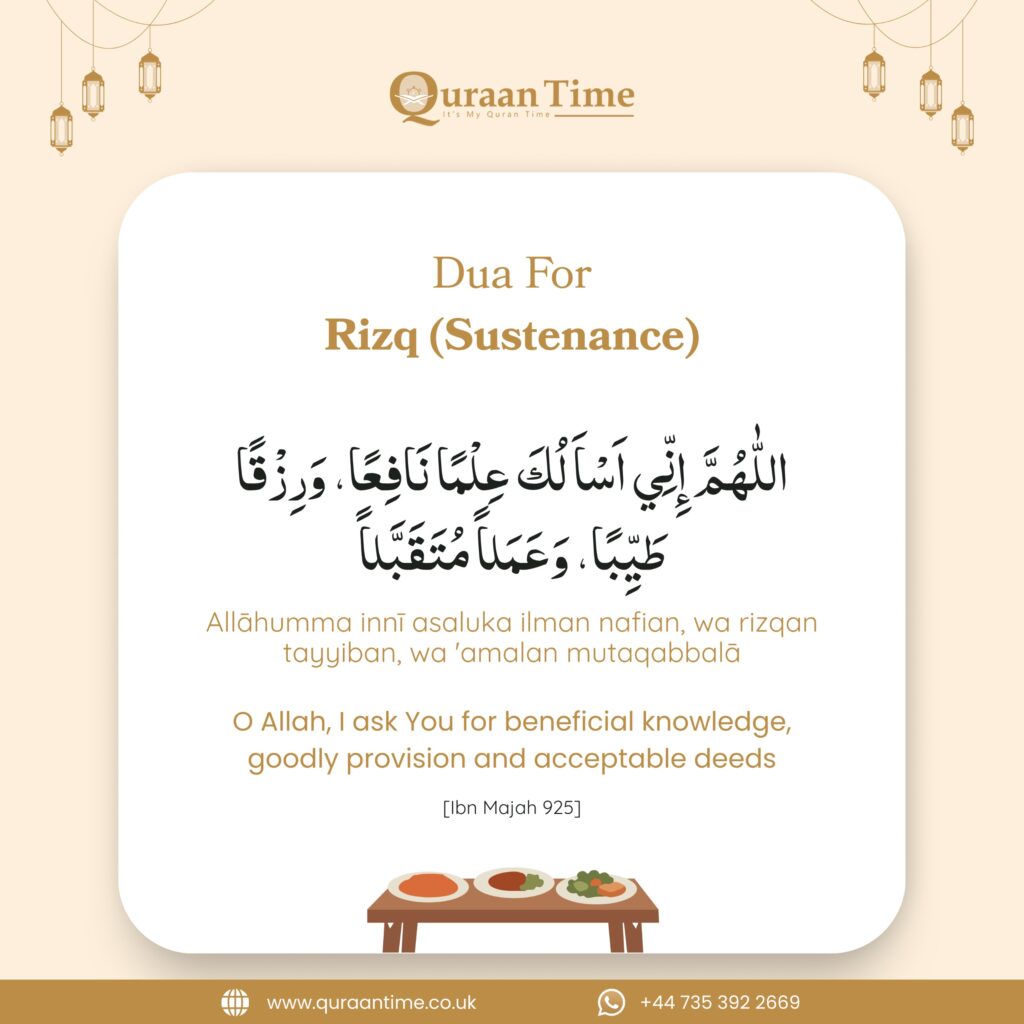
Dua For Rizq (Sustenance): A Comprehensive Guide
The Dua in Arabic
اللّٰهُمَّ إِنِّي اَسْاَ لُكَ عِلْمًا نَافِعًا، وَرِزْقًا طَيِّبًا، وَعَمَلاً مُتَقَبَّلاً
Transliteration: Allāhumma innī asaluka ilman nāfian, wa rizqan tayyiban, wa 'amalan mutaqabbalā
Translation and Meaning
English Translation: "O Allah, I ask You for beneficial knowledge, goodly provision and acceptable deeds."
Breakdown of the Request
- Ilman Nāfian (Beneficial Knowledge): Knowledge that benefits oneself and others, leads to good actions, and brings one closer to Allah.
- Rizqan Tayyiban (Goodly Provision): Sustenance that is pure, lawful (halal), abundant, and obtained without hardship or haram means.
- Amalan Mutaqabbalā (Acceptable Deeds): Actions that are performed with sincerity (ikhlas) according to the Quran and Sunnah, and are accepted by Allah.
Virtues and Benefits of This Dua
Comprehensive Supplication
This dua covers the three essential needs of a believer: knowledge, sustenance, and deeds. It asks for quality in each aspect—beneficial, good, and accepted.
Prophetic Guidance
Narrated in Sunan Ibn Majah, this supplication comes from the teachings of the Prophet Muhammad (peace be upon him), ensuring it is beloved to Allah.
Spiritual and Material Balance
It balances the request for spiritual wealth (knowledge, good deeds) with material need (provision), reflecting the holistic Islamic view of success.
Questions from Parents & Answers from Teachers
Parent Question:
"My child is about to start exams. How can we use this dua specifically for seeking beneficial knowledge?"
Teacher's Answer:
"Teach your child to recite this dua with focus before studying and before the exam. Explain that 'beneficial knowledge' (ilman nafian) means not just memorizing to pass, but understanding to apply. Pair the dua with action: create a structured revision timetable. The dua is a tool to seek Allah's help in making their effort fruitful and their memory strong."
Parent Question:
"We are facing financial difficulty. How should we understand 'goodly provision' (rizqan tayyiban) in this context?"
Teacher's Answer:
"Rizq is not merely abundance; it is what is pure, lawful, and sufficient. In times of hardship, this dua teaches us to ask for provision that is good in its source and its effect—even if it's modest. It is also a reminder to trust Allah's timing and wisdom. Continue making the dua sincerely, increase in gratitude for what you have, and diligently seek halal means. Trust that Allah will provide what is truly good for you."
Parent Question:
"How can I make this a consistent family practice, especially with younger children?"
Teacher's Answer:
"Consistency is key. Designate a specific time, such as after Fajr or Maghrib prayers, for the family to recite it together. For young children, start with the translation—ask them 'What three things are we asking Allah for?' Use simple analogies: 'Beneficial knowledge is like a superpower for your brain, good provision is like healthy fuel for your body, and accepted deeds are like sending a beautiful gift to Allah.' Keep it positive and engaging."
How to Incorporate This Dua Into Daily Life
- Daily Recitation: Make it a habit after your five daily prayers.
- With Presence of Heart (Hudur al-Qalb): Slow down, understand each word you are saying, and feel humility before Allah.
- Specific Intentions (Niyyah): Before reciting, briefly think of your specific need for knowledge, rizq, or a particular deed.
- Pair With Action (Taghyir): Duas are answered through effort. Seek knowledge, work diligently for halal rizq, and perform good deeds sincerely.
- Teach Others: Share this dua with family and friends. The one who guides to something good gets a reward similar to those who follow it.
Conclusion
The Dua for Rizq is a powerful, prophetic supplication that encapsulates a believer's core needs. By regularly asking Allah for beneficial knowledge, pure sustenance, and accepted deeds, we align our desires with divine pleasure and open the doors to holistic barakah (blessing) in our lives.
For more Islamic resources, prayers, and guidance, visit www.quraantime.co.uk or contact +44 735 392 2669.