

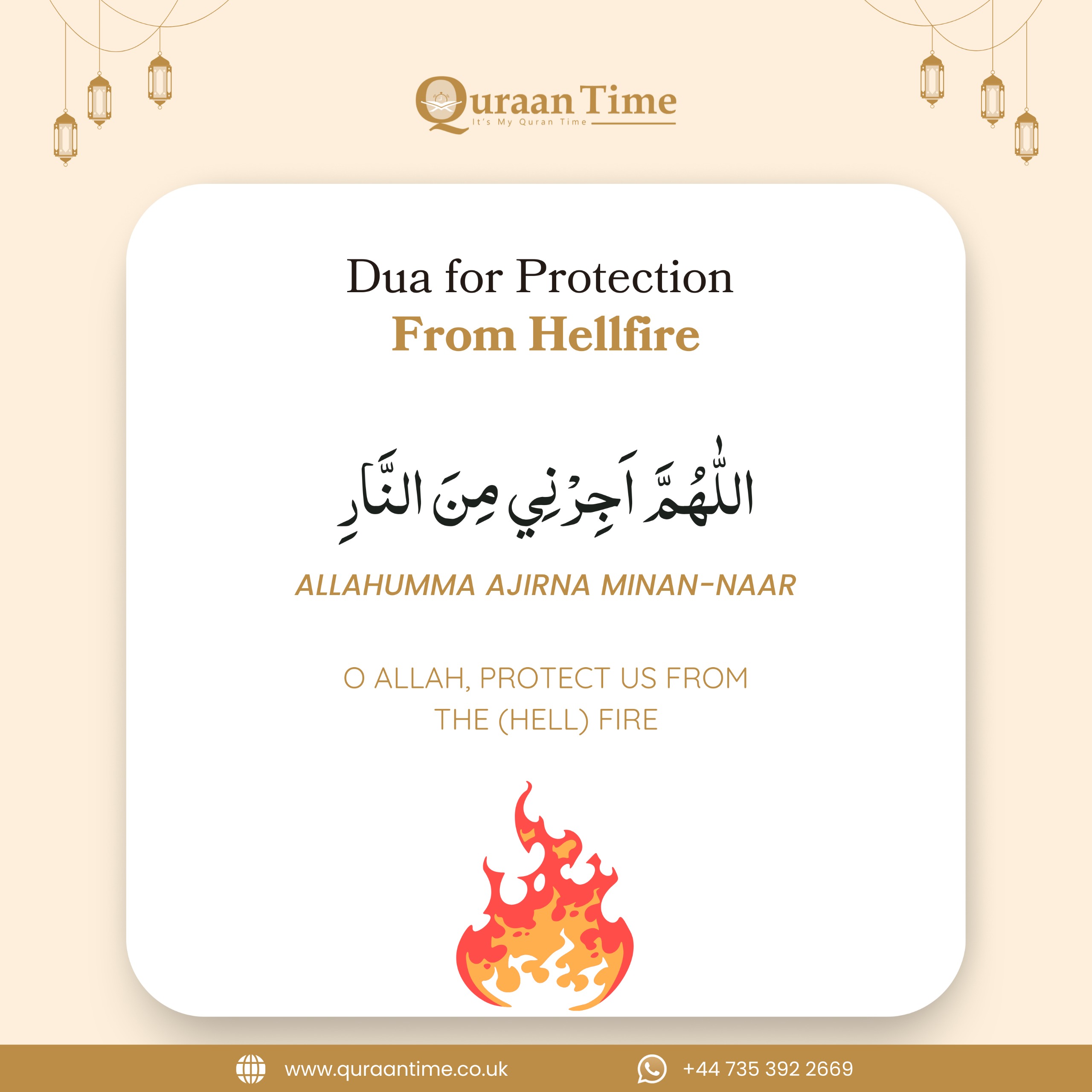
Understanding the profound significance, proper recitation, and transformative power of "Allahumma Ajirna Minan-Naar" – the supplication for divine protection from the Fire.
In Islamic tradition, the concept of seeking protection from Hellfire (Jahannam) is deeply rooted in the Quran and Sunnah. Among the most powerful and frequently recommended supplications is the concise yet comprehensive dua: "Allahumma Ajirna Minan-Naar" – "O Allah, protect us from the Fire." This prayer, though brief, encapsulates a believer's ultimate spiritual objective: salvation in the Hereafter and protection from divine punishment.
The fear of Hellfire is not meant to paralyze believers with terror, but rather to motivate them towards righteousness, repentance, and constant spiritual improvement. This dua serves as both a shield and a compass – a shield against the consequences of sin and a compass directing the heart towards Allah's mercy and forgiveness.
This supplication's power lies in its directness and comprehensiveness. It doesn't merely ask for protection from the physical torment of Hellfire but implicitly seeks protection from all that leads to it – major and minor sins, harmful intentions, neglecting obligations, and heedlessness of Allah's commands.
The Prophet Muhammad (peace be upon him) emphasized the importance of seeking refuge from Hellfire frequently. In numerous hadiths, he taught his companions specific supplications for protection, understanding that constant remembrance of the Hereafter keeps the heart alive and the soul vigilant.
The dua "Allahumma Ajirna Minan-Naar" operates on multiple spiritual levels. Firstly, it is an acknowledgment of human vulnerability and dependence on Allah's mercy. By asking for protection, the believer admits their need for divine assistance in achieving salvation.
Secondly, this supplication serves as a constant reminder of the ultimate accountability. Every time a Muslim recites it, they reaffirm their belief in the Day of Judgment, Paradise, and Hellfire – the three essential articles of faith concerning the Hereafter.
Thirdly, the use of the plural "us" (na) rather than the singular "me" demonstrates the communal spirit of Islam. The believer doesn't seek protection alone but includes their family, community, and all Muslims in their supplication.
Islamic scholars note that the effectiveness of this dua increases when combined with righteous actions. The supplication is most powerful when coming from a tongue that frequently remembers Allah, hands that give charity, feet that walk to prayer, and a heart that fears Allah sincerely.
Recommended times for this dua include after the five daily prayers, during the last third of the night (Tahajjud), on Fridays, in the month of Ramadan, and while in prostration (sujood) during voluntary prayers.
Answer from Sheikh Ibrahim: Your concern reflects prophetic parenting. The Prophet (pbuh) taught us to pray for our children's protection in this world and the next. Recite "Allahumma Ajirna Minan-Naar" with your children present, explaining its meaning. Make it part of your family's morning and evening remembrances (adhkar). Additionally, when praying individually, specifically mention your children by name in your supplication: "O Allah, protect me and my children [mention names] from the Fire." Remember that your dua for them is complemented by giving them proper Islamic education, nurturing their faith, and being a righteous example.
Answer from Ustadha Fatima: This beautiful dua encompasses both dimensions when recited with sincerity. Allah's protection can manifest as forgiveness for past sins and preservation from future ones. The key is to combine the dua with sincere repentance (tawbah). When you say "Allahumma Ajirna Minan-Naar," intend it as part of your repentance process. Allah says in the Quran (66:8): "O you who have believed, repent to Allah with sincere repentance. Perhaps your Lord will remove from you your misdeeds and admit you into gardens beneath which rivers flow." The dua is a verbal expression of that repentance and desire for protection.
Answer from Imam Yusuf: Yes, several times are particularly auspicious for this and all supplications. These include: during the last third of the night, between the adhan and iqamah, while prostrating in prayer, on Friday especially during the last hour before Maghrib, during rainfall, while traveling, when breaking your fast, and during the month of Ramadan especially on Laylat al-Qadr. However, never restrict your supplication to only these times. Allah's mercy is vast, and He responds to the sincere caller at any moment.
To truly benefit from "Allahumma Ajirna Minan-Naar," integrate it systematically into your daily worship:
Remember that this dua is not a magical incantation but a spiritual tool. Its effectiveness is tied to the state of your heart, your overall obedience to Allah, and your sincere intention to live a life pleasing to Him. The dua for protection from Hellfire should naturally lead you to actions that make you worthy of that protection.
If you wish to learn more about the comprehensive Islamic approach to supplications, protection from punishment, and spiritual safety in the Hereafter, our qualified scholars are available for guidance.
Explore our courses and resources on Islamic spirituality, prophetic supplications, and building a relationship with Allah that leads to eternal safety and success.
Learn More About Islamic GuidancePhone: +44 735 392 2669
Understanding what one seeks protection from enhances the sincerity of the supplication. The Quran describes Hellfire with vivid imagery that serves as a deterrent and motivator for righteousness. It is described as a place of intense heat, painful punishment, and deep regret for those who rejected faith and disobeyed Allah despite knowing the truth.
However, Islamic theology balances this with overwhelming emphasis on Allah's mercy. The Prophet (pbuh) said: "Allah's mercy outweighs His wrath." This dua is a means of accessing that mercy. It represents the believer's choice to turn towards Allah's infinite compassion rather than risk His justice.
Ultimately, "Allahumma Ajirna Minan-Naar" is more than a prayer for avoidance; it is a prayer for success. Protection from Hellfire inherently means attainment of Paradise – the ultimate achievement for a believer. Thus, this simple phrase encapsulates the entire objective of Islamic worship: to please Allah sufficiently to earn His pleasure and eternal reward.
© 2023 Quran Time Institute. This educational content is based on authentic Islamic sources including Quranic verses and authentic hadith collections.
For specific personal guidance, please consult with a qualified Islamic scholar familiar with your individual circumstances.
Reference: Based on teachings from Sahih al-Bukhari, Sahih Muslim, and classical Islamic scholarship on supplications.