

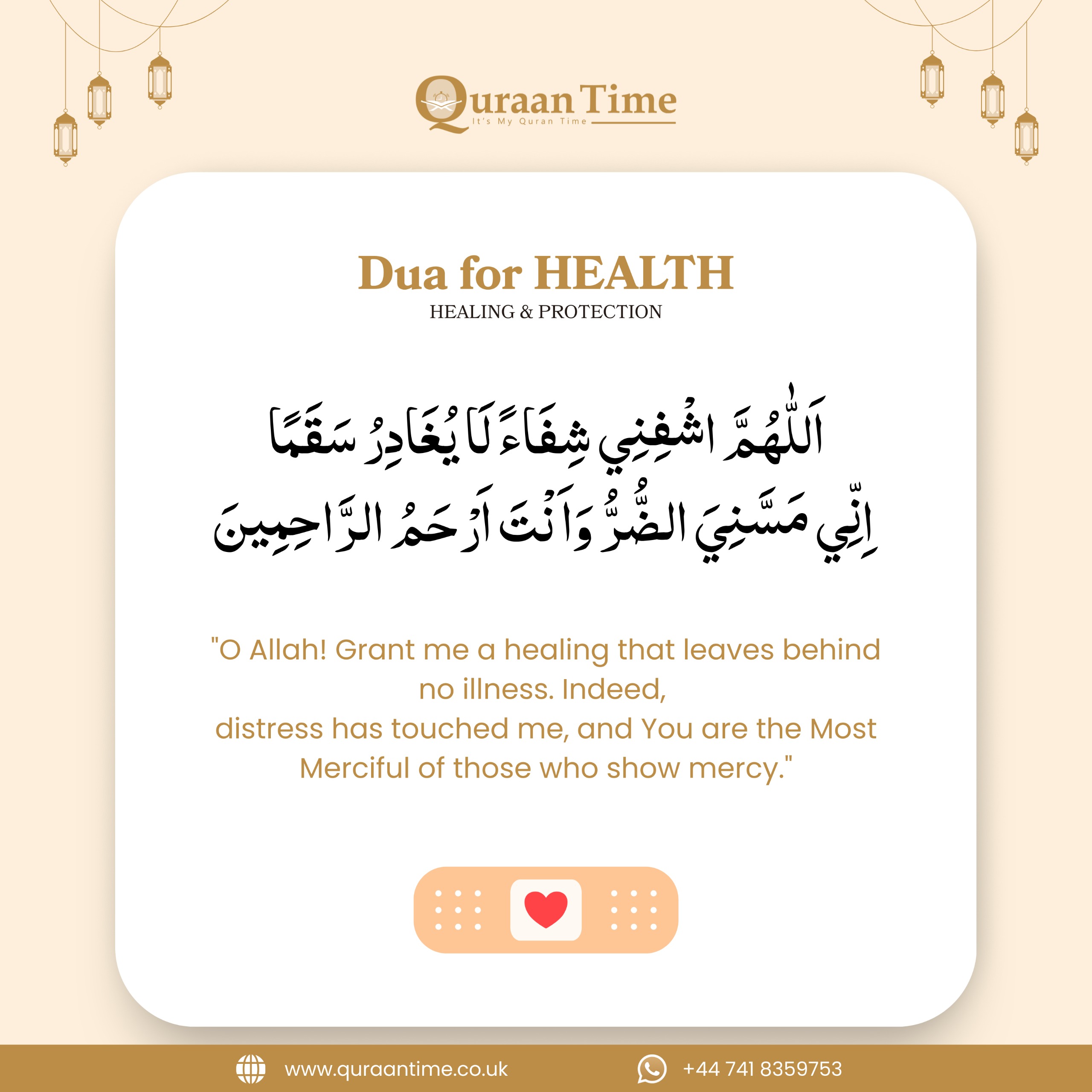
Dua for Health, Healing & Protection
Translation:
"O Allah! Grant me a healing that leaves behind no illness. Indeed, distress has touched me, and You are the Most Merciful of those who show mercy."
Spiritual and Psychological Benefits:
- Strengthens faith during difficult times
- Provides psychological comfort and reduces anxiety
- Encourages patience and acceptance
- Fosters a connection with the Divine
- Promotes hope and positive thinking
How to Practice This Dua
Timing
Recite this dua during times of illness, before medical procedures, or as part of your regular supplications for ongoing protection.
Frequency
Repeat the dua 3, 7, or 41 times according to your spiritual tradition and personal connection with the supplication.
Mindfulness
Focus on the meaning of each word, contemplating Allah's mercy and healing power while reciting with a humble heart.
Consistency
Make this dua a regular practice, not only during illness but also as a preventive measure for maintaining good health.
Questions and Answers: Teachers and Parents Discuss Dua for Health
How can I teach my children the importance of this dua without making them fearful of illness?
Focus on the positive aspects - explain that this dua is about seeking Allah's protection and mercy. Frame it as a conversation with Allah about our wellbeing, similar to how we talk to doctors about our health. Emphasize that Allah loves when we ask for good health to worship Him better.
At what age should children begin learning this dua?
Children as young as 3-4 can learn short phrases from the dua. By age 6-7, they can learn the complete supplication. The key is repetition in a loving context - perhaps reciting it together when someone in the family is unwell or as part of bedtime routines.
How do we balance making this dua with seeking medical treatment?
This is an excellent question. Islam teaches us to seek both spiritual and physical remedies. The dua should be recited with conviction that Allah is the ultimate healer, while also taking the necessary medical steps. They complement each other - the doctor treats with knowledge given by Allah, and the dua strengthens our trust in His will.
Can this dua be recited for someone else's healing?
Absolutely. The beauty of dua is that it can be made for oneself and for others. When you recite this dua for a loved one, you're not only seeking their healing but also earning spiritual rewards for your intercession. Many Islamic traditions encourage making dua for others in their absence.
Integrating Faith and Wellness
The Dua for Health represents the holistic Islamic approach to wellbeing, recognizing that true healing encompasses physical, emotional, and spiritual dimensions. By incorporating this supplication into our lives, we acknowledge that while we take practical steps for our health, ultimate healing comes from the Divine Source of all mercy and compassion.
Whether facing a specific health challenge or seeking ongoing protection, this dua serves as a reminder of our reliance on Allah and the power of turning to Him in all circumstances.