

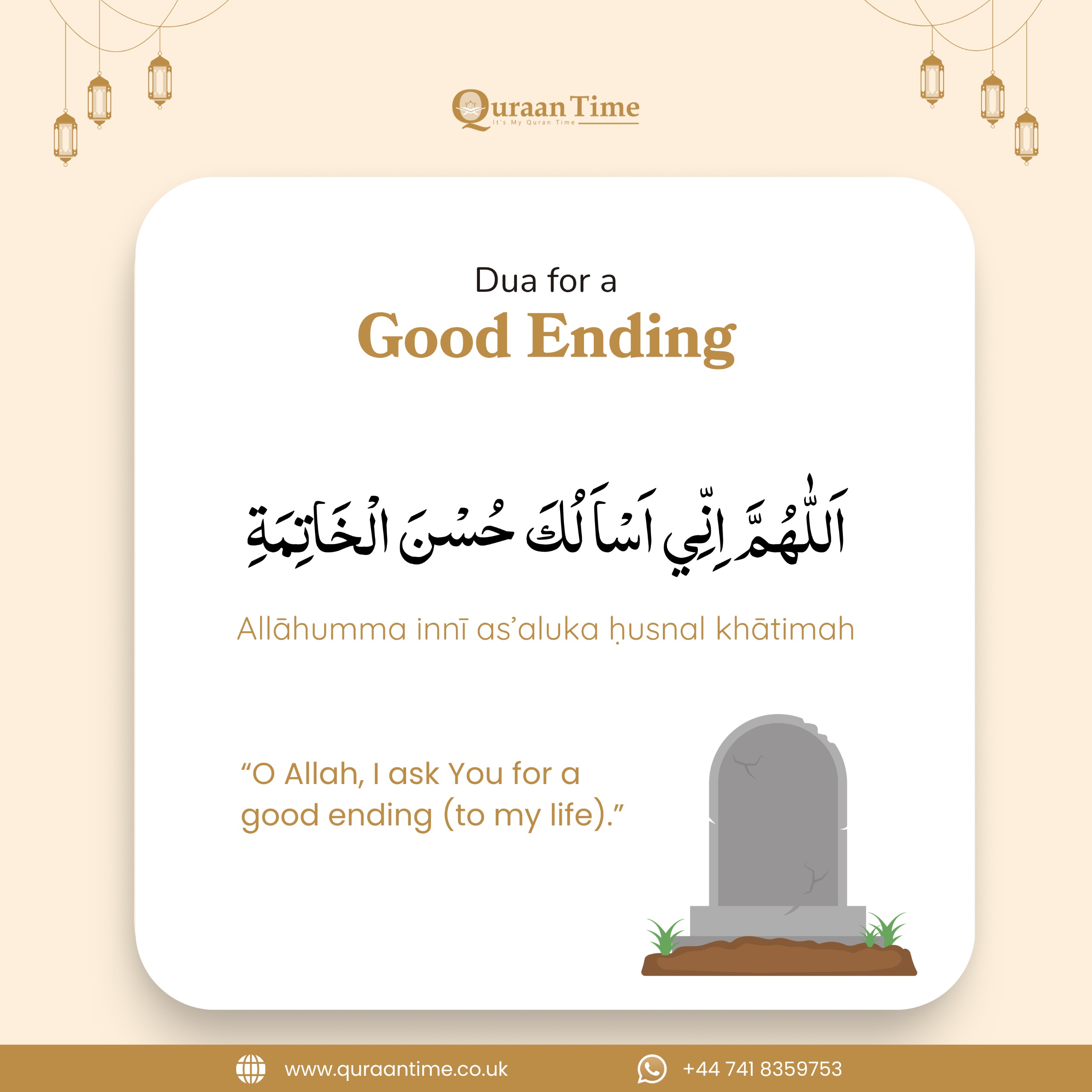
What is Husn al-Khatimah? In Islamic theology, a “good ending” (ḥusn al-khātimah) refers to departing this world in a state of faith and righteousness, with the mercy of Allah. It is the moment when a believer’s last words or deeds reflect complete submission and hope in Allah’s forgiveness. This Dua, taught by the Prophet Muhammad (peace be upon him), encapsulates a believer’s deepest yearning: to end one’s life while being pleased with Allah and He being pleased with them. It is a powerful supplication that every Muslim should regularly recite, especially in times of health, for no one knows the hour of their departure.
The Profound Significance
Asking for a good ending is not merely about the final seconds of life; it is about maintaining steadfastness (istiqamah) until the very last breath. Scholars explain that a good ending is often a reflection of a life lived in obedience, repentance, and constant remembrance of Allah. This Dua aligns the heart with the ultimate purpose: to meet Allah in a state of purity. The phrase “ḥusnal khātimah” appears in many narrations, emphasizing that a person’s deeds are judged by their conclusion. Therefore, reciting this Dua with sincerity transforms one’s daily actions, encouraging believers to avoid sins, increase in worship, and keep good company.
Virtues of Reciting this Dua regularly:
- ✔ It instills consciousness of death, leading to productive, purpose-driven life.
- ✔ It protects from a bad ending (su’ al-khatimah) by Allah’s grace.
- ✔ The Prophet ﷺ encouraged asking Allah for a good ending as a sign of true reliance.
- ✔ Brings peace to the heart, knowing the future is in Allah’s hands.
Spiritual & Practical Tips
To maximize the benefits of this Dua, combine it with righteous deeds: maintain the five daily prayers, give charity, seek forgiveness (istighfar), and treat others with kindness. According to Islamic scholars, those who consistently say “Allāhummā innī as’aluka ḥusnal khātimah” before sleeping and after obligatory prayers often find their hearts inclined toward goodness. Additionally, avoid major sins and hasten to repent, as a person dies upon what they used to live. Surrounding yourself with reminders of the Hereafter strengthens the likelihood of a beautiful end.
❓ Question & Answer: Teachers and Parents Discuss
Q1: How can teachers introduce the concept of a good ending to young students without causing fear?
Teachers can frame Husn al-Khatimah as a beautiful goal: finishing life’s journey like a runner crossing the finish line with grace. Use stories of the Prophets and righteous people who ended their lives in prayer. Focus on Allah’s mercy, and encourage small daily good deeds. This Dua becomes a positive aspiration, not a source of anxiety.
Q2: What practical steps can parents take at home to instill the habit of reciting this Dua?
Parents can make this Dua part of the bedtime routine and morning Adhkar. Create a family challenge: recite together after Fajr and Maghrib. Explain the meaning in a simple way: “O Allah, let our last moments be filled with Your love.” Lead by example—children imitate what they see. Use a beautiful poster with the Arabic script at home. Consistency nurtures a spiritual bond.
Q3: In a classroom setting, how to address a student’s question about what happens if someone does not get a good ending?
The teacher should explain Allah’s infinite mercy and justice. Emphasize that we never despair of Allah’s forgiveness, and no one can judge another’s ending. The Dua is a tool to turn back to Allah. Remind students that the best approach is to focus on their own relationship with Allah and to pray for others. This opens a conversation about hope and repentance, not fear.
Q4: How can Islamic schools incorporate this Dua into weekly assemblies?
Schools can dedicate five minutes each Friday to the Dua of the week. Display the Dua on screens, have a student recite it beautifully, then share a short story of a companion who died with a good ending. Connect it to character education: honesty, compassion, and sincerity. Group recitation strengthens collective spiritual awareness without being morbid.
The Linguistic & Theological Depth
The term “Khātimah” derives from “khatm” (seal or conclusion). Asking for “ḥusn” (beauty/excellence) indicates that the final state of a believer should be adorned with faith. Imam Al-Ghazali mentions that the heart’s state at death mirrors the dominant traits of one’s life. Therefore, reciting this Dua is a transformative practice: it reprograms the soul toward enduring goodness. Many scholars recommend adding this Dua in the supplications after Tashahhud before the Taslim. Also, it is narrated that one should frequently ask for a good ending, especially when experiencing moments of illness or travel, as the Prophet ﷺ used to make this Dua part of his comprehensive pleas.
Prophetic Tradition: It was narrated from Anas ibn Malik that the Prophet ﷺ said: “When Allah wishes good for His servant, He uses him (in obedience).” They asked: “How does He use him?” He replied: “He grants him success in doing good deeds before death.” (Ahmad). This illustrates the direct link between righteous actions and a noble conclusion. The Dua for a good ending is a means to attract such divine facilitation.
Daily Routine Integration
To make this Dua a consistent part of your life, integrate it into the following moments: after every obligatory prayer, during the last third of the night, when visiting the sick (praying for a good ending for them and yourself), and before sleeping. Additionally, writing the Dua on a small card or placing it as a screensaver serves as a visual reminder. Remember that sincerity and presence of heart elevate the Dua’s impact. Pair it with asking Allah for steadfastness (thabat) until the final moment.
Many Islamic scholars highlight that a person who regularly seeks a good ending is granted a tranquil life, because they constantly realign their intentions. They also become more mindful of wasting time, backbiting, and heedlessness. So the Dua for a good ending is not just for the future — it refines the present.
May Allah grant us all Husn al-Khatimah and gather us among the righteous. Ameen.
Recite daily with reflection: اللَّهُمَّ إِنِّي أَسْأَلُكَ حُسْنَ الْخَاتِمَةِ