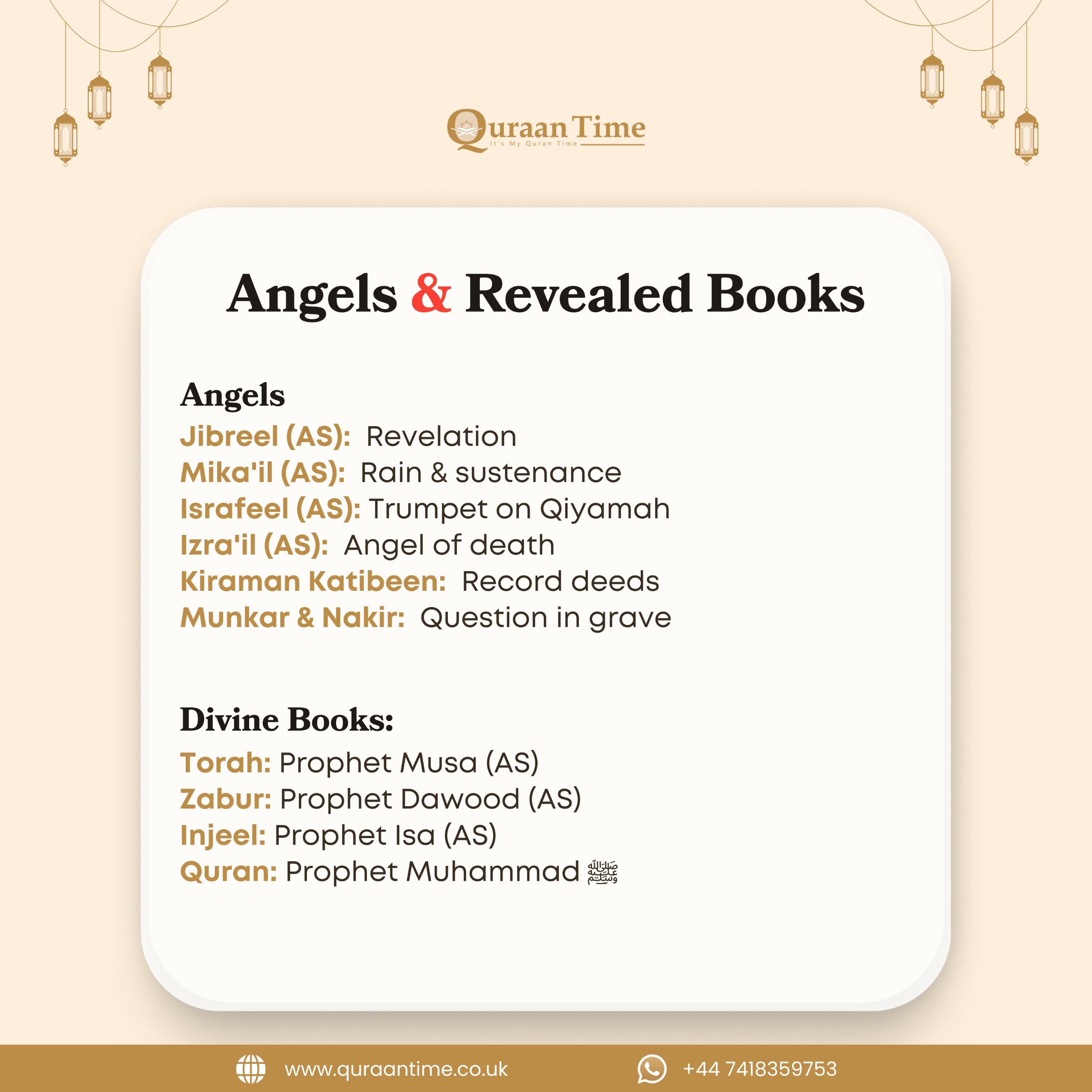
Angels & Revealed Books: Divine Messengers and Scriptures in Islam
Understanding the unseen world of angels and the divine scriptures forms a fundamental pillar of Islamic faith. This comprehensive guide explores the roles, significance, and teachings about celestial beings and heavenly revelations.
In Islamic theology, belief in angels (Mala'ika) and divinely revealed books (Kutub) constitutes two of the six articles of faith.
Angels are spiritual beings created from light (Nur) who inhabit the unseen world (Al-Ghayb) and tirelessly execute Allah's commands.
Simultaneously, the revealed scriptures represent Allah's guidance to humanity through various prophets, culminating in the Quran—the final,
preserved revelation for all mankind until the Day of Judgment. This article provides an in-depth examination of both concepts,
their significance in Muslim belief, and practical implications for spiritual development.
1 The Angels in Islamic Belief
Angels are perfect beings devoid of free will, created solely to worship Allah and carry out specific duties. Their existence underscores the comprehensive nature of divine administration over creation.
2 The Revealed Scriptures
Allah sent divine revelations to guide humanity at different historical jununctions. While earlier scriptures were meant for specific communities, the Quran serves as universal guidance.
Educational Dialogue: Teachers & Parents Discuss Islamic Concepts
How do we explain the nature and purpose of angels to children in an age-appropriate way?
+
Teacher's Perspective:
We use relatable analogies. For younger children, we explain angels as "Allah's special helpers" who have different jobs—some bring rain for our food, some write down our good deeds, and others bring messages to prophets. We emphasize they're made of light so they can't be seen, but they're always around us doing important work for Allah.
Parent's Experience:
I've found success connecting angels to daily experiences. When my child sees rain, we talk about Mika'il's role. When they do something kind, we mention the recording angels. This makes the concept tangible. We also use children's books with appropriate illustrations that show angels in a respectful, non-anthropomorphic way.
What's the significance of believing in previous scriptures while only following the Quran?
+
Teacher's Explanation:
This demonstrates Islam's respect for previous revelations while acknowledging their historical context. We teach that the original Torah, Zabur, and Injeel contained divine truth, but over centuries, human alterations occurred. The Quran serves as the final, authentic criterion (Furqan) that confirms what remains true in previous scriptures and clarifies what has been changed.
Parent's Approach:
I explain it using the "library metaphor": Allah gave different books to different communities at different times. We respect all those books, but the Quran is like the master reference book that has all the correct information and updates. It's the only one that Allah promised to preserve perfectly, so it's our main guide.
How can learning about angels positively influence children's behavior and character development?
+
Teacher's Insight:
Knowledge of angels fosters "Ihsan" (excellence in worship)—the consciousness that even when no human sees you, angels are recording your deeds and Allah is watching. This internalizes moral accountability. We also highlight specific angels' roles: Kiraman Katibeen encourage honesty, Mika'il teaches gratitude for sustenance, and Jibreel represents respect for revelation.
Parent's Observation:
My children developed a sense of constant companionship with angels that reduces fear of being alone. They understand that two angels are always with them, which provides comfort. The concept of recorded deeds has made them more thoughtful about their actions. They'll often say, "The angels are writing this down" when they do something good.
What practical activities help children connect with the concept of revealed books?
+
Teacher's Methods:
We create a "Prophets and Their Books" timeline showing which scripture was revealed to which prophet. For older students, we compare themes found in different scriptures (like stories of Prophet Abraham). We also organize Quran appreciation sessions where children learn about its miraculous preservation and unique literary qualities compared to other texts.
Parent's Activities:
We have a "book of the month" where we learn about one revealed scripture each month—its prophet, main messages, and how it relates to the Quran. We also visit museums with religious manuscripts when possible. At home, we emphasize respect for the Quran physically (keeping it elevated, clean hands) to instill reverence for divine revelation.
This article includes structured data markup for enhanced search engine visibility. The content is optimized for educational websites and Islamic learning platforms.