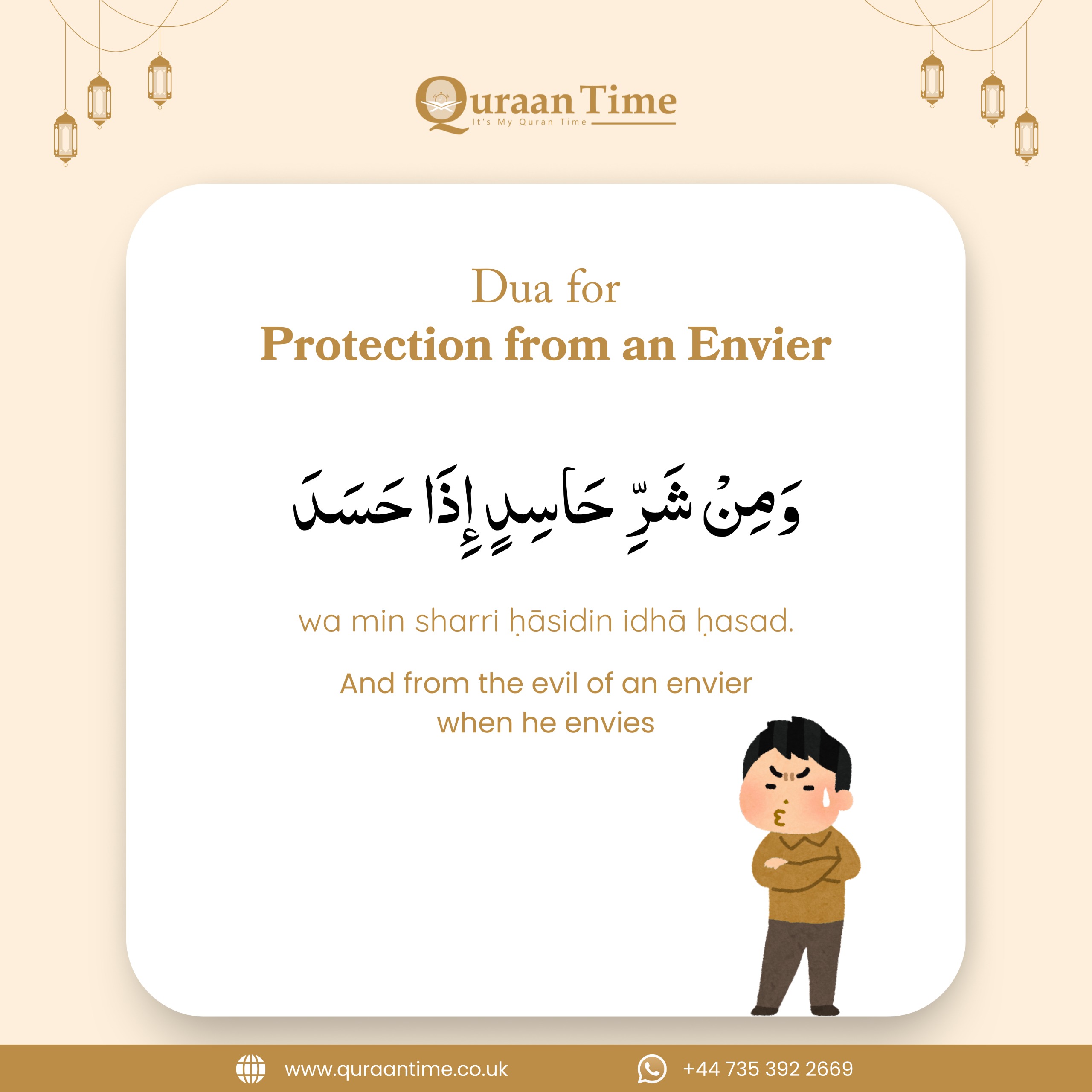
Dua for Protection from an Envier: A Spiritual Shield
In a world where negative energies and jealous glances can impact our well-being, Islam offers powerful spiritual remedies. The Dua for Protection from an Envier is a profound supplication that seeks Allah's safeguard against the harm of those who envy. This article explores its meaning, significance, and how to incorporate it into daily life for spiritual protection.
وَمِن شَرِّ حَاسِدٍ إِذَا حَسَدَ
Translation: "And from the evil of an envier when he envies."
Reference: Surah Al-Falaq (113:5)
Understanding the Dua
This dua is the fifth and final verse of Surah Al-Falaq, one of the Quran's most frequently recited chapters for protection. It specifically addresses the harm that can come from hasad (envy or the evil eye), a recognized spiritual phenomenon in Islamic tradition. The envier's glance or negative energy can affect health, relationships, and success without any physical contact.
Why This Protection Is Essential
Envy isn't merely an emotion; it's an energy that can manifest real-world consequences. The Prophet Muhammad (peace be upon him) emphasized protection against envy, stating that "the evil eye is real" (Bukhari and Muslim). This dua serves as a spiritual armor, invoking Allah's direct protection against this subtle but potent harm.
Spiritual Shield
Creates a divine barrier against negative energies and malicious intentions.
Psychological Peace
Reduces anxiety about others' envy and fosters trust in divine protection.
Strengthened Faith
Reinforces reliance on Allah as the ultimate protector from all harms.
Comprehensive Protection
Part of Surah Al-Falaq which protects from multiple forms of evil.
How to Practice This Dua
1. Daily Recitation: Recite this verse after each of the five daily prayers, particularly after Fajr and Maghrib when protection is especially emphasized.
2. Specific Situations: When you feel someone's gaze is particularly intense or before entering competitive environments where envy might be present.
3. For Children: Recite over children before they go to school or social events where they might be subject to envy.
4. Combine with Other Prayers: Recite alongside Surah Al-Falaq (entire chapter), Surah Al-Ikhlas, and Surah An-Nas for comprehensive protection.
Common Questions Answered
Can this dua protect against unintended envy from loved ones?
Yes, absolutely. The dua protects against all forms of envy, including unintended hasad that can come even from well-meaning friends or family. The Prophet taught us that even parents can accidentally give the evil eye to their children through excessive admiration without saying "Masha'Allah." This dua provides protection regardless of the envier's intentions.
How many times should I recite this for effective protection?
There's no fixed number, but consistency matters more than quantity. Many scholars recommend reciting it three times after each prayer. The Prophet Muhammad (peace be upon him) would recite the last three chapters of the Quran (including this verse) three times each morning and evening for protection.
Does this replace medical treatment if I suspect envy has affected my health?
No, this is a crucial point. Islamic teaching emphasizes both tawakkul (reliance on Allah) and taking practical means. If you experience health issues, seek medical treatment alongside spiritual remedies. The dua is spiritual protection, while doctors provide physical treatment. Both are important and complementary in Islam.
Can I recite this dua for someone else's protection?
Yes, you can recite this dua for the protection of family members, friends, or anyone you care about. The Prophet would seek protection for his grandsons Hassan and Hussein by reciting protective prayers over them. You can recite it and blow gently over the person or mention their name in your intention.
What's the difference between envy and the evil eye?
Envy (hasad) is the desire for something someone else has to be taken away from them, while the evil eye (ayn) can occur even through admiration without malicious intent. Both can cause harm, and this dua protects against both. The verse uses "hasid" which encompasses all forms of harmful envious energy.
Historical Context and Significance
This verse was revealed as part of Surah Al-Falaq during a challenging period in Medina when the Prophet faced various forms of spiritual and physical harm. Jewish tribes reportedly used magic against him, and this chapter provided divine protection. The specificity of "envier when he envies" acknowledges that envy is most potent when actively being felt and projected.
Integrating This Dua into Modern Life
In today's social media age where envy can be amplified through constant comparison, this dua is particularly relevant. Consider reciting it:
- Before posting significant achievements online
- When starting a new job or project where you might stand out
- When purchasing a new home, car, or other visible blessings
- During pregnancy or after childbirth when vulnerability is high
Learn More Spiritual Practices
"And seek protection in Allah, for He is the Best Protector and the Most Merciful."
— Quran Time Spiritual Guidance