

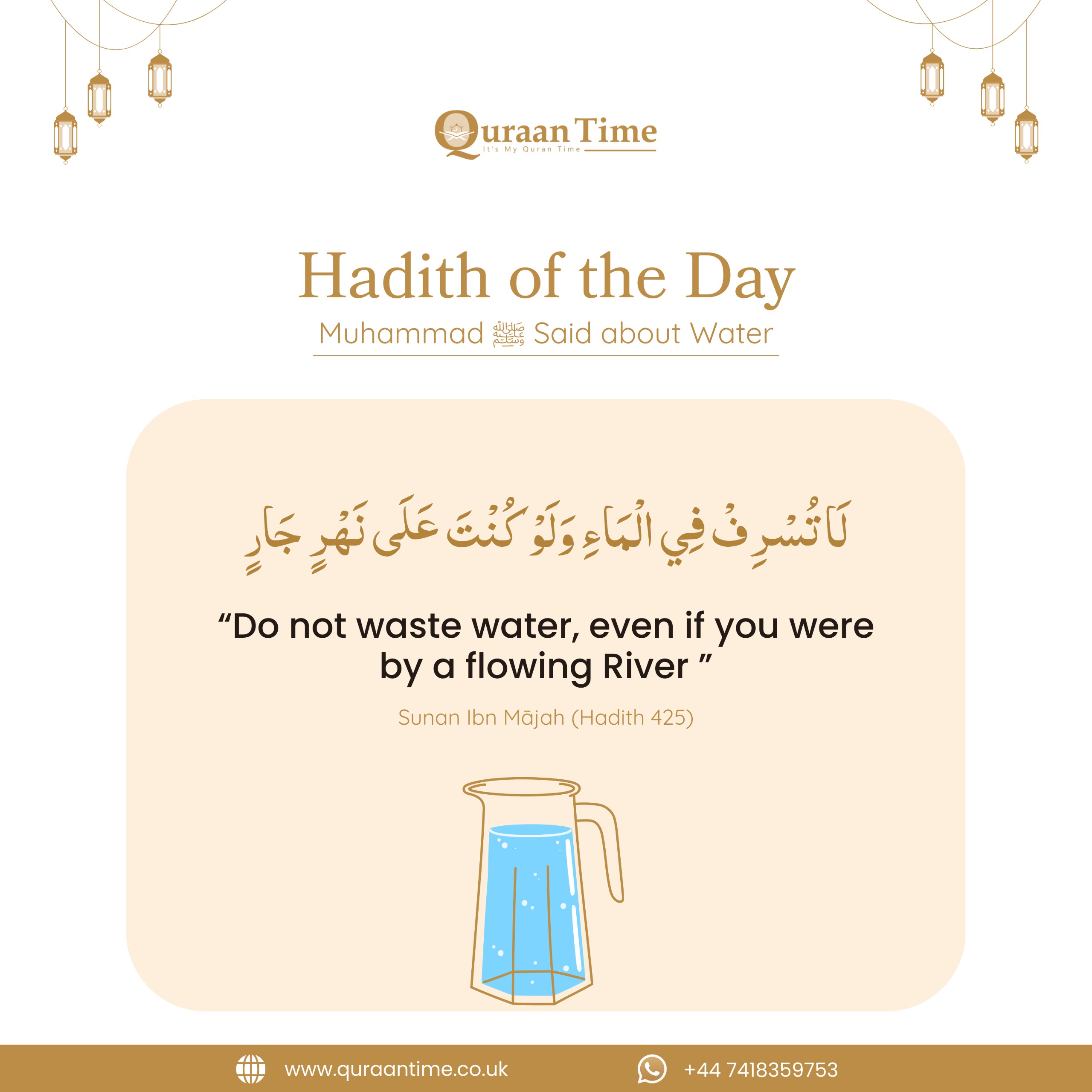
This profound hadith, narrated by the Prophet Muhammad (peace be upon him), transcends time and geography, offering a foundational principle for sustainable living. At its core, it establishes a spiritual and ethical framework for the conservation of natural resources, emphasizing that abundance does not justify wastefulness.
Revealed in 7th century Arabia—a desert region where water was synonymous with life—this teaching was revolutionary. It instilled a mindset of resourcefulness and respect for nature in a community where water was scarce. The Prophet (pbuh) modeled this: he performed ablution with just a handful of water and advised against excessive use even for religious rituals like wudu (ablution).
The instruction "even if you were by a flowing river" powerfully removes any potential excuse for waste. It teaches that our responsibility is intrinsic, not conditional upon scarcity. This principle directly applies to our modern context of running taps, long showers, and unnecessary consumption while parts of the world face severe droughts.
In an era of climate change and environmental crisis, this hadith provides a divine imperative for conservation. It aligns with modern ecological principles but roots them in faith and accountability to the Creator. Water in Islam is a trust (amanah) from Allah; wasting it is a violation of that trust.
Practical applications in our daily lives include fixing leaky faucets, using water-saving appliances, being mindful during wudu and ghusl, and educating children about conservation. It fosters an attitude of gratitude (shukr)—recognizing water as a blessing to be used wisely, not squandered.
To truly live by this hadith, we must move beyond intellectual understanding to habitual action. Place reminders near sinks and showers. Make du'a (supplication) to be among those who are grateful and not wasteful. Support charities that provide clean water to communities in need—this is a direct application of preserving and sharing the blessing.
The Prophet’s concern for water extends to protecting sources from pollution, ensuring fair access for all, and sharing with animals. This holistic view challenges us to consider our entire water footprint—from personal use to corporate and agricultural practices we support.
© Hadith of the Day Reflection. This content aims to promote understanding and implementation of Prophetic teachings. May we be among those who heed the guidance.
2025-12-31
Islamic Studies Portal