
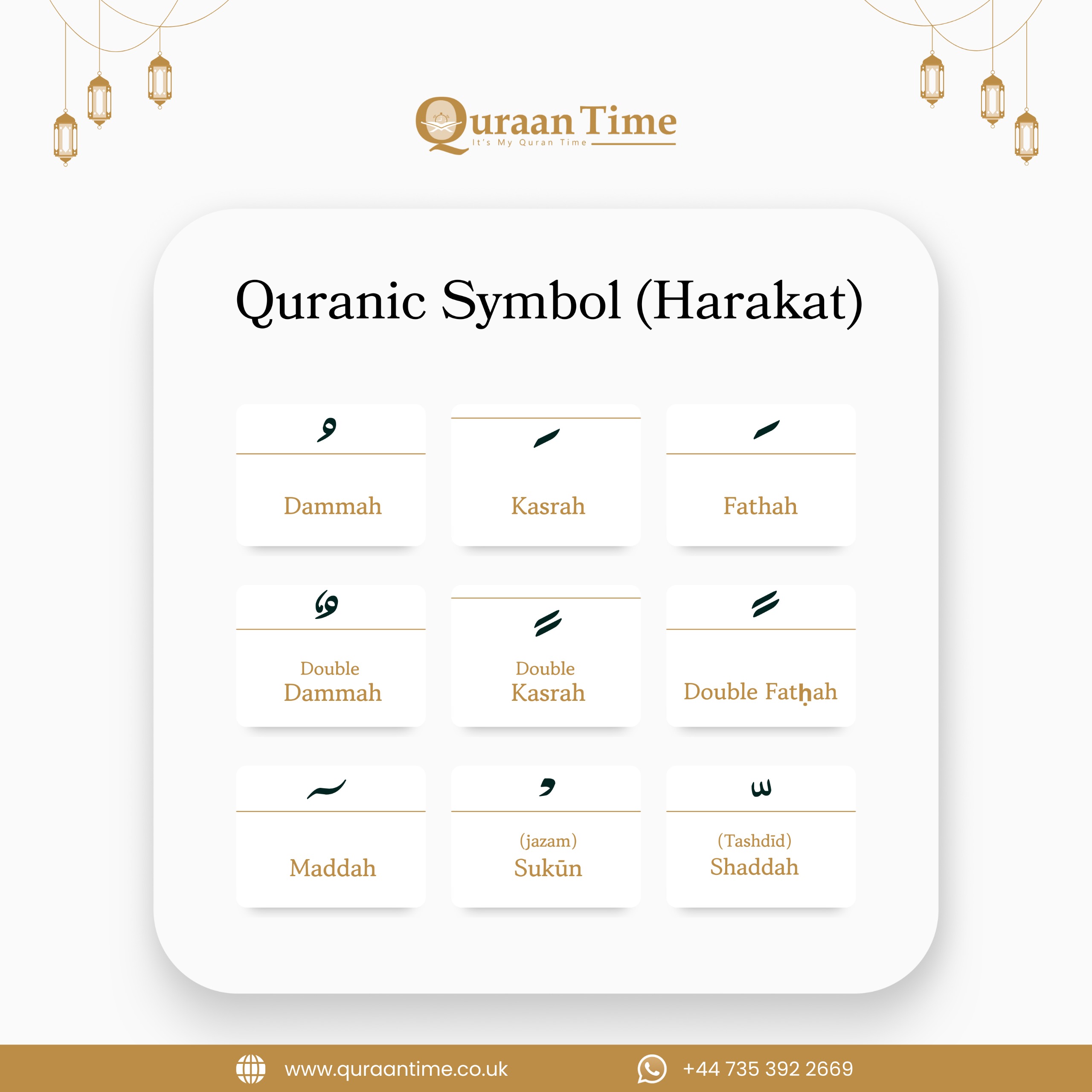
Quranic Symbol (Harakat)
Mastering Quranic Symbols: Harakat, Sukūn, and Shaddah
A Comprehensive Guide to Tajweed Diacritical Marks for Proper Quran Recitation
Introduction to Quranic Symbols (Harakat)
Quranic symbols, known as Harakat or diacritical marks, are essential components of proper Arabic pronunciation and Quran recitation. These symbols guide readers in vowel pronunciation, consonant emphasis, and phonetic rules that preserve the precise recitation revealed to Prophet Muhammad (PBUH). Mastering these symbols is fundamental to Tajweed – the science of Quranic recitation.
Did you know? The Quran was originally revealed without these diacritical marks. The current system was developed during the Umayyad Caliphate to preserve correct pronunciation as Islam spread to non-Arabic speakers.
Basic Harakat Symbols
These three primary symbols form the foundation of Arabic vowel pronunciation:
Dammah (ُ)
A small curl placed above a letter indicating a short "u" or "oo" sound, similar to the vowel in "put".
Kasrah (ِ)
Placed below a letter, producing a short "i" sound as in "sit". It's the equivalent of Fathah but with an 'i' vowel.
Fathah (َ)
A small diagonal line above a letter representing a short "a" sound, like the "a" in "cat".
Double Harakat (Tanween)
These symbols indicate nunation - a grammatical feature adding an "n" sound to the end of words:
Double Dammah (ٌ)
Indicates the sound "un" at the end of a word. Example: "kitābun" (a book).
Double Kasrah (ٍ)
Produces an "in" sound at word endings. Example: "baytin" (a house).
Double Fathah (ً)
Creates an "an" sound. Often appears on the last letter of indefinite accusative nouns.
Advanced Quranic Symbols
Maddah (آ)
A tilde-like symbol indicating elongated "aa" sound, typically over the letter Alif (ا).
Sukūn / Jazm (ْ)
A small circle indicating the absence of a vowel, creating a closed consonant sound.
Shaddah / Tashdid (ّ)
Resembles a small "w" shape indicating consonant doubling or emphasis.
Note: The Sukūn (jazm) is crucial for proper pronunciation as it indicates where to pause the vowel sound. The Shaddah requires holding the consonant for approximately two beats, effectively doubling its pronunciation.
Q&A: Common Questions About Quranic Symbols
Practical Tips for Mastering Harakat
- Start slowly: Practice each symbol individually before combining them in words
- Use audio resources: Listen to qualified Qaris (reciters) and imitate their pronunciation
- Practice with common words: Begin with frequently used Quranic vocabulary
- Focus on articulation points: Learn where each Arabic letter originates in the mouth
- Seek qualified instruction: Find a certified Tajweed teacher for personalized feedback
Begin Your Quranic Journey Today
Mastering Quranic symbols is the first step toward beautiful, correct Quran recitation. Whether you're a beginner or seeking to refine your Tajweed, understanding these diacritical marks transforms your relationship with the Quran.
Learn More About Quran CoursesContact: +44 735 392 2669