

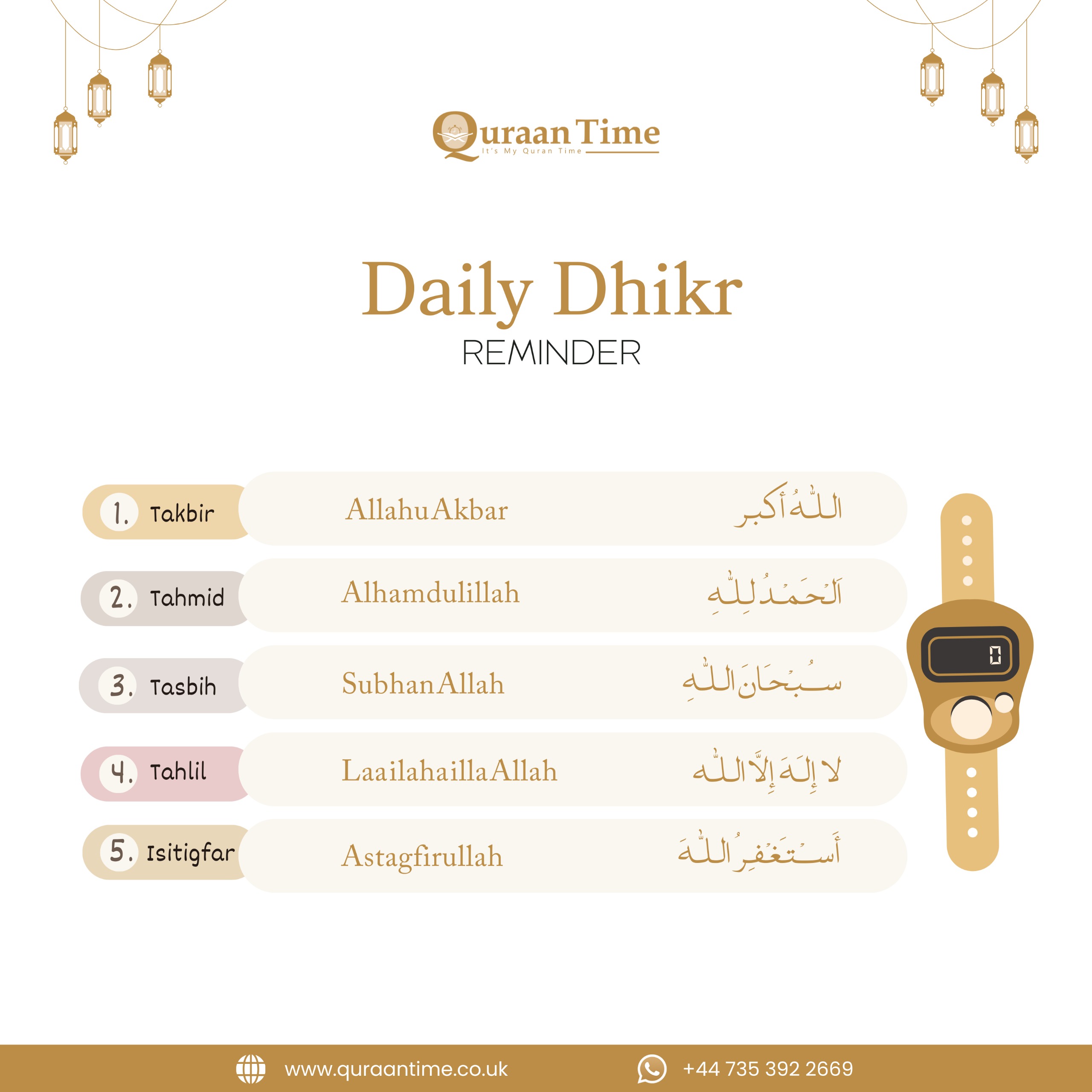
In the hustle and bustle of modern life, maintaining spiritual connection becomes both challenging and essential. The practice of Dhikr, or remembrance of Allah, serves as an anchor for Muslims seeking peace, purpose, and spiritual growth. This comprehensive guide explores the five foundational remembrances that form the cornerstone of daily spiritual practice.
These five essential phrases, when incorporated into daily routine, create a framework for continuous spiritual awareness and connection.
Meaning: "Allah is the Greatest"
Significance: This declaration puts everything in perspective, reminding us that no matter how large our problems seem, Allah is greater. It's a statement of submission and recognition of divine supremacy.
Meaning: "All praise is for Allah"
Significance: An expression of gratitude for all blessings, both apparent and hidden. This phrase cultivates contentment and protects against envy and dissatisfaction.
Meaning: "Glory be to Allah"
Significance: A declaration of Allah's perfection, free from any imperfection or partner. This remembrance purifies one's understanding of divine nature.
Meaning: "There is no deity worthy of worship except Allah"
Significance: The foundation of Islamic belief, this declaration affirms monotheism and serves as a constant reminder of life's ultimate purpose.
Meaning: "I seek forgiveness from Allah"
Significance: A recognition of human imperfection and a means of spiritual cleansing. Regular istighfar opens doors to mercy and divine assistance.
Incorporating these remembrances doesn't require special circumstances or specific times. They can be integrated into daily activities: while commuting, during breaks, before sleep, or upon waking. The key is consistency rather than quantity. Starting with just a few repetitions after each prayer can establish a sustainable habit that grows over time.
Start by making dhikr a family activity. Create a "remembrance time" where everyone sits together for just 5 minutes. Use visual aids like the chart in this article, and consider creating a reward system for consistency. Most importantly, let children see you practicing dhikr regularly - children learn best through observation. Make it joyful by celebrating when they remember on their own, and explain the meanings in simple, relatable terms.
Absolutely. While learning the meanings enhances the spiritual experience, the mere act of repeating these sacred words has benefit. Start by learning the phrases phonetically, then gradually learn their meanings. Many resources provide transliterations and explanations. The intention to connect with Allah is what matters most. Consider it a journey - begin with what you can manage, and your understanding will grow with time and effort.
There's flexibility in both count and order. Traditional practice often recommends 33 repetitions of each (Subhan Allah, Alhamdulillah, Allahu Akbar) after prayers, but you can start with whatever is manageable - even 3 or 10 times. The order presented here is common but not mandatory. The important aspect is regularity. Some find it helpful to use prayer beads (misbaha) to keep count, while others prefer counting on fingers as the Prophet Muhammad (peace be upon him) recommended for women.
Countless practitioners report transformative effects. Regular dhikr creates psychological benefits by reducing anxiety through repetition of comforting phrases. Spiritually, it maintains consciousness of Allah throughout the day. Socially, it improves relationships as patience and gratitude increase. Many notice that problems seem smaller when beginning with "Allahu Akbar," and challenges become more manageable with "Alhamdulillah." The effects often start subtly but compound significantly over time, much like physical exercise for the soul.
Modern psychology recognizes the benefits of repetitive positive affirmations and mindfulness practices. Dhikr combines these elements with spiritual dimensions. Neurological studies show that repetitive spiritual phrases can reduce cortisol levels (stress hormone) and increase feelings of peace and well-being. The rhythmic nature of dhikr can induce meditative states similar to those achieved in mindfulness meditation.
Our team at Qurqan Time is dedicated to supporting your spiritual journey. Whether you have questions about implementing dhikr in your daily routine or need resources for teaching children, we're here to help.
Visit Our WebsitePhone: +44 735 392 2669
Email: info@qurqantime.co.uk
May your journey of remembrance bring you closer to peace, purpose, and divine connection.