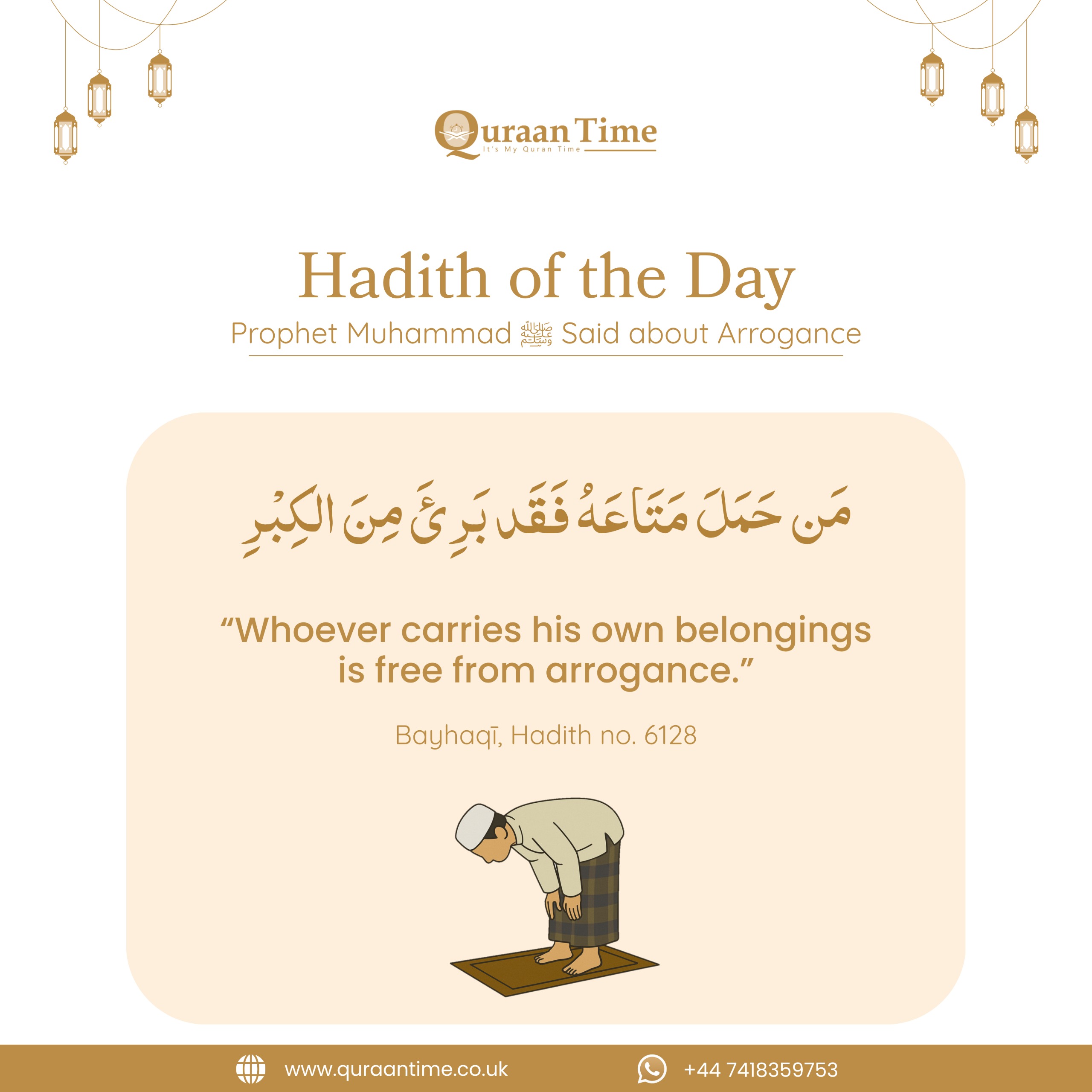
The Hadith in Arabic
مَن حَمَلَ مَتَاعَهُ فَقَد بَرِئَ مِنَ الكِبْرِ
Reference: Bayhaqī, Hadith no. 6128
Translation and Meaning
"Whoever carries his own belongings is free from arrogance."
This profound hadith teaches us that true humility is demonstrated through practical actions. By carrying our own possessions, we reject the notion of self-importance and embrace the Islamic virtue of modesty.
The wisdom behind this teaching extends beyond the physical act - it's about cultivating an attitude of self-reliance and rejecting artificial social hierarchies.
Questions & Answers: Teaching Humility to Children and Youth
Q:
How can I explain this hadith to my children in a way they'll understand?
Use age-appropriate examples they can relate to. Explain that when they carry their own school bag, tidy their room, or help with household chores, they're practicing the humility that Prophet Muhammad taught. Compare it to superheroes who are powerful but still help others without boasting.
- Teacher Aisha, Islamic Studies Coordinator
Q:
My teenager thinks carrying their own things is 'uncool'. How should I address this?
This is a common challenge. Frame it as strength and independence rather than being 'uncool.' Share stories of successful, respected people who practice humility. Explain that true confidence doesn't need validation through being served by others. The Prophet himself, despite his status, mended his own shoes and helped with household work.
- Dr. Omar, Youth Counseling Specialist
Q:
In what practical ways can we implement this hadith in our family life?
Create a family culture where everyone contributes. Assign age-appropriate chores to all family members. Practice carrying groceries together instead of having one person bear the burden. When traveling, each family member should be responsible for their own luggage. Most importantly, model this behavior yourself - children learn more from what they see than what they're told.
- Family Counselor Khadija
Q:
How does this teaching relate to modern concepts of self-esteem and confidence?
Islamic humility actually builds genuine self-esteem. When children learn to be self-reliant and serve others, they develop competence and real confidence. This contrasts with false self-esteem based on external validation. The hadith teaches that true strength lies in humility, not in dominating others or avoiding 'menial' tasks.
- Educational Psychologist Fatima
Q:
What if we have domestic help? Does this mean we shouldn't use their services?
Having help is permissible in Islam, but the spirit of the hadith should be maintained. This means treating helpers with utmost respect and dignity, not considering oneself inherently superior, and still performing some tasks oneself to maintain humility. The Prophet had companions who had servants but still practiced personal service to maintain their humility.
- Islamic Scholar Yusuf