

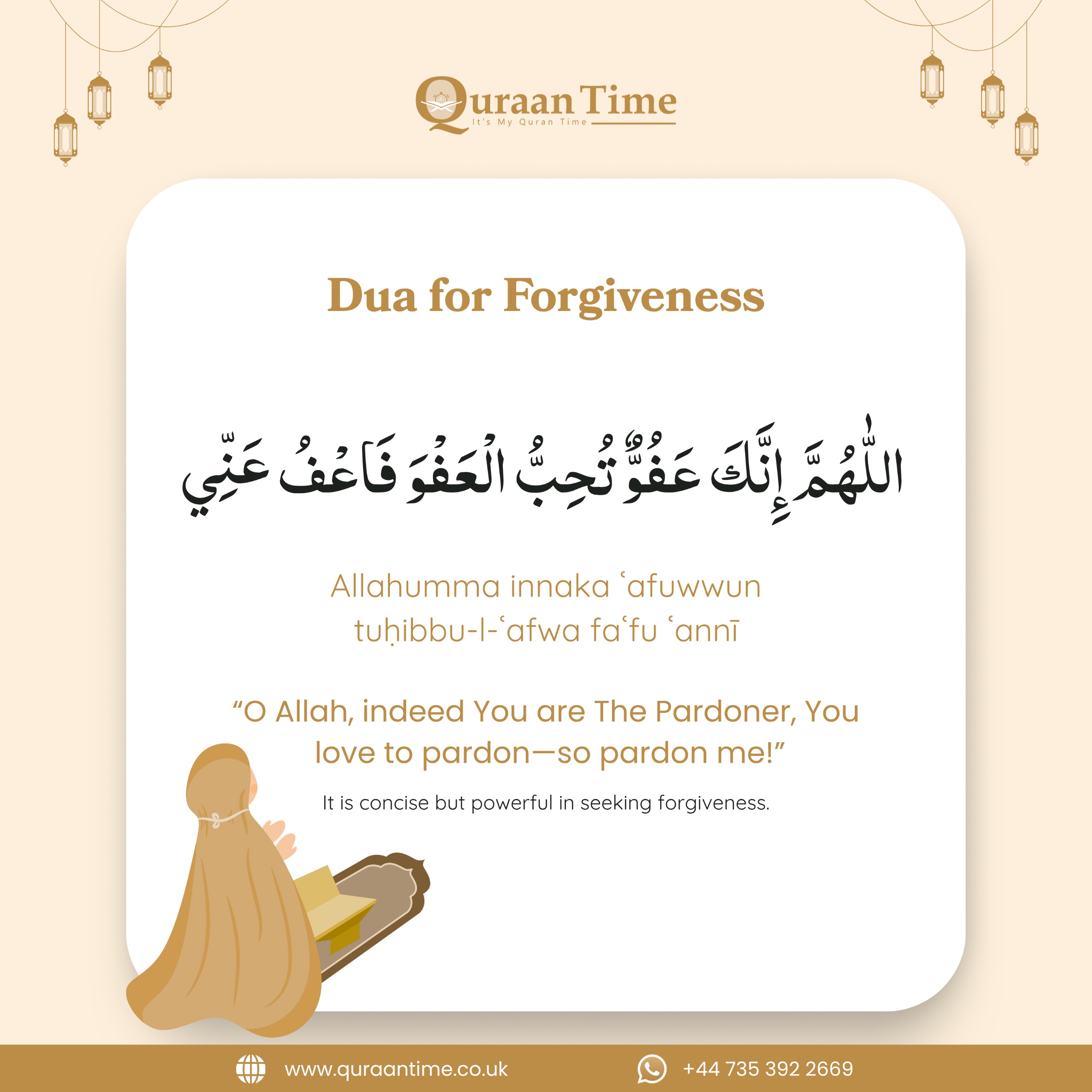
Discover the transformative power of this concise yet profound Islamic prayer
This powerful dua, though brief, contains deep spiritual meaning and connection with the Divine.
English Translation: "O Allah, indeed You are The Pardoner, You love to pardon - so pardon me!"
This dua beautifully acknowledges Allah's attributes of forgiveness and His love for forgiving His servants, while making a heartfelt plea for personal forgiveness.
This dua establishes a direct connection with Allah through His beautiful names and attributes, particularly His quality of being Al-'Afuww (The Pardoner).
Regular recitation helps in spiritual purification, removing the stains of sins and mistakes from one's spiritual record.
The act of seeking forgiveness brings peace to the heart and relief from the burden of past errors.
Seeking forgiveness opens doors to Allah's mercy and increases provisions and blessings in one's life.
Teacher's Answer: For young children, simplify the concept by saying: "This is a special prayer where we ask Allah, who loves to forgive, to clean our hearts. Just like we take baths to clean our bodies, this prayer cleans our hearts from mistakes." Use analogies they understand and make it a positive, loving conversation about Allah's mercy.
Teacher's Answer: The optimal times are during bedtime routines or after prayers. You can also incorporate it into daily activities - after making a mistake, gently remind them that we can always ask Allah for forgiveness. Consistency is more important than the specific timing. The Prophet Muhammad (PBUH) recommended seeking forgiveness frequently throughout the day.
Teacher's Answer: For teenagers, focus on the psychological and spiritual benefits. Discuss how seeking forgiveness reduces guilt and anxiety. Share stories from the Quran and Hadith about forgiveness. Encourage them to research the deeper meaning of Allah's name "Al-'Afuww" and create a "forgiveness journal" where they can reflect on times they sought forgiveness and how it made them feel.
Teacher's Answer: Emphasize that Allah's mercy is greater than our mistakes. Share the hadith where the Prophet (PBUH) said that if we didn't sin, Allah would replace us with people who do sin and then seek forgiveness. Teach them that the shaytan wants us to feel hopeless, while Allah wants us to always turn back to Him. The very act of seeking forgiveness is beloved to Allah.
Recite this dua every morning and evening as part of your daily remembrance of Allah.
Make it a habit to recite this dua after your five daily prayers for consistent spiritual cleansing.
Include this dua in family gatherings or bedtime routines with children to build collective spiritual practice.
Take a moment to reflect on the meaning while reciting, internalizing the concepts of divine mercy and forgiveness.