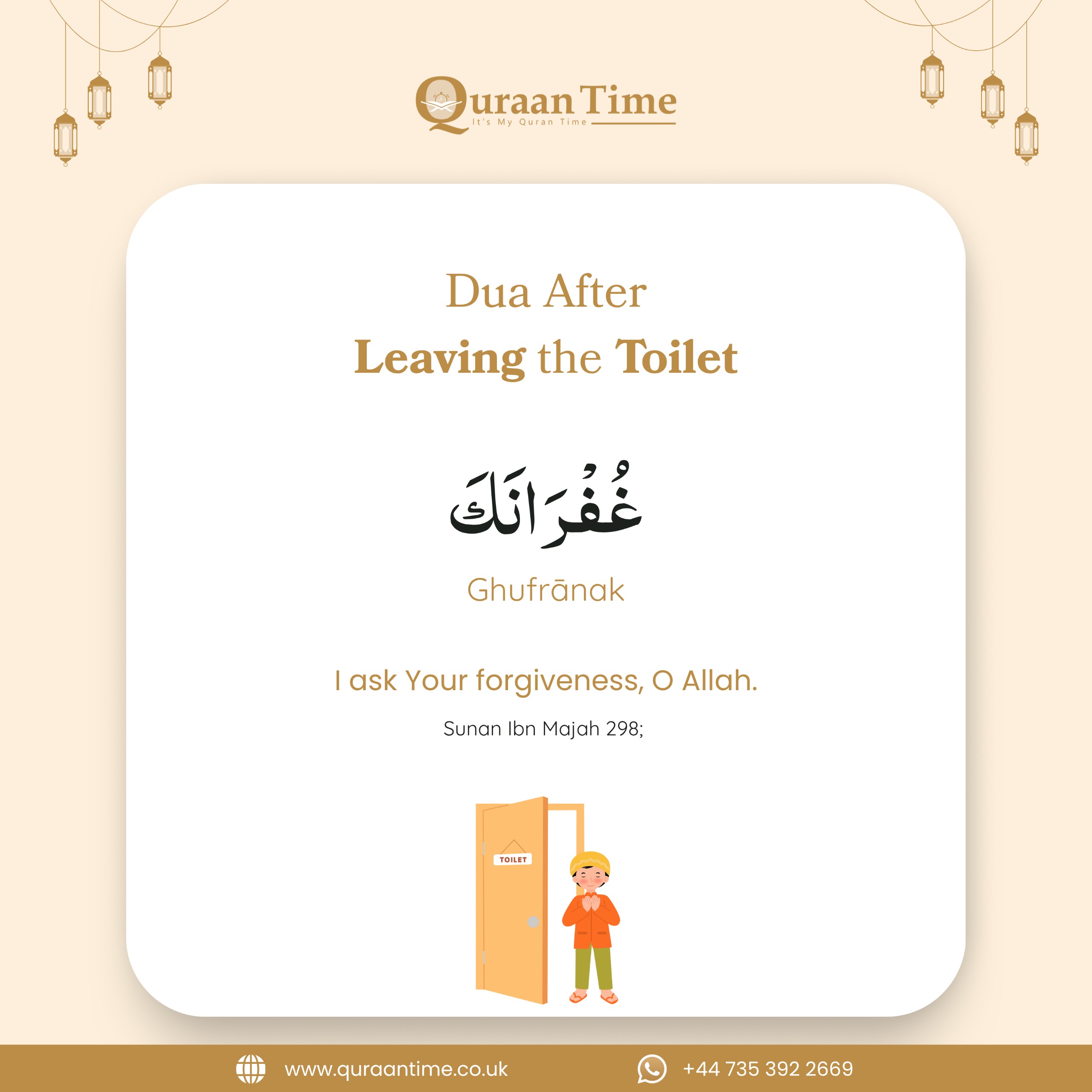
In the beautiful comprehensive guidance of Islam, every action has a beginning and an end, each with its own spiritual significance. Just as we begin our entry into the bathroom with a specific supplication seeking protection, we conclude this private act with another profound dua - a simple yet powerful prayer seeking Allah's forgiveness and mercy. This completion of the cycle reflects the holistic nature of Islamic teachings that encompass every aspect of our daily lives.
غُفْرَانَكَ
Ghufrānak
"I ask Your forgiveness, O Allah."
Authentically reported in Sunan Ibn Majah (298)
Spiritual Purification
This dua serves as a spiritual cleansing, complementing the physical purification and preparing you to re-enter spaces of prayer and remembrance.
Continuous Repentance
It instills the habit of constantly turning to Allah for forgiveness, recognizing our human imperfections and need for divine mercy.
Completing the Sunnah
By reciting this dua, you complete the full cycle of bathroom etiquette as taught by Prophet Muhammad (peace be upon him).
Common Questions About the Exit Dua
Parent's Question:
"Why do we seek forgiveness after leaving the bathroom? What have we done wrong?"
Teacher's Response:
"This is a beautiful question. We're not seeking forgiveness for a specific sin, but rather acknowledging our human state and our constant need for Allah's mercy. It's about maintaining a state of spiritual awareness and gratitude for being able to complete this natural function. The Prophet taught us to be grateful for every blessing, including the ability to relieve ourselves comfortably."
Parent's Question:
"My children find it hard to remember both the entry and exit duas. Should I focus on teaching one first?"
Teacher's Response:
"Start with the exit dua as it's shorter and easier to memorize. Once they've mastered 'Ghufrānak', then introduce the entry dua. You can make it a game - 'We say special words when we go in, and special words when we come out!' Praise them when they remember, and gently remind them when they forget. Consistency and positive reinforcement are key."
Parent's Question:
"Should we step out with a specific foot like we enter with the left foot?"
Teacher's Response:
"Yes, it's recommended to exit with the right foot while reciting this dua. The right foot is generally used for entering blessed places like mosques and homes, while the left is for entering less clean areas. So when leaving the bathroom, we step out with our right foot, symbolizing our return to clean, blessed spaces."
Parent's Question:
"What if I forget to say the dua until I've already walked away from the bathroom?"
Teacher's Response:
"You can still say it when you remember. The mercy of Allah encompasses our forgetfulness. The scholars mention that if you remember shortly after leaving, you should still recite the dua. The important thing is the consciousness and intention to follow the Sunnah. Don't let perfect become the enemy of good - it's better to say it late than not at all."
Complete Bathroom Etiquette in Islam
- Enter with left foot while reciting the entry protection dua
- Observe proper hygiene and cleanliness practices
- Exit with right foot while reciting "Ghufrānak"
- Wash hands thoroughly after completing
- If performing wudu, continue with ablution steps
- Maintain this complete sunnah consistently
A Cycle of Consciousness
The dua after leaving the toilet completes a beautiful cycle of Islamic etiquette that begins with seeking protection and ends with seeking forgiveness. This practice teaches us to bookend even our most private moments with remembrance of Allah, transforming mundane activities into acts of worship. The simplicity of "Ghufrānak" - just one word in Arabic - makes it accessible to Muslims of all ages and backgrounds, yet its meaning carries profound spiritual significance that keeps us connected to our Creator throughout our day.