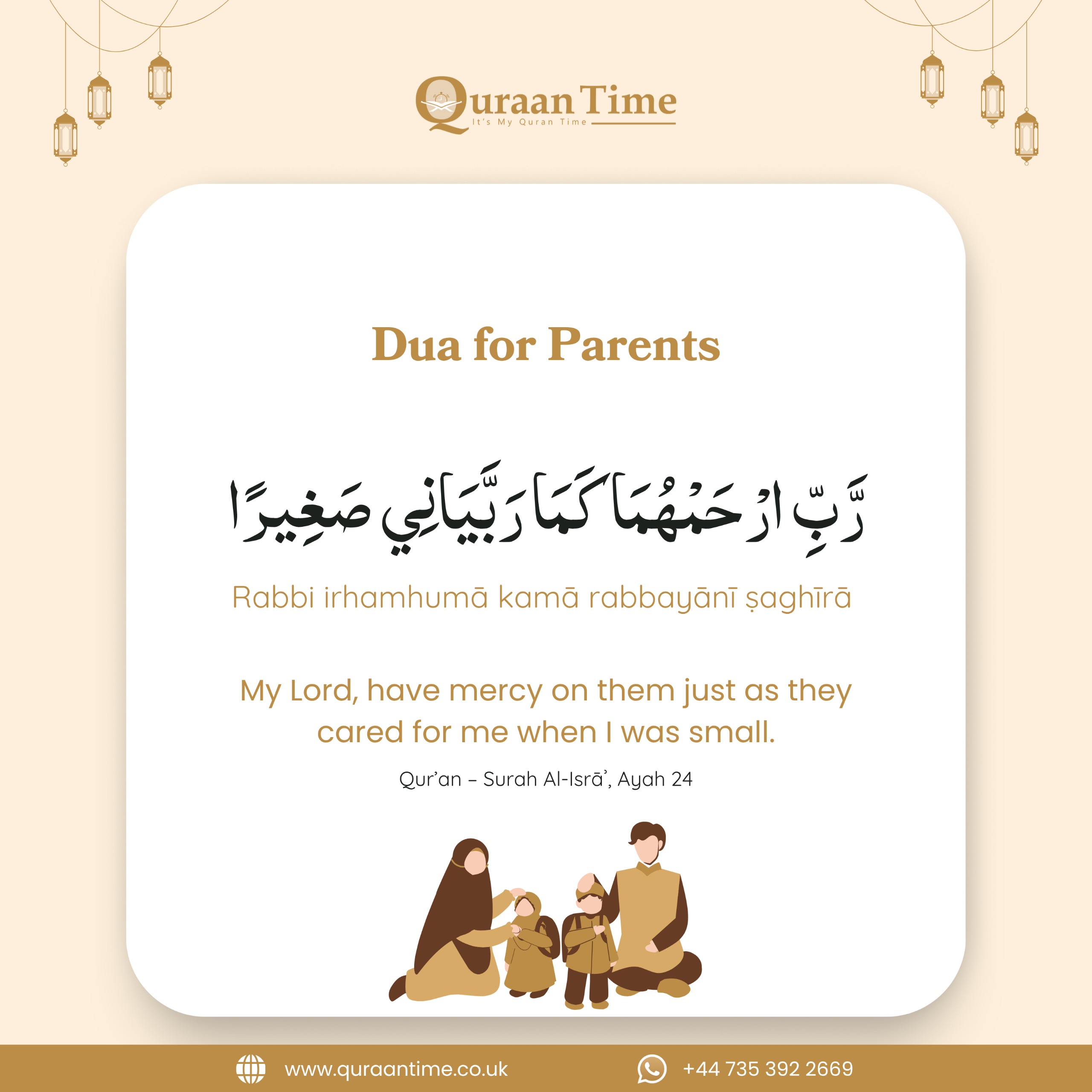
رَبِّ ارْحَمْهُمَا كَمَا رَبَّيَانِي صَغِيرًا
"My Lord, have mercy on them both as they brought me up when I was small."
Qur'an - Surah Al-Isrā', Ayah 24
The Significance of This Dua
This beautiful dua from the Quran represents one of the most profound expressions of gratitude and respect towards parents in Islam. It's not just a prayer, but a comprehensive approach to maintaining the bonds of kinship and showing appreciation for the sacrifices parents make.
The verse comes at a crucial point in Surah Al-Isra, where Allah commands worship of Him alone and then immediately emphasizes kindness to parents. This connection highlights how important honoring parents is in the Islamic faith.
Why This Dua is So Important
- Divine Connection: It's directly from the Quran, making it a prayer blessed by Allah
- Comprehensive Mercy: It asks for the same mercy parents showed us in childhood
- Timeless Relevance: Applicable whether parents are alive or deceased
- Spiritual Benefits: Regular recitation brings blessings and increases sustenance
- Emotional Healing: Helps heal relationships and express unspoken gratitude
Common Questions About Dua for Parents
When is the best time to recite this dua?
This dua can be recited at any time, but it's especially powerful during prayers, after obligatory salah, in the last third of the night, and on Fridays. Many scholars recommend making it a regular part of your daily supplications.
Can I recite this dua if my parents have passed away?
Absolutely. This dua is beneficial for both living and deceased parents. For parents who have passed away, the dua becomes a means of sending blessings to them and can increase their status in the hereafter. The mercy you ask for them continues to benefit them in their graves.
What if I had difficult relationships with my parents?
This dua can be particularly healing in such situations. It doesn't require you to ignore past difficulties, but focuses on asking Allah to have mercy on them "as they raised you when you were small." Even in difficult relationships, there were likely moments of care and sacrifice you can acknowledge. The dua helps cultivate forgiveness and compassion.
How can I teach this dua to my children?
Start by explaining the meaning in simple terms. Use stories from the Prophet's life (peace be upon him) about honoring parents. Make it part of your family's daily routine - perhaps after Maghrib prayer. Children learn best by example, so let them see you regularly making this dua for your own parents.
Benefits of Regular Recitation
🕋
Spiritual Growth
Strengthens your connection with Allah and increases your faith
❤️
Emotional Healing
Helps resolve past issues and cultivates compassion
👨👩👧👦
Family Harmony
Brings blessings to family relationships and creates peace
📈
Increased Blessings
Opens doors to rizq and divine mercy in all affairs
Making It Part of Your Life
Incorporating this dua into your daily routine doesn't require major changes. Start small - recite it once after Fajr prayer, or before going to sleep. The key is consistency rather than quantity.
As you make this dua regularly, you'll notice subtle changes in your relationship with your parents and in your own spiritual state. The words will begin to carry deeper meaning as you reflect on the countless sacrifices your parents made for you.
Remember that in Islam, being dutiful to parents is second only to worshipping Allah. This dua is a powerful tool in fulfilling that sacred duty.
Start Your Journey of Spiritual Connection Today
Join our community learning about Islamic prayers and their profound meanings
Learn More About Islamic Duas