

In the Islamic tradition, bedtime is not merely a physical rest but a spiritual transition. The dua (supplication) before sleeping holds profound significance, connecting believers with Allah in their most vulnerable state. This article explores the beautiful supplication: "Allāhumma Bismika Amūtu wa Ahyā" and its importance in a Muslim's daily life.
This brief yet powerful supplication encapsulates the Islamic worldview on life, death, and the continuous cycle of existence. By reciting these words before sleep, Muslims acknowledge that sleep is a minor form of death and waking is a form of resurrection, both entirely in Allah's control.
Instilling this beautiful practice in children from a young age helps develop their spiritual identity and connection with Allah. Here are some practical approaches:
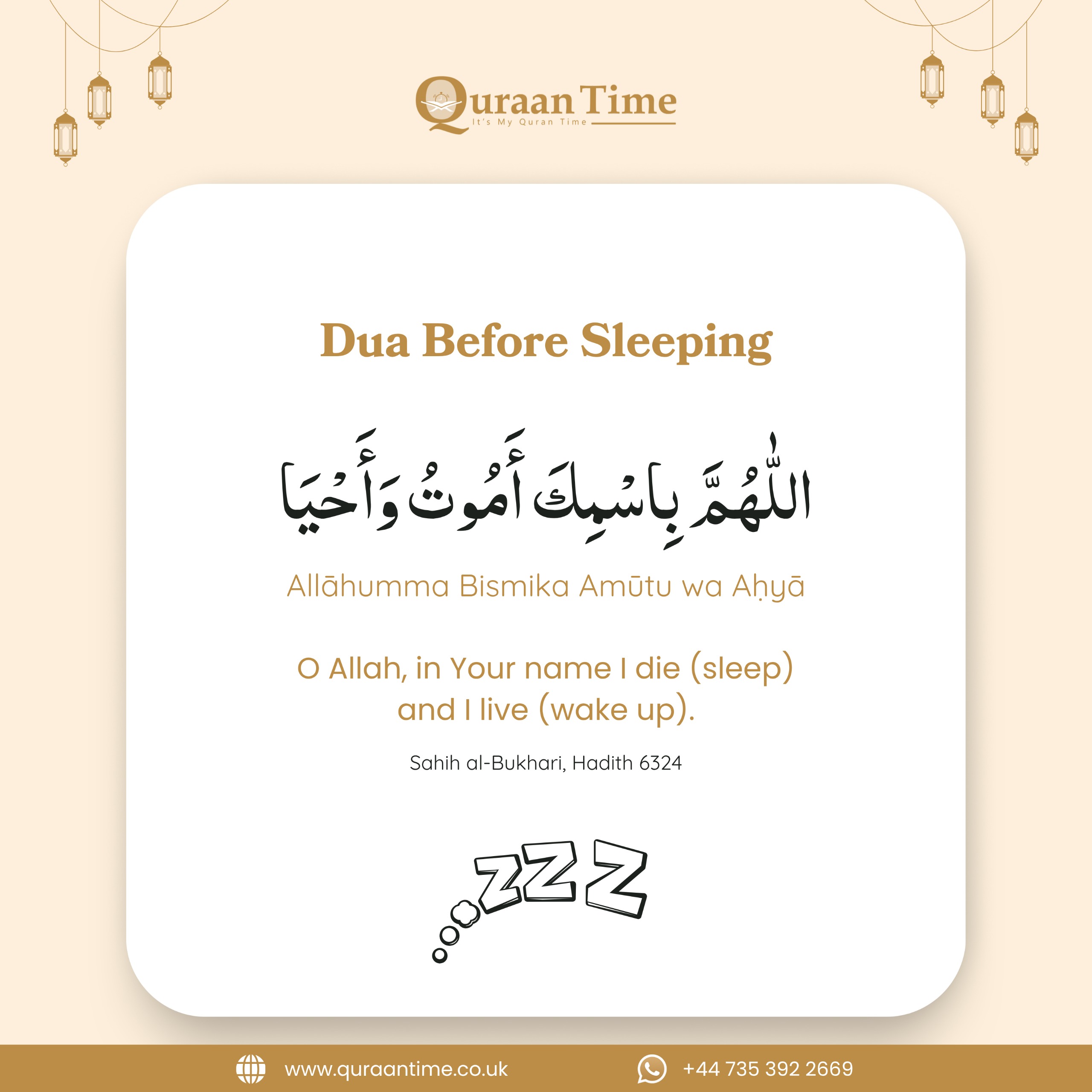
The dua is: اللَّهُمَّ بِاسْمِكَ أَمُوتُ وَأَحْيَاا"
Transliteration: "Allāhumma Bismika Amūtu wa Ahyā"
Translation: "O Allah, in Your name I die (sleep) and I live (wake up)."
This supplication is mentioned in Sahih al-Bukhari, Hadith 6324, making it one of the most authentic references in Islamic literature.
Children can begin learning short duas as early as 2-3 years old. Start with simple repetition and gradually explain the meaning as they grow older. The key is to make it a natural part of their bedtime routine.
Yes, there are several other recommended bedtime supplications, including Ayat-ul-Kursi (Quran 2:255), the last two verses of Surah Al-Baqarah, and various other prophetic supplications for protection during sleep.
Gently remind them without criticism. You can say, "Let's not forget to ask Allah for protection before we sleep." The goal is to create a positive association with the practice rather than making it feel like a burdensome obligation.
Making the bedtime dua a family practice strengthens spiritual bonds and creates a household environment centered on Islamic values. Consider these approaches:
The dua before sleeping is a profound practice that transforms the simple act of resting into an act of worship. By reciting "Allāhumma Bismika Amūtu wa Ahyā," Muslims affirm their belief in Allah's control over life and death, seek protection during vulnerability, and maintain a continuous connection with their Creator. Teaching this practice to children ensures the preservation of this beautiful tradition for generations to come.