

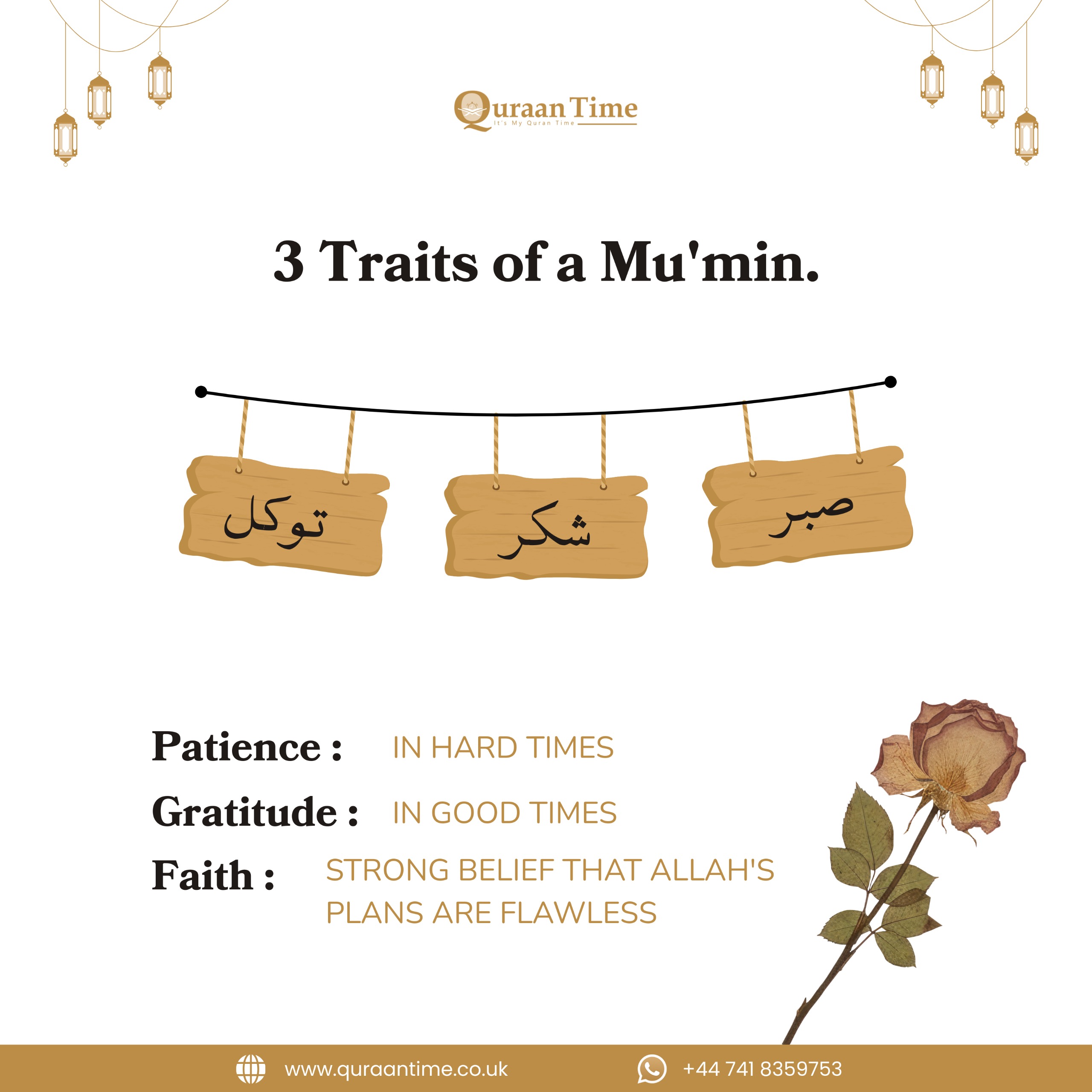
The life of a true believer (Mu'min) is characterized by specific traits that shape their response to life's challenges and blessings. These three essential qualities—patience in hardship, gratitude in prosperity, and unwavering faith in divine wisdom—form the foundation of a spiritually fulfilled life.
"IN HARD TIMES"
Patience, or Sabr, is not merely passive endurance but an active, conscious perseverance in the face of adversity. It's the ability to maintain composure, trust, and steadfastness when life presents its most difficult challenges.
For a Mu'min, patience is a multifaceted virtue that encompasses:
True patience is rooted in the understanding that every difficulty carries wisdom and potential reward. The Quran reminds us: "Indeed, Allah is with the patient" (Quran 2:153). This divine companionship transforms the experience of hardship into an opportunity for spiritual elevation.
"IN GOOD TIMES"
Gratitude, or Shukr, is the conscious acknowledgment and appreciation of blessings. While patience is the test of adversity, gratitude is the test of prosperity. A Mu'min recognizes that all blessings—great and small—are divine gifts that require acknowledgment.
Genuine gratitude manifests in three dimensions:
The Prophet Muhammad (peace be upon him) said: "Whoever does not thank people has not thanked Allah" (Sunan Abi Dawud). This teaching connects divine gratitude with human interactions, creating a comprehensive ethic of thankfulness that permeates all aspects of life.
"STRONG BELIEF THAT ALLAH'S PLANS ARE FLAWLESS"
At the core of both patience and gratitude lies unwavering faith—the conviction that Allah's plan is perfect, even when our limited understanding cannot comprehend its wisdom. This trait enables a Mu'min to navigate life's uncertainties with serenity and trust.
Key aspects of this faith include:
This profound trust is beautifully expressed in the Quranic verse: "But perhaps you hate a thing and it is good for you; and perhaps you love a thing and it is bad for you. And Allah Knows, while you know not" (Quran 2:216). A Mu'min lives by this principle, finding peace in surrender to divine wisdom.
Teaching patience begins with modeling it ourselves. Create situations that require waiting, like delayed gratification for rewards. Use stories from the Quran and the lives of prophets to illustrate patience in action. Most importantly, validate children's feelings while gently guiding them toward endurance. Simple practices like waiting a few minutes before eating a treat or completing a task before screen time can build this muscle gradually.
Establish a family gratitude ritual, such as sharing three blessings before meals or at bedtime. Create a "gratitude jar" where family members deposit notes about things they're thankful for. Encourage children to thank people directly—teachers, cashiers, siblings. Also, connect blessings to their Source by regularly saying "Alhamdulillah" for both big and small things. Studies show that families who practice gratitude together experience stronger bonds and greater overall happiness.
First, acknowledge that doubt during hardship is human—even prophets questioned. The key is where we