

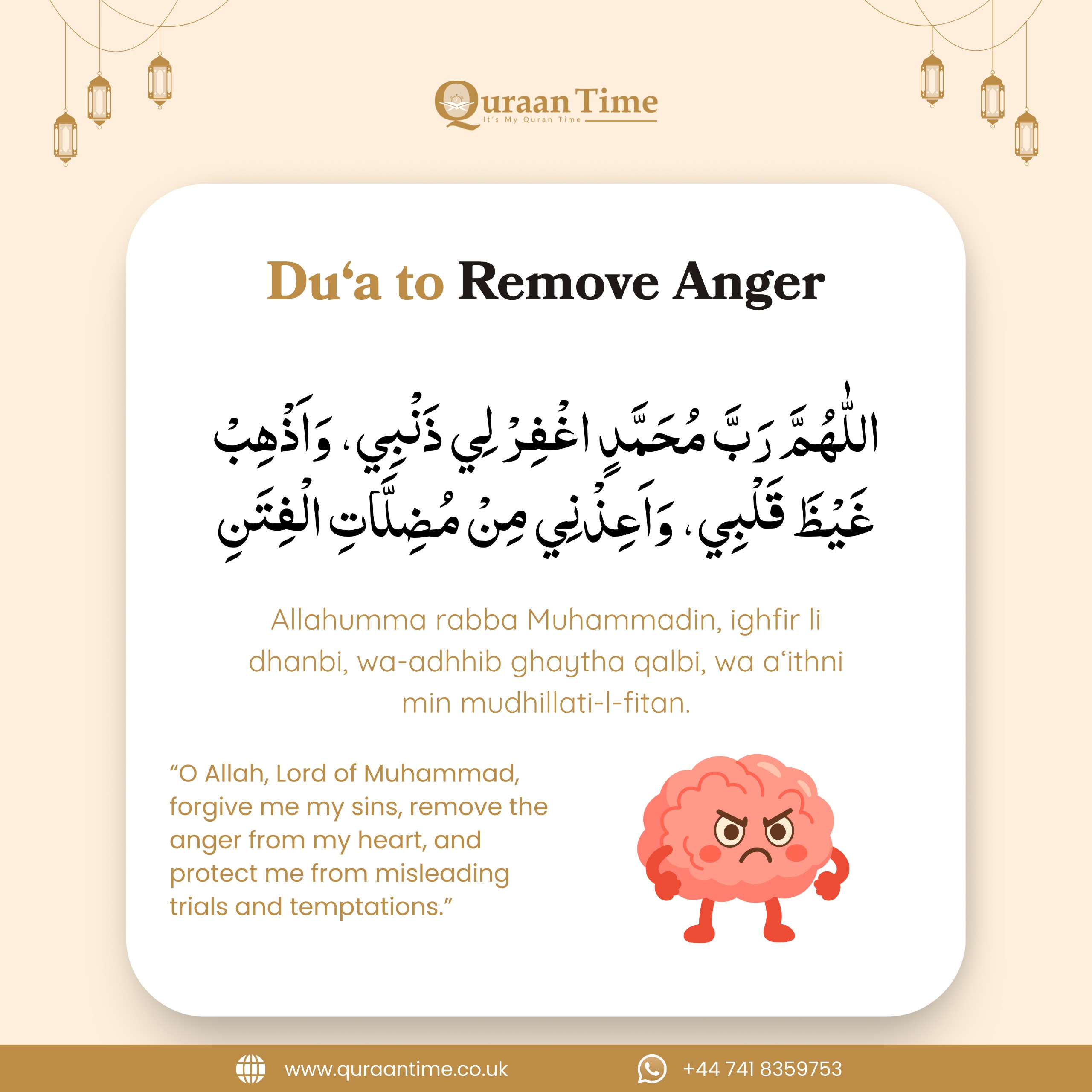
In both Islamic tradition and modern psychology, anger is recognized as a powerful emotion that requires conscious management. This article explores the profound supplication (du'a) taught by Prophet Muhammad (peace be upon him) specifically for removing anger from the heart, examining its spiritual significance, psychological benefits, and practical applications in daily life.
The du'a begins with seeking Allah's forgiveness for sins. Spiritual cleansing is often the first step toward emotional healing, as guilt and regret can fuel negative emotions.
The core request addresses the emotional state directly, asking Allah to extract anger from the heart. This acknowledges that ultimate control over emotions resides with the Creator.
The concluding portion seeks protection from misguidance, recognizing that anger often leads to poor decisions and spiritual vulnerability.
Modern psychology identifies anger as a secondary emotion typically masking deeper feelings like hurt, fear, or frustration. The du'a to remove anger operates on multiple psychological levels:
Cognitive Pause: Reciting the du'a creates a mandatory pause between stimulus and response, disrupting the automatic anger cycle and allowing prefrontal cortex engagement.
Emotional Labeling: Verbalizing "remove anger from my heart" helps identify and externalize the emotion, reducing its intensity through metacognitive awareness.
Spiritual Reframing: By attributing control to a higher power, individuals release the burden of emotional management alone, reducing anxiety about controlling uncontrollable feelings.
Teacher's Perspective: Start by teaching the du'a in short segments. Focus on the meaning rather than perfect pronunciation initially. Create visual aids with the Arabic text and translation. Use storytelling to explain situations where the Prophet (PBUH) or companions used similar supplications.
Parent's Perspective: Model using the du'a yourself when frustrated. Create a "calm corner" with the du'a displayed. Practice together during calm moments, not just during anger episodes. Reward effort in using the du'a, not perfect recitation.
Teacher's Perspective: Explain that emotional healing is often gradual, not instantaneous. The du'a is a tool, not a magic spell. Encourage repetition and patience. Discuss complementary strategies: wudu (ablution), changing physical position, or temporarily leaving the situation.
Parent's Perspective: Normalize repeated use. Share your own experiences with gradual emotional change. Create a family practice of reciting the du'a together at designated times to build the habit before crises occur. Track progress through journaling.
Teacher's Perspective: The du'a complements cognitive-behavioral techniques beautifully. The recognition phase aligns with emotional awareness exercises. The supplication itself serves as a cognitive restructuring tool. The spiritual dimension adds motivation and meaning beyond secular approaches.
Parent's Perspective: We use the du'a alongside breathing exercises and "time-in" rather than time-out. The spiritual component provides a values-based foundation for emotional regulation. We've found children more willing to engage with anger management when framed as both religious practice and life skill.
Teacher's Perspective: While the du'a can be recited anytime, traditional teachings emphasize certain optimal conditions: after obligatory prayers, during the last third of the night, while in prostration, or immediately upon feeling anger's onset. Consistency matters more than timing perfection.
Parent's Perspective: We've made it part of our morning and evening routines to build familiarity. During anger moments, we focus on sincerity over perfect conditions. Even whispered or silent recitation while taking deep breaths proves effective. The key is establishing the neural pathway connecting emotional distress with this spiritual response.
Step 1: Memorize the du'a in manageable parts. Start with the English meaning, then transliteration, then Arabic text.
Step 2: Create physical reminders. Place the du'a in visible locations: refrigerator, car dashboard, phone wallpaper.
Step 3: Establish a trigger response. Pair the du'a with a physical action (deep breath, closing eyes, placing hand on heart).
Step 4: Practice during neutral moments. Recite 3 times daily regardless of emotional state to build association.
Step 5: Reflect on changes. Note emotional shifts in a journal without judgment.
This article includes JSON-LD schema markup for:
These structured data elements help search engines understand and display this content effectively in search results.
The du'a to remove anger represents a profound integration of spiritual wisdom and emotional intelligence. By addressing the symptom (anger), the root (spiritual disconnection), and the consequence (poor decisions), it offers a comprehensive approach to emotional regulation. Whether used in classroom settings, family environments, or personal practice, this supplication provides a timeless tool for navigating one of humanity's most challenging emotions with grace, awareness, and divine connection.