

Dua for Sehri

Dua for Sehri

The Complete Guide to Dua for Sehri (Suhoor)

Understanding the significance, proper recitation, and spiritual benefits of the Sehri intention (Niyyah)

The Spiritual Significance of Sehri

Sehri (or Suhoor) is the pre-dawn meal Muslims consume before beginning their daily fast during Ramadan. Beyond physical nourishment, this time holds immense spiritual value. The act of waking up before dawn, preparing to fast, and making the intention (niyyah) is a worship in itself.

The Prophet Muhammad (peace be upon him) said: "The difference between our fasting and the fasting of the People of the Book is eating Sahoor." This emphasizes the uniqueness and importance of this blessed meal and the accompanying dua.

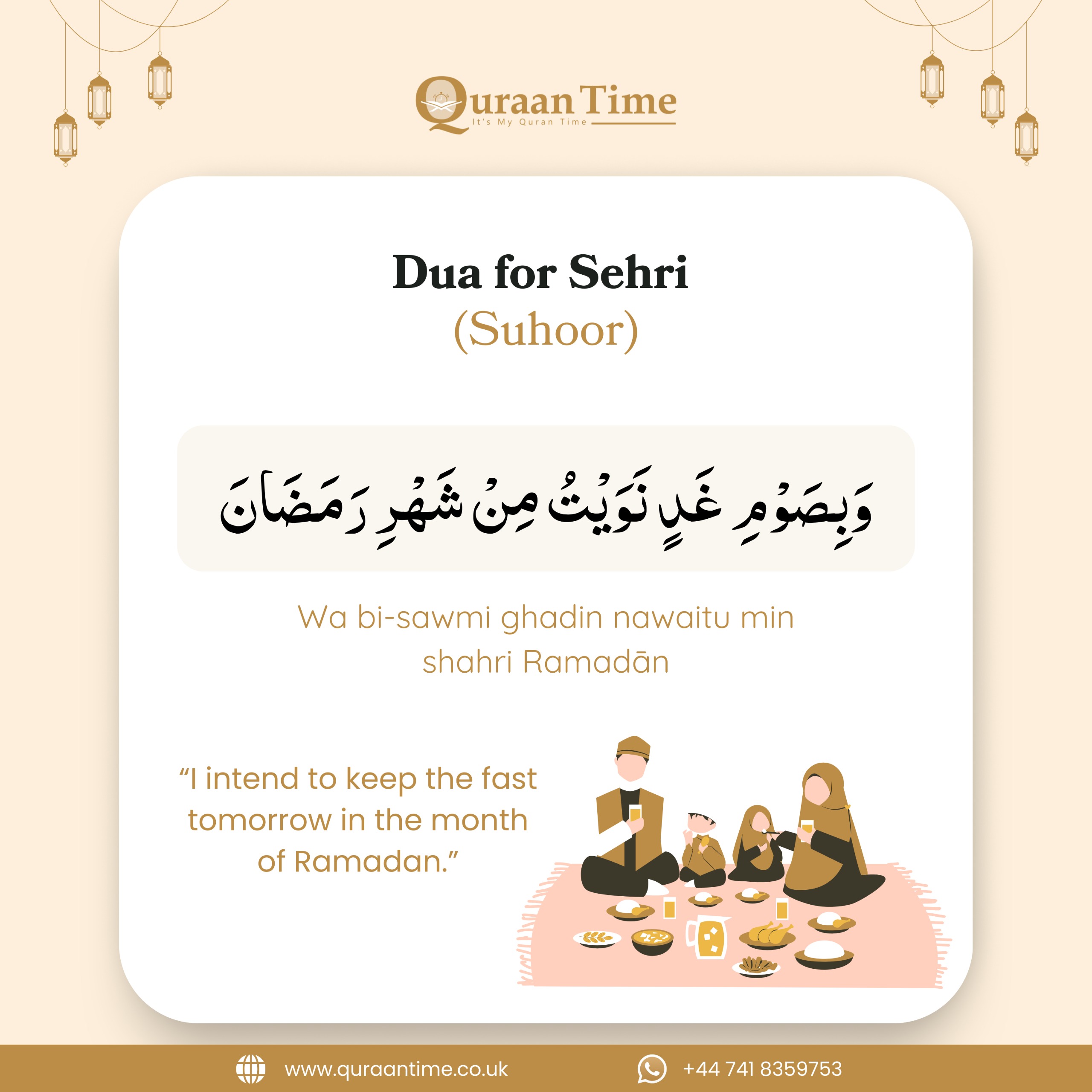
وَبِصَوْمِ غَدٍ نَوَيْتُ مِنْ شَهْرِ رَمَضَانَ
Wa bi-sawmi ghadin nawai tu min shahri Ramadān
"I intend to keep the fast tomorrow in the month of Ramadan."

Q&A: Common Questions About Sehri Dua

Parent: What if I forget to recite the dua at Sehri time?

+

Teacher: The intention (niyyah) for fasting is primarily in the heart. While verbalizing the dua is recommended and brings spiritual focus, if you forget to say it but had the intention in your heart to fast, your fast is still valid according to most scholars. However, try to make it a consistent practice.

Note: The Prophet (PBUH) emphasized consistency in good deeds, even small ones.

Parent: Can I make the intention in my native language?

+

Teacher: Yes, absolutely. While learning and reciting the Arabic dua is highly recommended as it connects you to the original revelation, the essence is the intention in your heart. You can say in your own language: "I intend to fast tomorrow for Ramadan." The key is conscious awareness of your intention to fast for the sake of Allah.

Parent: What is the best time to recite the Sehri dua?

+

Teacher: The optimal time is during the last portion of the night before Fajr prayer begins, ideally after you've finished eating your Sehri meal. It should be recited before the dawn (Fajr) time commences. Some scholars recommend making the intention the night before as well, which ensures you don't miss it if you oversleep.

Parent: Should children also recite this dua?

+

Teacher: Definitely! Teaching children this dua from a young age instills the importance of intention in worship. Start with simple explanations and short versions. Even if they're not fasting full days, having them participate in Sehri and recite a simple "I intend to fast today" builds spiritual habits. Make it a family practice.

Practical Benefits of Sehri Dua

Spiritual Focus

Transforms a physical act into spiritual worship, reminding you that fasting is for Allah alone.

Mental Preparation

Prepares your mind and soul for the day ahead, increasing commitment to complete the fast.

Barakah (Blessing)

Invokes divine blessings in your day and fasting experience, making it easier and more rewarding.

Article Schema Information

This content is structured with Schema.org markup for better search engine understanding and display in rich results.