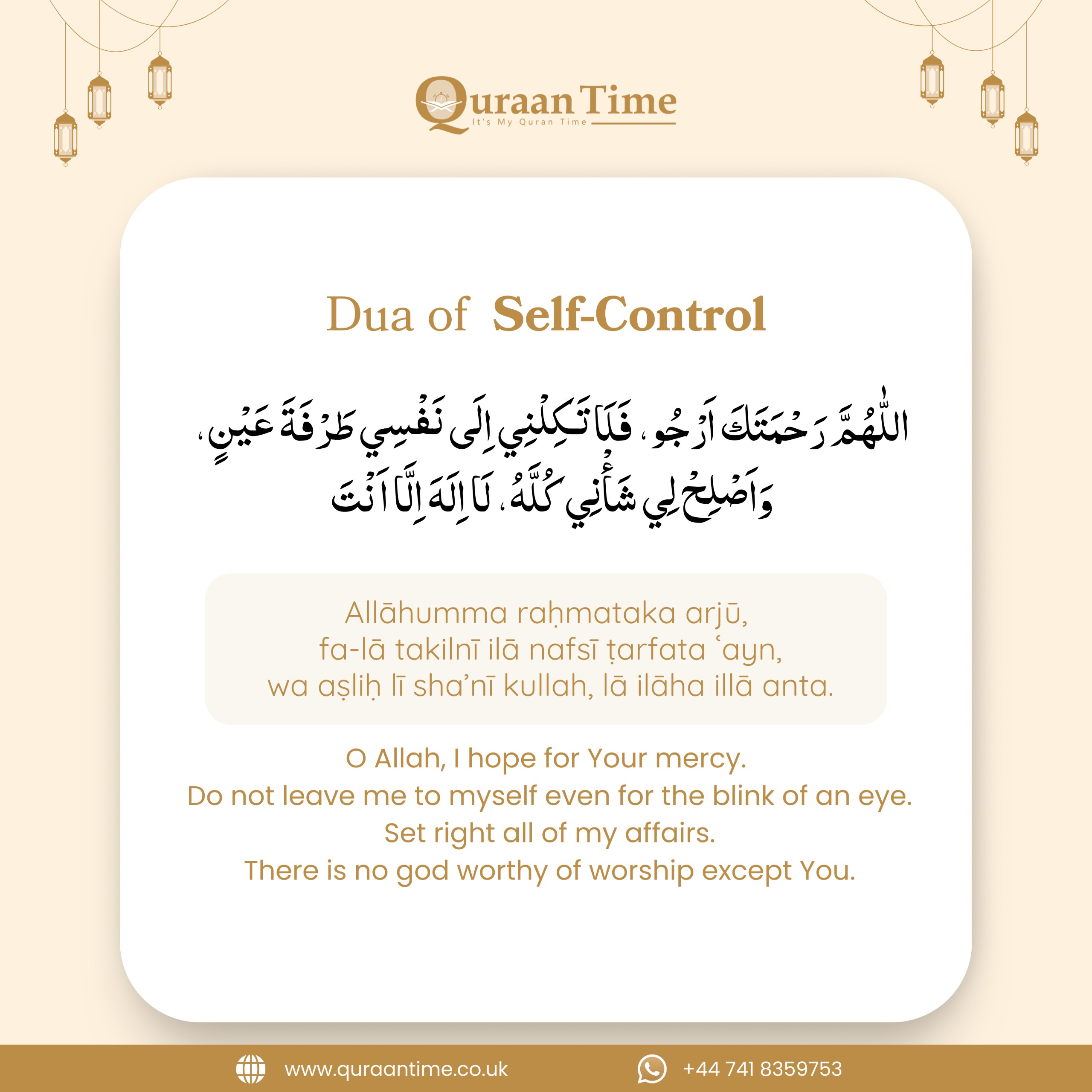
The Dua of Self-Control: A Spiritual Anchor in Modern Life
Harnessing Divine Assistance for Discipline, Patience, and Emotional Mastery
Reminder: This powerful supplication is attributed to Prophet Muhammad (peace be upon him) and serves as a comprehensive plea for self-regulation and divine guidance in all affairs.
In an era of constant distractions, instant gratification, and overwhelming choices, the concept of self-control has become both critically important and increasingly difficult to maintain. Islamic tradition offers profound spiritual tools for developing this essential quality, none more direct than the Dua of Self-Control.
O Allah, I hope for Your mercy. The supplication begins with hopeful reliance on Allah's boundless compassion.
Do not leave me to myself even for the blink of an eye. This is the core plea for self-control—acknowledging human vulnerability and our need for constant divine support.
Set right all of my affairs. A comprehensive request for rectification in every aspect of life.
There is no god worthy of worship except You. Affirmation of monotheism that grounds the entire supplication.
Psychological & Spiritual Benefits
1. Emotional Regulation
By asking not to be left to oneself, we acknowledge our emotional vulnerabilities and invite divine assistance in managing anger, impulse, and reactive patterns.
2. Decision-Making Clarity
The dua seeks rectification in all affairs, promoting thoughtful choices aligned with higher principles rather than momentary desires.
3. Protection from Negative Influences
Seeking refuge from Shaytan includes protection from both external temptations and internal whispers that undermine self-discipline.
4. Cultivation of Taqwa
Regular recitation reinforces God-consciousness, the ultimate foundation of self-restraint in Islamic spirituality.
Questions & Answers: Practical Applications
How can parents teach this dua to children effectively?
Begin by explaining the concept of self-control in simple terms—waiting for dessert, managing frustration with toys, or speaking kindly when upset. Introduce the dua as a "special prayer for help" that even adults use. Create visual reminders in their room, practice together during calm moments, and gently prompt its recitation when challenging situations arise. Positive reinforcement when they use it successfully reinforces its value.
When are the optimal times to recite this supplication?
While it can be recited at any time, certain moments are particularly potent: after obligatory prayers, during the last third of the night, when facing a difficult decision, when feeling overwhelmed by emotions, and as part of morning and evening adhkar. Consistency matters more than timing—making it a regular practice integrates its benefits into daily life.
How does this dua relate to modern psychological approaches to self-control?
Contemporary psychology emphasizes self-regulation as a limited resource that can be depleted. This dua provides a spiritual dimension by acknowledging this limitation and seeking transcendent support. It combines cognitive recognition of vulnerability with proactive request for assistance, aligning with therapeutic approaches that encourage humility and seeking support while maintaining personal responsibility.
Can this dua help with digital addiction and screen time management?
Absolutely. Digital temptations represent a major self-control challenge today. Reciting this dua before opening devices creates a mindfulness pause. The phrase "do not leave me to myself" directly applies to moments of impulsive scrolling or excessive screen use. Pair the dua with practical measures like app limits, but use the spiritual practice to address the root craving mechanism.
Practical Integration Framework
To make this dua a transformative practice:
Morning Intention: Recite after Fajr prayer, setting intention for conscious self-regulation throughout the day.
Trigger Association: Link recitation with specific triggers (before checking social media, when feeling impatient, before meals).
Reflective Journaling: Note situations where you used the dua and observe patterns in self-control challenges.
Family Practice: Establish a family time where everyone shares one self-control challenge and recites the dua together.
Progressive Internalization: Gradually move from audible recitation to silent remembrance throughout the day.
The Dua of Self-Control represents a profound intersection of spiritual wisdom and practical psychology. It doesn't deny human limitations but provides a divine framework to transcend them. In a world that often celebrates unrestrained expression and instant fulfillment, this supplication offers a counter-narrative of mindful restraint, conscious choice, and spiritual partnership in mastering oneself.
Final Reflection: True self-control in Islamic perspective isn't about harsh self-denial but about alignment with higher purpose. This dua transforms discipline from a struggle into a connection—acknowledging our need while accessing a source of strength beyond our own.