

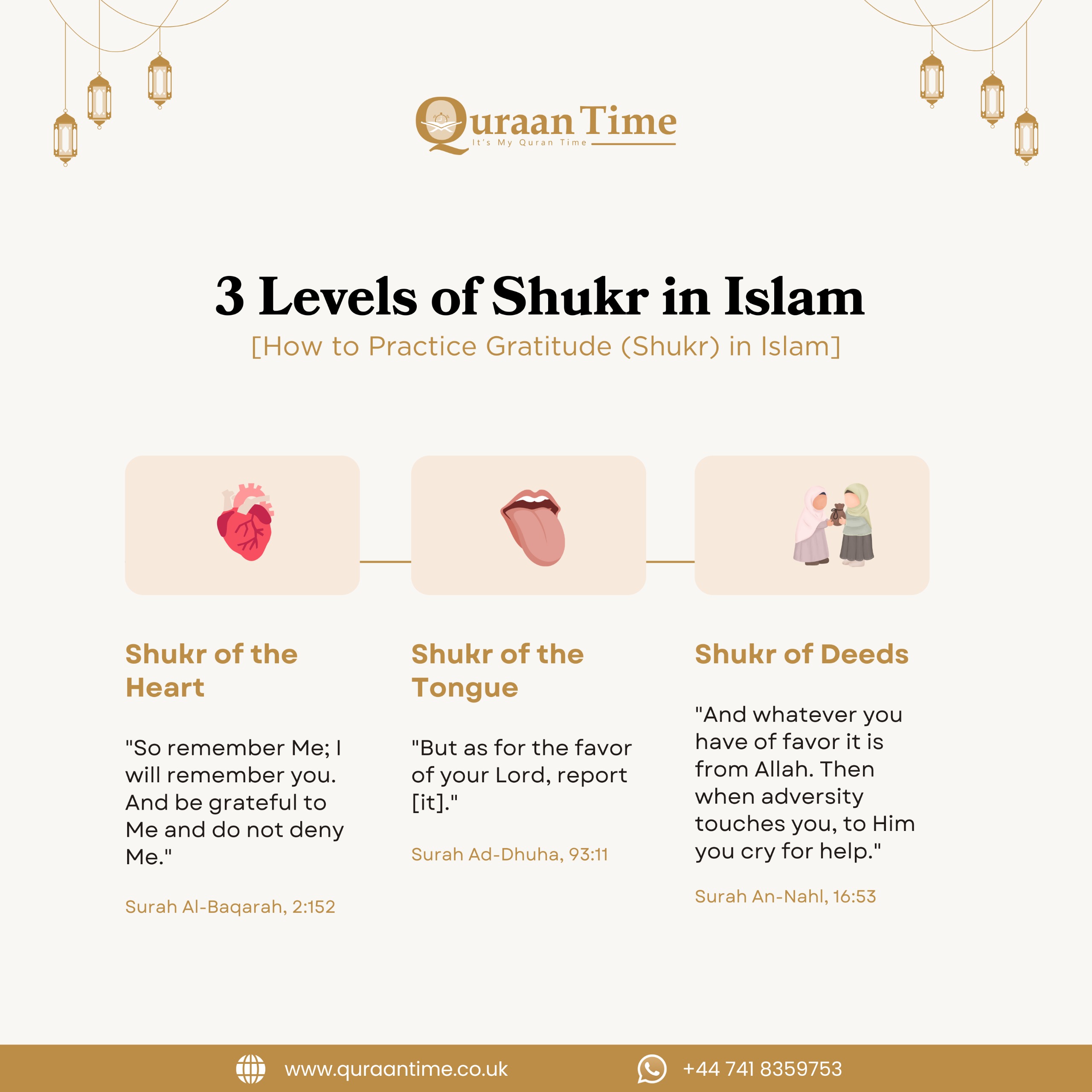
In Islam, gratitude (Shukr) is not merely an emotion but a comprehensive way of life that encompasses one's heart, speech, and actions. This article explores the three fundamental levels of Shukr as derived from Islamic teachings, providing practical guidance for Muslims seeking to cultivate this essential virtue.
Shukr of the heart represents the foundational level of gratitude in Islam. It involves cultivating an inner awareness and acknowledgement of Allah's countless blessings. This internal recognition is the seed from which all other forms of gratitude grow.
Each morning, mentally list three blessings you're grateful for, focusing on feeling genuine appreciation in your heart for each one.
Verbal gratitude is the expression of what resides in the heart. Shukr of the tongue involves articulating thankfulness to Allah through words of praise, remembrance, and sharing blessings with others.
Make it a habit to say "Alhamdulillah" at least 10 times daily with mindfulness of its meaning, not just as a routine phrase.
The highest level of Shukr involves using one's blessings in ways pleasing to Allah. This means employing our abilities, resources, and opportunities in obedience to our Creator and in service to His creation.
Identify one blessing you've received (knowledge, skills, resources) and dedicate a portion of it specifically for Allah's pleasure this week.
Common questions from parents and teachers about implementing gratitude in daily life
How can we teach children the concept of Shukr when they're focused on what they don't have?
Start with simple, tangible exercises. Create a "blessings jar" where children write or draw something they're grateful for each day. Connect these blessings to Allah explicitly: "Who gave us this delicious food? Allah did, so we say Alhamdulillah." Modeling gratitude consistently is more powerful than mere instruction.
How do we practice Shukr during difficult times when it feels like there's little to be grateful for?
In Islam, Shukr during trials is particularly valuable. The Prophet Muhammad (peace be upon him) taught us to say "Alhamdulillah" in all circumstances. Focus on fundamental blessings we often overlook: faith, life, consciousness, the ability to breathe. Remember that patience during hardship is itself a form of gratitude and worship.
What's the relationship between Shukr and increasing one's blessings?
Allah promises in the Quran: "If you are grateful, I will surely increase you [in favor]." (14:7). This increase isn't always material—it may be contentment, peace, or strengthened faith. When we recognize blessings, we use them more wisely and they become means for further goodness in our lives.
How can we make Shukr a family practice rather than an individual one?
Establish family gratitude rituals: share one blessing each at mealtime, create a family gratitude journal, or dedicate a portion of family charity specifically as an expression of thanks for a particular blessing. When children see parents expressing Shukr consistently, they naturally internalize it as a family value.
Take a moment to reflect on today's blessings using the three levels of Shukr.
The three levels of Shukr—heart, tongue, and deeds—work together to create a comprehensive practice of Islamic gratitude. When the heart recognizes blessings, the tongue articulates thanks, and the actions demonstrate appreciation, we fulfill the complete meaning of Shukr. This holistic approach transforms gratitude from an occasional feeling to a constant state of being that colors our entire relationship with Allah and His creation.